This is a walk through the first fifty flags in our database, taken in the order they come. It is an arbitrary way to travel, which is exactly why it works: you end up in Andorra and American Samoa in the same paragraph, and the differences between them are more instructive than any theme we could have imposed.
What vexillology covers
Vexillology is the study of flags, which sounds narrower than it is. Flags have been in use for centuries, from banners carried onto battlefields to the national flags flown over parliaments today, and each one is put together with some idea of what it should say and some set of design rules about how to say it clearly.
Colors are the shorthand. Red usually stands for bravery or revolution, blue for peace and unity. Patterns carry their own meaning: a cross often points to religious heritage, stripes to unity between regions or groups, crescents to Islam. Plenty of flags also refer to particular historical events, which is where the shorthand stops being shorthand and you have to know the story.
The first five
Afghanistan
A black, red, and green tricolor with an emblem. The colors carry the memory of Afghanistan's monarchies, its changes of government, and its cultural shifts.
Albania
A red field with a black double-headed eagle, standing for strength and valor.
Algeria
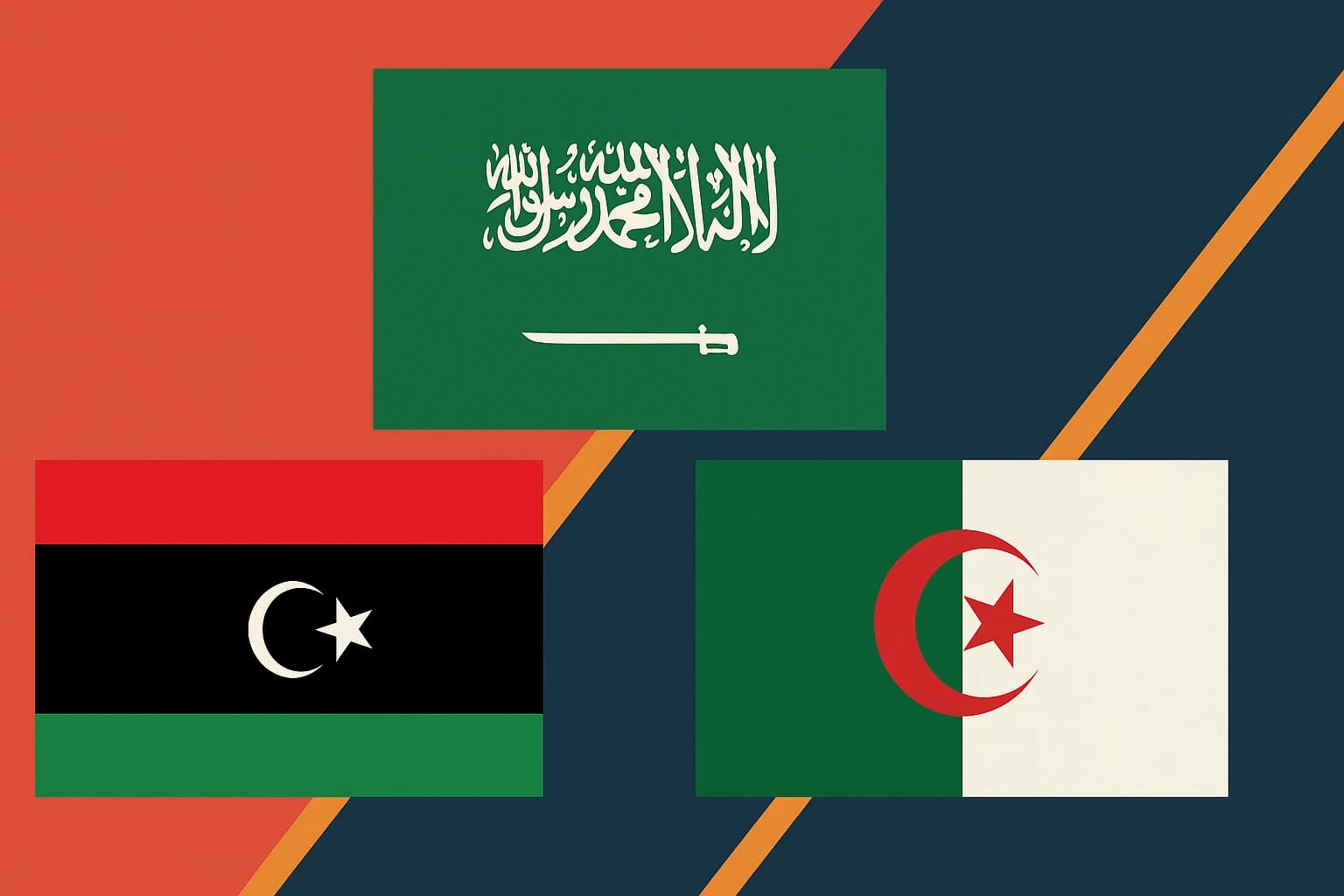
Green and white with a crescent and star, for Islam, peace, and the country's faith.
American Samoa
The eagle acknowledges the American connection, while the rest of the design uses native Samoan motifs.
Andorra
Three vertical bars in blue, yellow, and red, the palette split between Spanish and French influence.
Further down the list
Flags from the same part of the world often rhyme with each other, sharing colors or shapes out of solidarity or common history. That is easier to see once you get past the alphabetical opening.
Barbados carries a trident, an emblem of its independence.
Benin uses the Pan-African colors.
Set neighboring countries next to each other and the connections show up quickly, as they do across the Latin American flags.
The last twenty
The tail of the list holds designs that get less attention. Burundi's is a reminder of African unity.
Egypt's eagle and bold colors tie the flag closely to the country's heritage.
Flags in public life
Flags stir emotion. They turn up at protests, at the signing of peace treaties, and at celebrations, which is how a piece of cloth becomes an identity marker. In diplomacy, the flag is the thing you show respect to.
A couple of things people get wrong
Most people assume every flag is a rectangle. Nepal's is not.
Flags also collect myths. Some designs are believed to bring prosperity, which says more about the people flying them than about the design.