Why animals ended up on flags at all
Animals on national symbols are rarely chosen for looks. They come out of heraldry, the older business of coats of arms and badges, where a lion or an eagle was shorthand for a quality the bearer wanted claimed on their behalf: courage, wisdom, freedom. Vexillology, the study of flags, inherited that vocabulary more or less intact.
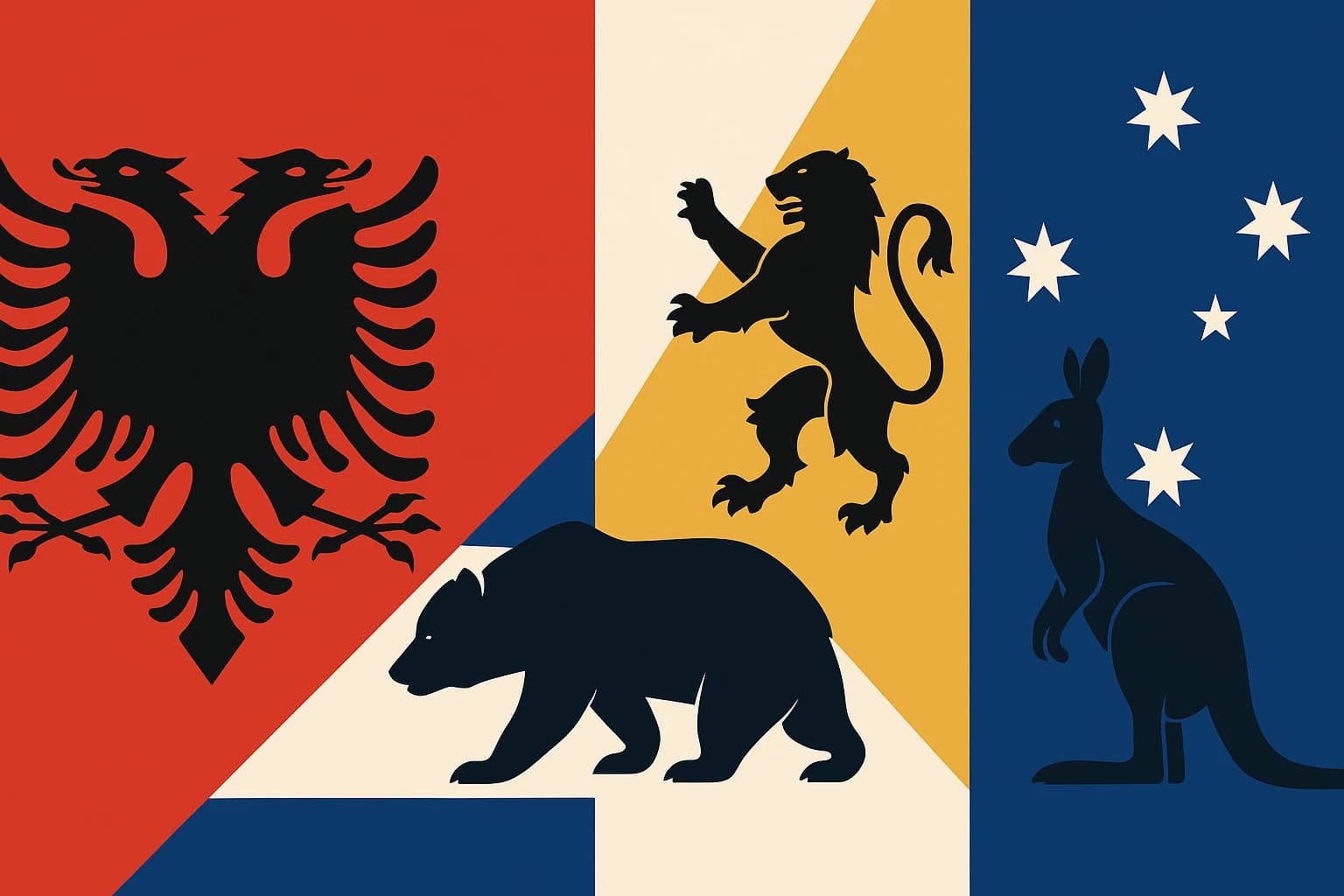
Albania's double-headed eagle
The double-headed eagle has roots in the Byzantine Empire, where it stood for power and dominion.
On Albania's flag the same bird now reads as union and strength, which is a fair example of how these symbols shift meaning without changing shape.
Australia's emu and kangaroo
Australia's two national animals were not picked because they are appealing, though they are.
The usual explanation is that neither animal moves backward easily, so the pair stands for a country that only goes forward. Whatever you make of the reasoning, both are recognized worldwide as Australian.
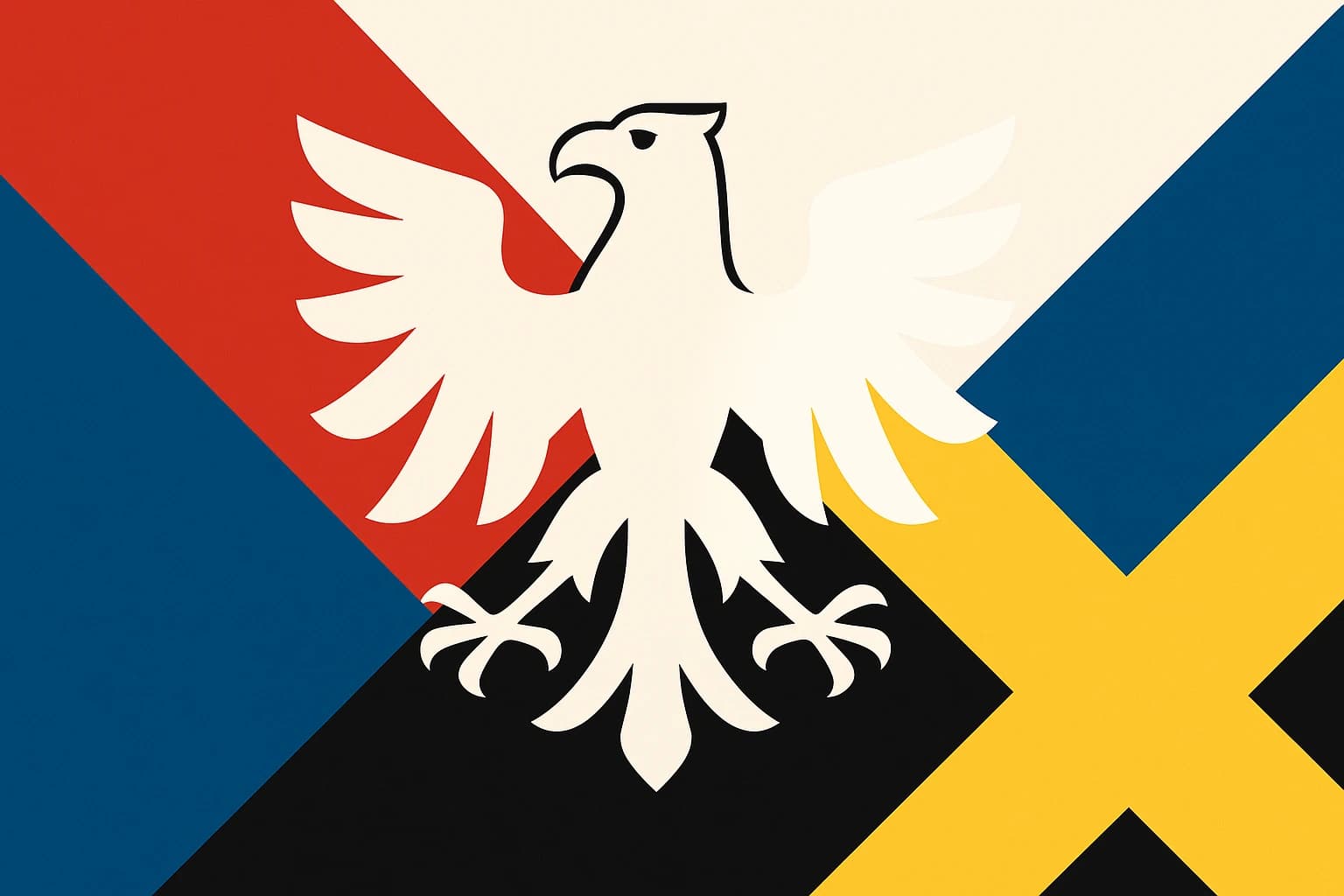
The bald eagle
The bald eagle became a national symbol of the United States in 1782.
It was chosen for strength and for the way it flies, and it has been attached to American ideas of freedom and independence ever since. It now does as much work abroad as it does at home in shaping how the country is seen.
Scotland's lion and the Welsh dragon
Scotland's lion is an old emblem of courage and sovereignty, with centuries of use behind it.
The Welsh dragon stands for strength and for ancient Celtic prowess.
Two neighbors, two very different animals, and no attempt to reconcile them.
Animals elsewhere
Canada has the moose and the beaver as national totems, tied both to the country's wildlife and to a reputation for hard work.
Mexico's flag has an eagle holding a snake on a cactus, an image drawn from an Aztec legend.
In both cases the animal is local first and symbolic second, which is what makes it convincing.
What happens to these symbols now
Interpretations move with the times, but the older meanings tend to survive underneath. That is most of the point. In a world where a lot of daily life has no borders in it, an animal on a flag is a reminder of a specific place.