Imagine showing up to a global summit and the country seated across from you is flying your flag. Not a similar flag. Your exact flag. Same colors, same layout, same proportions.
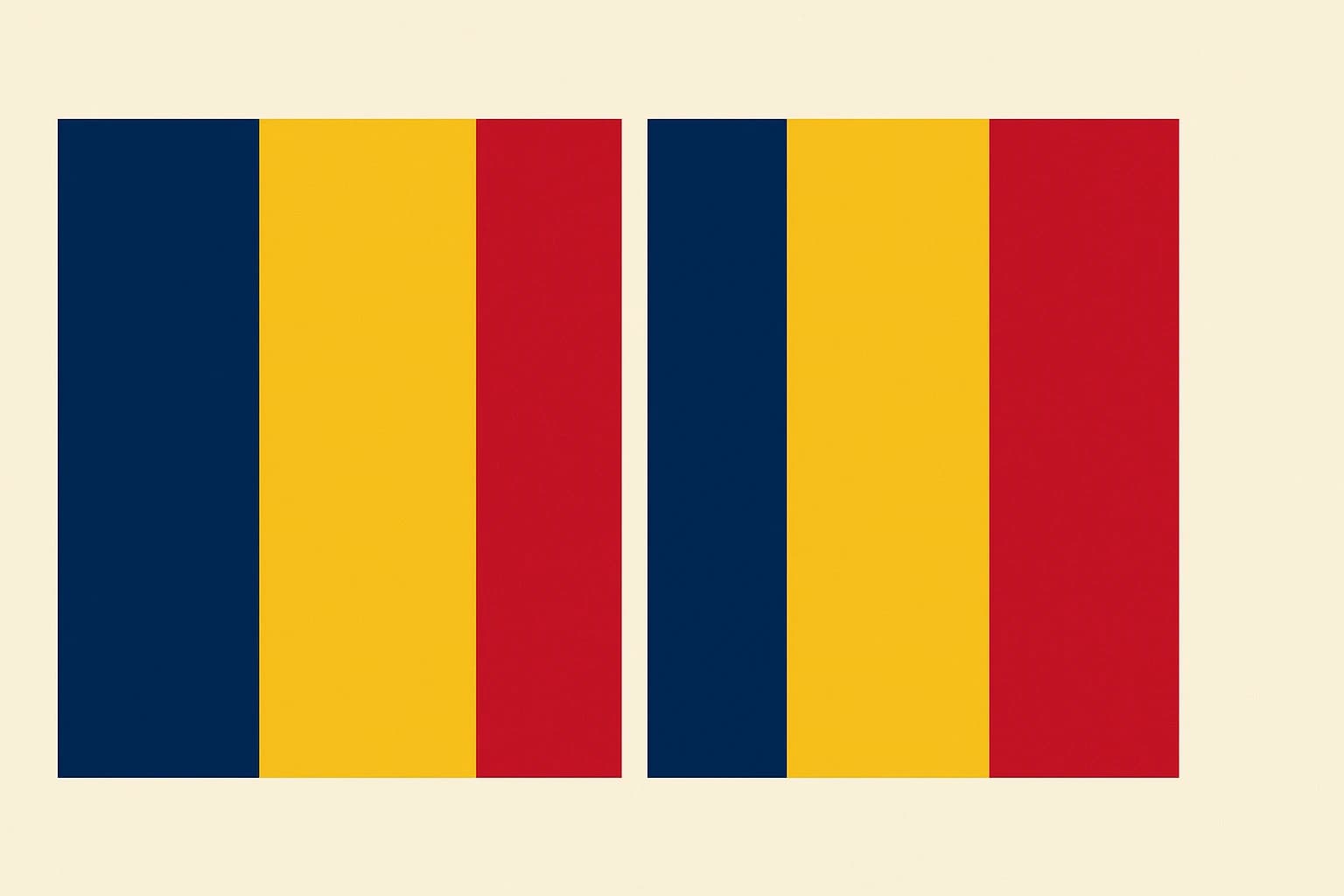
Since 1959, Chad and Romania have carried virtually identical national banners into every UN General Assembly, Olympic ceremony, and diplomatic function on Earth. Three vertical stripes: blue, yellow, red, left to right. No emblem, no seal, no distinguishing mark.
The two nations share no border, no colonial history, no common language, and no cultural overlap. They arrived at the same design through unrelated historical accidents separated by more than a century. In 2004, Chad's president formally complained to the United Nations. Romania's response was blunt: we were here first, and we're not changing anything. Neither country has budged since.
Romania's tricolor, forged in 1848
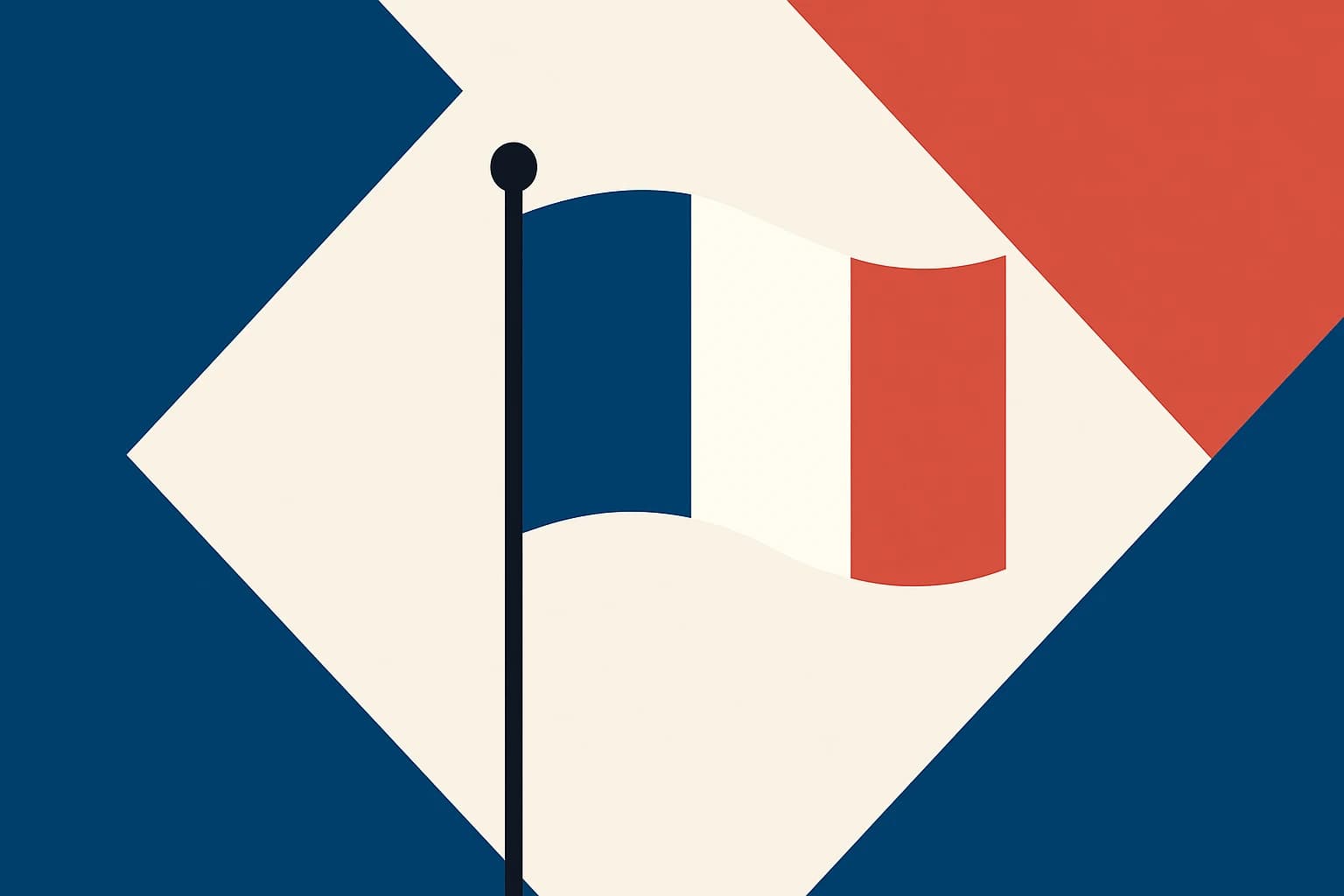
Romania's blue-yellow-red tricolor traces its origins to the Wallachian Revolution of 1848, when Romanian liberals rose against Ottoman suzerainty and Russian influence. The revolutionary flag, hoisted in Bucharest in June of that year, drew directly on the French tricolore as a symbol of liberty, equality, and fraternity, but repackaged those ideals with colors representing the three historical Romanian principalities: blue for Wallachia, yellow for Moldavia, red for Transylvania.
The French connection was no accident. Romanian intellectuals of the mid-19th century were deeply Francophile and many had studied in Paris. The 1848 revolutions sweeping across Europe created a shared symbolic language among liberal movements, and the vertical tricolor format was a deliberate nod to the French Republic.
The flag went through several iterations over the decades. Horizontal stripes. Coats of arms overlaid. Royal crests added under the monarchy. But the blue-yellow-red palette survived every regime change: the Kingdom of Romania in 1881, the communist People's Republic (which put a socialist emblem in the center), and the modern republic that followed.
During the 1989 revolution that toppled Nicolae Ceaușescu, Romanian protesters cut the communist emblem out of the center of their flags with scissors and knives, then marched through Bucharest holding flags with holes in the middle. The holed flag became one of the defining images of the revolution.
Romania's current flag was officially re-adopted on December 27, 1989, days after Ceaușescu's fall. Between 1848 and 1989, the tricolor accumulated enough history to make any suggestion of modification a political non-starter.
Chad's flag, born from a process of elimination
Chad's path to the same design was entirely different and far more pragmatic.
As the country prepared for independence from France in 1959, a committee was tasked with designing a national flag. The initial instinct was to follow the Pan-African color tradition of green, yellow, and red, the colors that dominated the flags of newly independent African nations as symbols of African unity, fertile land, and the blood of liberation.
There was a problem. Mali, Chad's neighbor, had already claimed the green-yellow-red vertical tricolor.
Using the same design would create immediate confusion between two countries that shared a border and overlapping diplomatic relationships. The committee needed a substitute.
The solution was to swap green for blue, which worked as a nod to Chad's sky and its southern waterways and as a subtle reference to the French tricolore, France being the departing colonial power whose administrative and legal structures Chad was inheriting. The resulting flag was adopted on November 6, 1959, almost a year before independence on August 11, 1960.
There is no evidence the designers were aware of Romania's flag during any of this. Chad's flag came out of elimination (avoiding Mali) and symbolic substitution (blue for green), not from any engagement with European heraldic traditions. Two independent design processes arrived at the same endpoint more than a century apart.
Spot the difference
Place the two flags side by side and even trained vexillologists struggle. Both are vertical tricolors of blue, yellow, and red, read left to right. The proportions are identical at 2:3. The stripe widths are equal. Neither has an emblem, seal, coat of arms, or any distinguishing mark.
The only measurable difference is a marginal variation in the shade of blue. Romania specifies cobalt, a brighter and slightly lighter hue. Chad uses indigo, darker and deeper. In practice the distinction is nearly invisible, especially on fabric, at a distance, or on screens, and flag manufacturers have acknowledged that they sometimes produce the two interchangeably.
The confusion is not theoretical. International sports broadcasts have misattributed the flags. Diplomatic protocol officers have reportedly double-checked placements. Online flag emoji databases use the same or nearly indistinguishable images.
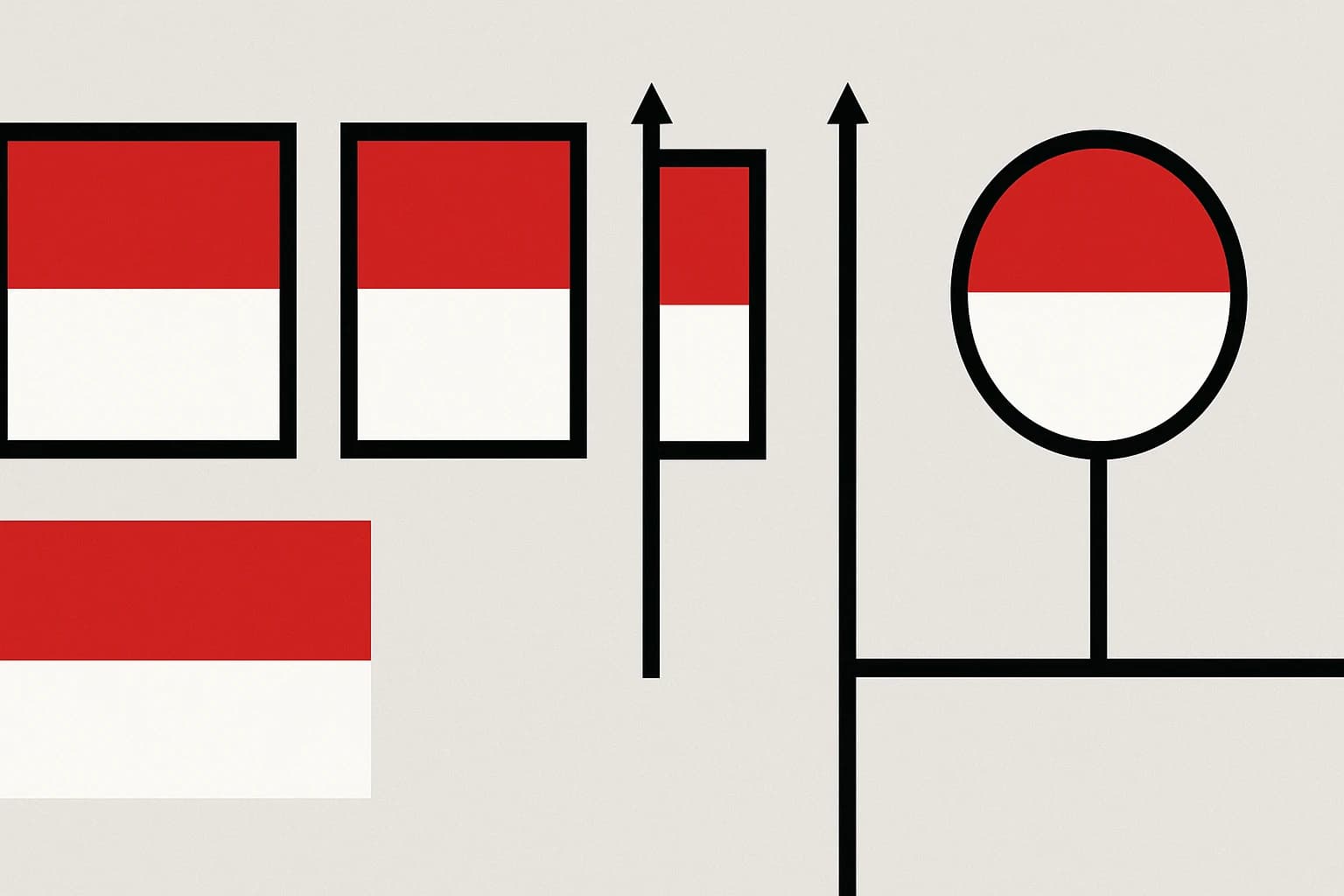
For comparison, the Indonesia and Monaco pairing (both red-over-white horizontal bicolors) is at least distinguished by proportion. Indonesia's flag is wider.
Chad and Romania don't even have that.
The 2004 UN complaint
In 2004, Chadian President Idriss Déby took the issue to the international stage. He formally raised the matter at the United Nations, arguing that the duplication caused confusion and that one of the two countries should modify its flag. The complaint was directed not at Romania specifically but at the broader international community, framed as a problem of global governance and symbolic clarity.
Romania's response was swift. The government stated that its tricolor predated Chad's by over a century, that the flag was enshrined in the Romanian constitution (Article 12 specifies the colors and their vertical arrangement), and that there was no legal or moral obligation to change. Foreign ministry officials pointed out that Romania had used the design continuously since the 19th century and that Chad had adopted it with full knowledge that similar flags existed.
The United Nations had no mechanism to adjudicate any of this. No international body registers, regulates, or arbitrates national flag designs. The UN simply displays whatever flag a member state provides.
The complaint died without resolution.
The episode exposed a gap in international law. Corporate trademarks, domain names, and even country-code top-level domains are all regulated. The flag, the most visible symbol of national identity, is not. Any nation can adopt any design it wants, and there is no appeals process.
Why neither country will budge
For Romania, the flag is inseparable from national identity in a way that makes modification unthinkable. The blue-yellow-red tricolor was carried by revolutionaries in 1848, flown by soldiers in both World Wars, cut from communist-era flags by protesters in 1989, and enshrined in the post-revolution constitution. Changing it because of a coincidence involving a country 4,000 kilometers away would look like capitulation and would throw away nearly two centuries of continuity.
For Chad the reasoning differs but the answer is the same. The flag was designed at the moment of independence, and independence-era symbols carry enormous weight in postcolonial nations. Changing it would implicitly concede that Chad's design process was somehow secondary. In a country that has been through decades of civil war and political instability, the flag is one of the few constants.
There is also a practical deterrent. Changing a national flag is expensive and politically fraught. It means redesigning every government document, embassy facade, military uniform, passport, and official seal. New Zealand held a $26 million referendum in 2015 and 2016 on whether to change its flag and voted to keep the existing one.
For both Chad and Romania, the arithmetic points toward doing nothing.
Neither government has revisited the issue publicly since the mid-2000s. The shared flag has settled into the category of known diplomatic oddities: acknowledged, occasionally joked about, and accepted as a problem both nations have decided to live with.
Who owns a color combination?
In corporate law the answer is a qualified yes. Tiffany & Co. has trademarked its robin's-egg blue. T-Mobile owns magenta in the telecommunications space. Cadbury has fought legal battles over purple. Those protections exist within commercial frameworks that have registries, courts, and enforcement mechanisms.
National flags sit outside any such framework. The closest analogue is the Red Cross and Red Crescent emblem, which is protected under the Geneva Conventions.
That protection covers one specific humanitarian symbol, not the general principle of color ownership. No treaty, convention, or customary international law grants a nation exclusive rights to a flag design.
Which makes duplication close to inevitable. With 193 UN member states and a limited palette of symbolically meaningful colors and geometric arrangements, convergence is more or less a mathematical certainty:
- Indonesia and Monaco share red-and-white horizontal bicolors.
- Ireland and Côte d'Ivoire are mirror images of each other.
- The Netherlands and Luxembourg differ only in a shade of blue, much like Chad and Romania.
- India and Niger both use orange-white-green tricolors with central emblems.
Flags are among the most emotionally charged symbols anywhere and they operate in a legal vacuum. What the Chad and Romania standoff shows is that the absence of rules produces stalemates rather than chaos, because the emotional weight of a flag makes any compromise feel like a concession of sovereignty.
What could fix it, and why nobody will
Vexillologists and design commentators have floated several theoretical fixes over the years. Chad could add a small emblem or star to the center stripe, following the precedent of Senegal or Cameroon.
Romania could adopt a slightly modified shade and formally standardize Pantone values that put visible daylight between the two. Both could agree to different aspect ratios, as Indonesia and Monaco technically have.
The cheapest option would be mutual acknowledgment without modification: a joint diplomatic statement recognizing the shared design, explaining the independent origins, and treating it as a curiosity rather than a conflict. Even that has not happened, probably because formally acknowledging the problem gives it a diplomatic weight neither side wants to sustain.
So the flags will stay identical. No domestic constituency in either country is demanding change, no international body has the authority to compel it, and the issue is not big enough to spend diplomatic capital on.