The Flag of France
French Republic
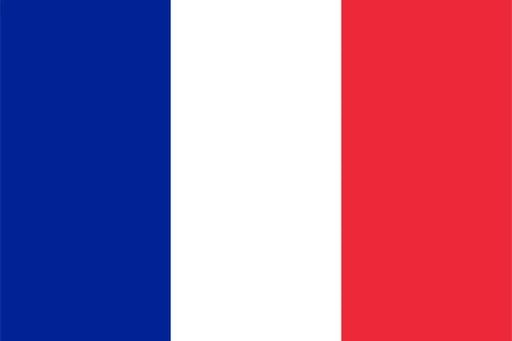
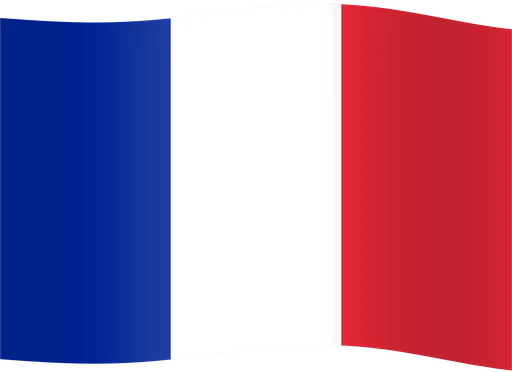
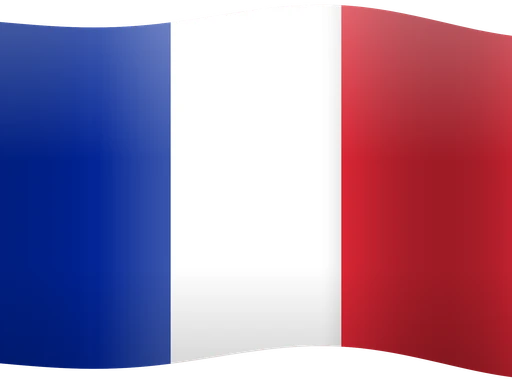
The national flag of France, known as the Tricolour or 'Tricolore', has three vertical stripes of equal width, running from the flagpole outward in the order blue, white, red. The design is closely associated with the values of the Republic: liberty, equality, and fraternity.
The French Tricolore was born in the chaos of 1789, and its arrangement of blue, white, and red became the template for modern flag design, copied from Haiti to Ireland to Romania. Beneath the clean geometry sits a history of shifting shades, political erasures, and quiet reinventions that most people never notice.
A flag born in three days
The story begins on July 17, 1789, three days after the storming of the Bastille. King Louis XVI appeared before Parisian crowds wearing a cockade, a rosette of ribbons, combining the red and blue of Paris with the white of the Bourbon monarchy. It was a gesture of reconciliation, or at least meant to look like one. The Marquis de Lafayette is widely credited with suggesting the combination, framing it as a visual truce between the people and the crown. The Revolution overturned that meaning entirely.
The cockade came first. The tricolor concept migrated from lapel to banner over the following months, appearing on military standards and improvised flags before it received any official sanction. Revolutionary movements needed new visual identities, and cutting the link to dynastic heraldry was a deliberate political act.
On February 15, 1794, the National Constituent Assembly formally adopted the tricolor flag, with the vertical orientation and blue at the hoist. The order of colors was not settled, though. Early versions sometimes placed red nearest the flagpole, and the modern blue-white-red sequence only became standard under the First Republic. What seems inevitable now was for years a matter of heated debate and competing designs.
Why vertical stripes changed flag design
Before the Tricolore, most European national flags relied on crosses, dynastic coats of arms, or horizontal stripes. The vertical triband was a radical departure. Its origins were partly practical: vertical stripes on naval pennants were easier to distinguish at sea and on the battlefield. But the format quickly became politically coded as republican and modern.
The influence is hard to overstate. Napoleon introduced the Italian Tricolore in 1797 through the Cisalpine Republic. Belgium adopted its own vertical triband in 1831. The Irish Tricolour followed in 1848. Dozens of other nations drew directly from the French template.
The Dutch horizontal tricolor actually predates France's flag by centuries, but it was the French vertical model that became the dominant global export of republican flag design. Vexillologists classify the descendants as the "tricolor family," and the genealogy almost always traces back to Paris.
Colors with competing histories
The precise symbolic meaning of the three colors has never been officially codified. One popular tradition maps blue to liberty, white to equality, and red to fraternity, echoing the revolutionary motto, but that interpretation was applied retroactively. No decree ever sanctioned it.
Blue and red trace their lineage to Paris itself, linked to the city's patron saints: Saint Martin (blue) and Saint Denis (red). They appeared on Parisian militia standards long before the Revolution gave them national significance. White, the color of the Bourbon monarchy, was the reconciliation element in Lafayette's original design. Over time that meaning shifted, and republicans began reading the white stripe as the king's color surrounded and subordinated by the people on either side.
The most recent chapter in the flag's chromatic history happened in 2020. President Macron quietly ordered the darker navy blue (bleu marine), standard for most of the 20th century, replaced with a brighter, lighter shade known as bleu de France. The goal was improved visibility on screens and at EU institutions. The change went largely unannounced, and months passed before the public noticed. Red, by contrast, has been the most stable of the three colors, symbolically and chromatically.
Disappearances and revivals
The Tricolore has not always flown over France. During the Bourbon Restoration, from 1814 to 1830, a plain white royal flag replaced it entirely.
Its return was as dramatic as its creation. During the July Revolution of 1830, Parisian crowds reclaimed the Tricolore in the streets before Louis-Philippe officially restored it. The reinstatement was a popular act first and a royal decree second.
Napoleon III kept the Tricolore during the Second Empire, from 1852 to 1870, but adorned it with imperial eagles. The Paris Commune of 1871 went further, rejecting the Tricolore outright in favour of the plain red flag. Communards viewed the national banner as a symbol of bourgeois republicanism, an ideological split that echoed through the 20th century.
The darkest chapter came during the Second World War. The Vichy regime retained the Tricolore but added the francisque, Pétain's axe emblem, while de Gaulle's Free French flew a Tricolore bearing the Cross of Lorraine. After liberation, restoring the plain, unadorned Tricolore was a conscious act of republican purification: stripping away the symbols of collaboration and returning to the flag's original simplicity.
Protocol and proportions
Article 2 of the French Constitution of the Fifth Republic specifies the Tricolore as the national emblem, with official proportions of 2:3, width to length. One technical detail is almost never discussed: the three vertical stripes are not actually equal in width. The white stripe is slightly narrower at 30 units, while blue and red are each 33 units wide. That creates an optical illusion of equal width when the flag is flying and rippling in the wind.
French law mandates the flag's display at all official buildings, schools, and public institutions. Half-mast protocols are observed during national mourning, deaths of heads of state, and major tragedies. After the November 2015 Paris attacks, flags flew at half-mast across the country for three days.
The flag appears without a coat of arms or motto, reflecting a republican view that the state's identity requires no heraldic embellishment. Naval ensign variants exist, as does a personal standard for the President of the Republic. Overseas territories and collectivities typically fly the Tricolore alongside their own local emblems.
From Delacroix to the World Cup
Eugène Delacroix's Liberty Leading the People (1830) is perhaps the most famous painting of any national flag. Housed in the Louvre, it cemented the Tricolore as a symbol of universal freedom rather than narrow nationalism.
After the 2015 Paris attacks, landmarks from Sydney to New York were lit in blue, white, and red, and the flag was shared millions of times on social media as a shorthand for solidarity.
In sport, French athletes competing under "Les Bleus" have made the Tricolore inseparable from football, cycling, and rugby. The 1998 and 2018 World Cup victories turned the flag into something closer to a party invitation than a civic symbol, waved by millions in the streets of Paris.
Contemporary French politics complicates things. The flag sits in a tug-of-war between those who read it as a universal republican emblem ("Liberté, Égalité, Fraternité") and nationalist movements that claim it as exclusively their own.
Abroad the Tricolore functions differently than at home. Internationally it signals French culture, cuisine, and language; domestically it is a civic and political symbol, sometimes embraced and sometimes contested. From Coco Chanel to contemporary luxury branding, its colors also work as a marker of provenance.
References
[1] French Constitution of the Fifth Republic, Article 2. Official text available via Légifrance (legifrance.gouv.fr)
[2] Pastoureau, Michel. Blue: The History of a Color. Princeton University Press, 2001.
[3] Smith, Whitney. Flags Through the Ages and Across the World. McGraw-Hill, 1975.
[4] Élysée Palace official communications on the 2020 flag shade revision (elysee.fr)
[5] Schama, Simon. Citizens: A Chronicle of the French Revolution. Knopf, 1989.
[6] Agulhon, Maurice. Marianne into Battle: Republican Imagery and Symbolism in France, 1789-1880. Cambridge University Press, 1981.
[7] Znamierowski, Alfred. The World Encyclopedia of Flags. Lorenz Books, 2002.
[8] Flags of the World (FOTW) database entry for France (crwflags.com/fotw)
[9] Delacroix, Eugène. Liberty Leading the People (1830), Musée du Louvre, Paris. Catalogue notes on the flag's depiction.
[10] Musée de l'Armée, Paris. Archival holdings on Revolutionary-era flags and military standards.
Common questions
- What is the meaning behind the name 'Tricolore' for the French flag?
- The French flag is known as the 'Tricolore' because it has three vertical stripes in blue, white, and red. The colors are tied to the revolutionary period that produced the Republic.
- How has the French flag influenced other countries' flags?
- The French flag inspired many others, especially in Europe and Africa, by introducing the tricolor design. Nations like Italy adopted the style to signal revolutionary and democratic values.
- What do the blue, white, and red colors on the French flag actually mean?
- Blue and red are rooted in Paris's identity and its patron saints. White came from the Bourbon monarchy, standing for peace between the crown and the people. The liberty, equality, fraternity reading got attached to the flag long after the fact. There was never an official decree saying that's what the colors meant.
- Why are the stripes on the French flag vertical instead of horizontal?
- It was a deliberate rejection of what other European flags looked like at the time: crosses and horizontal stripes. The vertical design ended up signaling 'modern' and 'republican' to people, and it caught on so widely that it became the template for flags around the world, including Italy's, Belgium's, and Ireland's.
Featured in these articles
- The Flag of Siam: How a White Elephant Ruled the Flagpole for a Century and Lost It to a Hoisting Accident
- Four Colors, One Island: How Mauritius Built the World's Most Mathematically Honest Flag
- Black Is Not Nothing: The Radical Political Statement Hidden in Jamaica's Flag
- The Map That Became a Flag: Why Kosovo and Cyprus Broke Vexillology's Most Sacred Rule
Download this flag
Free in 12 styles, from 32px icons up to 2000px, as SVG, PNG, WebP and JPG.