Flags are designed to be read instantly, which makes them unusually useful to artists. A flag arrives carrying a whole country's worth of association before anyone has decided what the work is about. Painters, muralists, writers and choreographers have all taken advantage of that, and mostly by complicating the meaning rather than repeating it.
What a flag brings with it
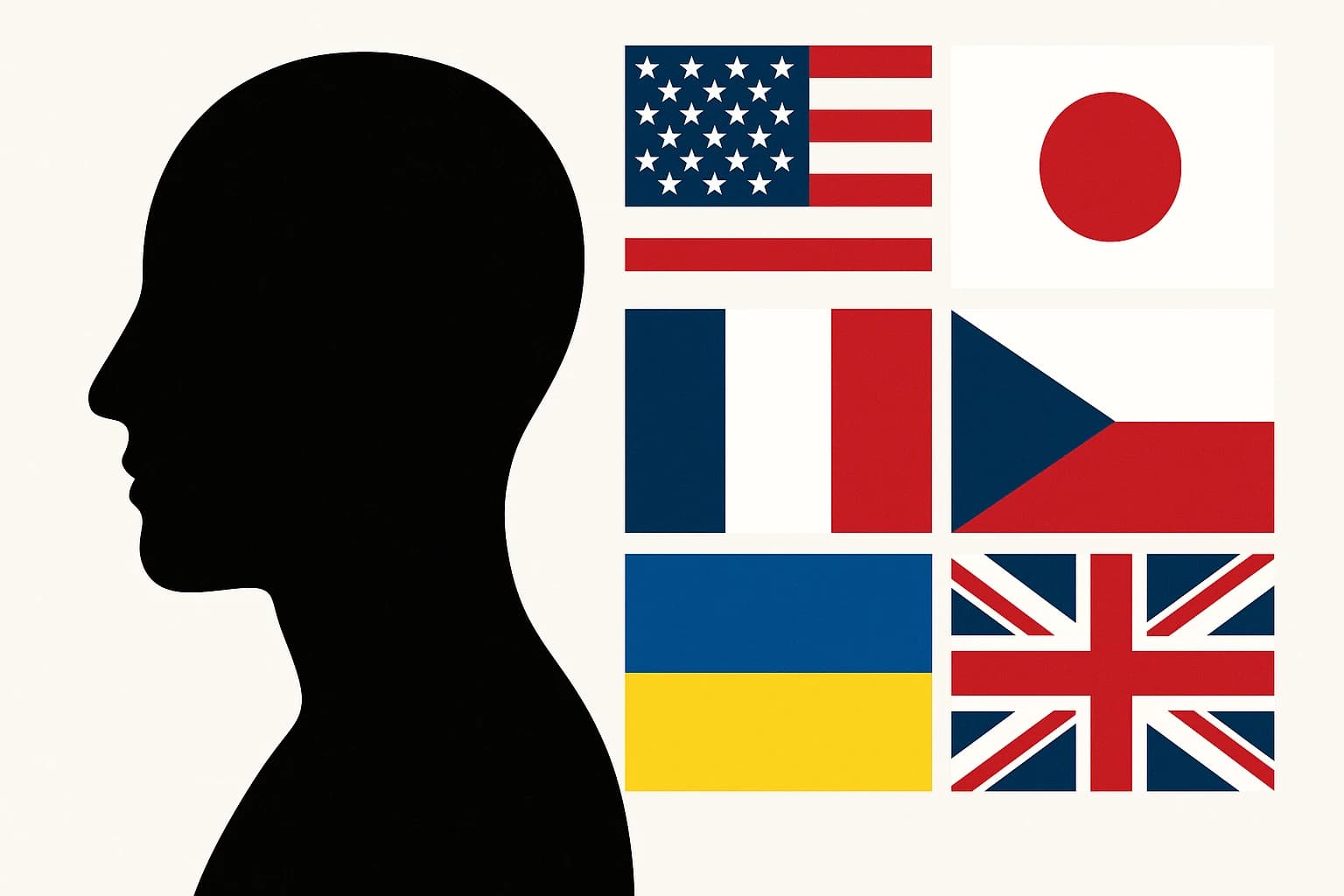
Every colour and shape on a flag is a deliberate choice about history and belief, which is why they translate so readily into other media. The French tricolour is the standard example.
Its three colours are conventionally read as liberty, equality and fraternity, so the design arrives pre-loaded with an argument. Japan's flag does the opposite and gets to the same place.
A red sun on a white field, with nothing else on it. The restraint is the statement.
Flags in painting and sculpture
Painters and sculptors work with bold colour and distinct shape, which is what flags are made of. Jasper Johns is the obvious case: his paintings of the American flag turned a familiar object into something viewers had to actually look at, and started an argument about American identity that has not stopped since.
Abstract painting reaches the same territory from another direction. Mondrian's grids of primary colour have no national content at all, but they are working with the same vocabulary of flat colour and hard division that flag design uses.
Flags in street art
Murals featuring flags turn up in cities everywhere, usually because a flag is the fastest way to make a wall about a specific political situation. A painted version of the South African flag, for example, carries the whole arc from apartheid to the present without a word of text.
Street art tends to use flags critically rather than reverently. Painting a flag on a wall is rarely a straightforward endorsement of what it represents.
Flags in writing
In literature flags work as metaphor, standing for identity, belonging or struggle depending on what the writer needs. Khaled Hosseini's The Kite Runner uses Afghanistan's flag as a way of marking the country's turbulent journey through the period the novel covers.
Poetry does something narrower and often more effective, using a flag as a single concrete image that a reader will already have feelings about, then complicating those feelings.
Flags in performance
Dance and theatre use flags as props precisely because they move. A large piece of cloth with a national design on it is legible from the back row and changes shape constantly, which is a rare combination. A dance company working with the Indian flag, for instance, has both a national symbol and a physical object that can be folded, shared or torn.
Flags across borders
Some flags belong to no single nation, and artists treat those differently. The Olympic flag is the clearest case, appearing in work around every games as a shorthand for international gathering.
What all of these have in common is that the artist is borrowing recognition. A flag is one of the few images that a very large audience will decode identically and instantly, which makes it valuable to anyone who wants to spend their effort on the second thing they are saying rather than the first.