National colors do not stay on the flagpole. They turn up on plates, in festival food, and in the way restaurants present a country's cuisine to people who have never been there. What follows is a look at where flags and food overlap, and what the overlap says about both.
What flags carry before they get to the table
A flag is a compact statement of national identity, and vexillology is the study of what is packed into it. Each one holds a piece of a country's history and its values.
The use has shifted over time. Flags started out on battlefields as a way of signaling allegiance. Now they are flown at international events, where they gather people rather than divide them, and occasionally they make it as far as the kitchen.
Colors on the plate
Flag colors carry meaning, often tied to cultural values or particular historical events. Red usually stands for courage, blue can mean freedom. The question is what happens when those colors have to be cooked.
The green and orange of the Irish flag turn up in dishes like colcannon, made with potatoes and kale. The red of the Algerian flag shows up in anything built on harissa.
Saffron rice in Spain, basil in Italian pesto: the palette of a national cuisine and the palette of a national flag tend to draw on the same landscape, which is why they so often match.
Flag-themed presentation
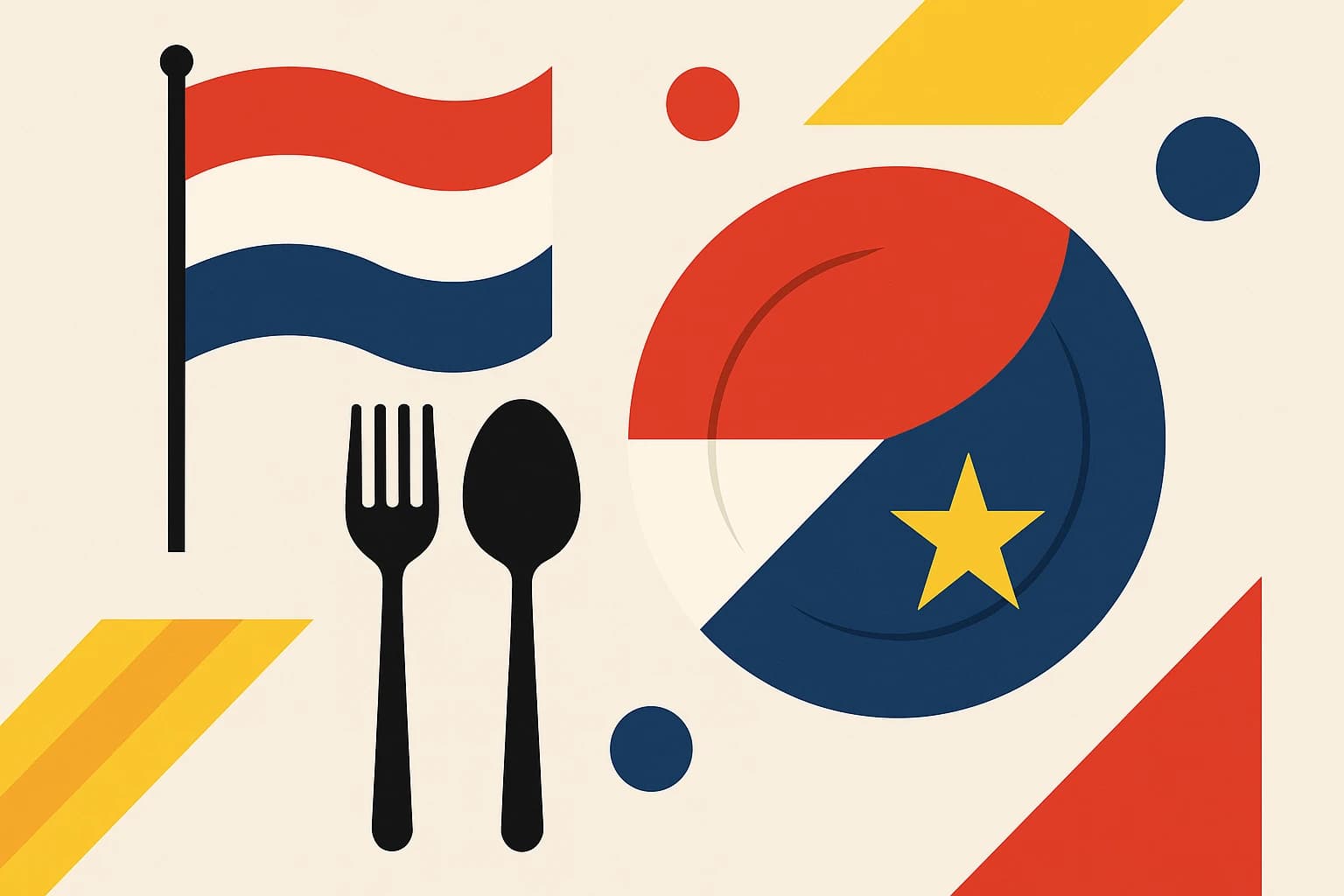
Chefs take the connection literally. Layering colors and textures to mirror a national flag is a standing challenge, and restaurants that specialize in international cuisine often build flag-themed plates where the ingredients reproduce the design.
It is more than a gimmick when it works, because the plate makes an argument about where the dish comes from. Picture a Greek salad set against the blue and white of the Greek flag: the arrangement carries the same cultural information the flag does.
Regional cuisines and their colors
In India, a meal can echo the tricolor: saffron spices, white rice, green herbs.
In Japan, the red and white of the flag reappears in sushi presentation, where aesthetics and national pride are hard to separate.
Festivals push the idea further. Bastille Day in France and Matariki in New Zealand both bring out dishes in national colors, edible versions of what the flag is doing overhead.
Food at national celebrations
On national holidays the traditional dishes are the point. Independence Day in the United States means barbecues and red, white and blue desserts, and nobody has to explain the color scheme.
These meals connect people to their heritage and carry stories about historical milestones from one generation to the next. As economies globalize, the traditions adapt without disappearing, which is roughly what you would expect of something people repeat every year.
That is the useful thing about flag gastronomy: cultural identity gets preserved through the ordinary act of eating, and culinary diversity gives people a way into each other's histories that requires no translation.