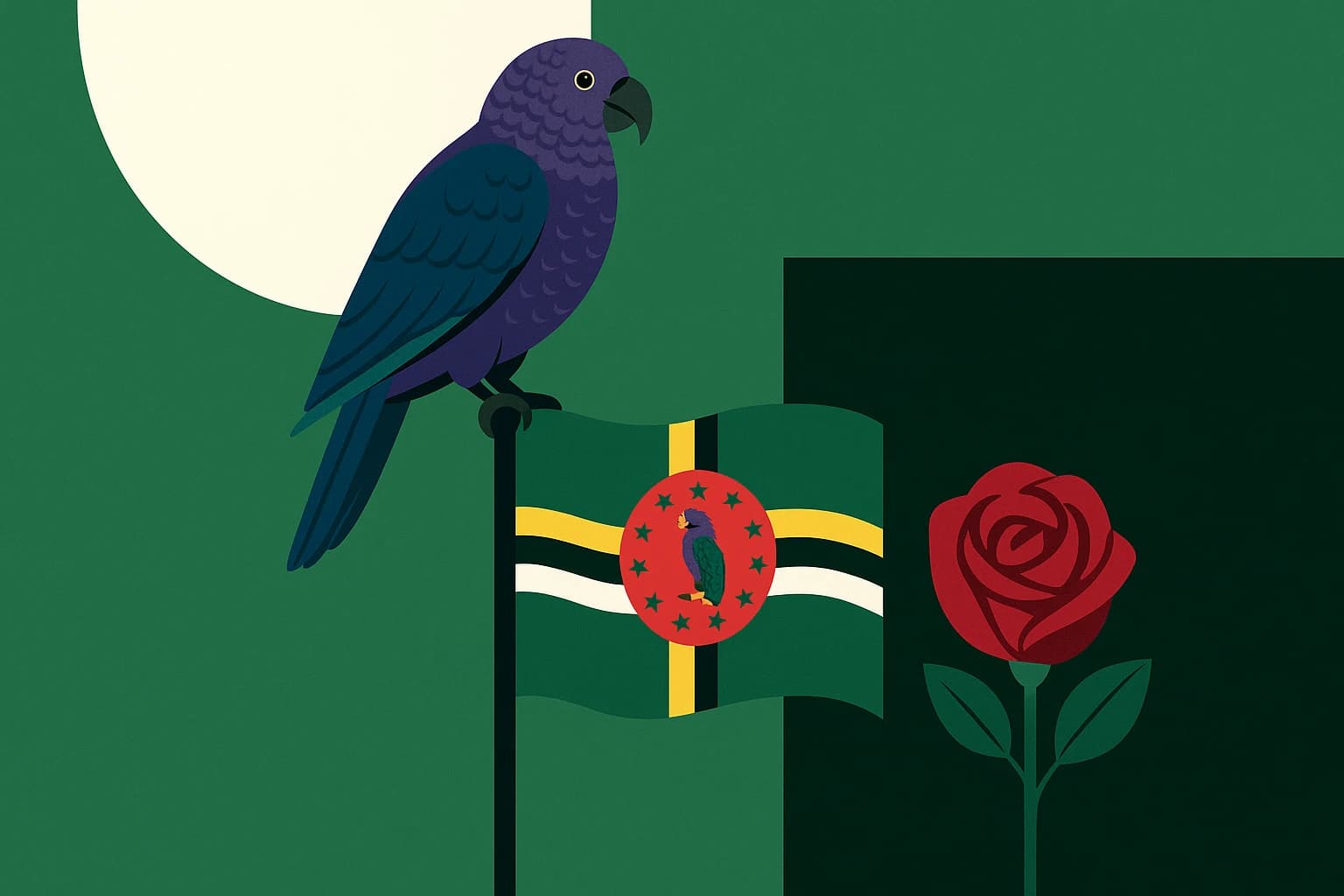
Vexillology is the study of flags, and it exists because flags are dense with information that almost nobody stops to read. A flag is visual shorthand for a country's history and values, worked out under real constraints, and once you know what the parts are doing it is hard to look at one the same way again. This guide covers the basics: design, colour, symbols, and how they vary by region.
What flag design is actually solving for
Flags are built around simplicity, because a complex image does not survive being flown. It has to read at a distance, in motion, at any angle, often in poor light. That pushes designers toward a small number of colours, a simple shape (rectangles dominate), and symbols chosen for legibility as much as meaning.
The usual test is whether a child could draw the flag from memory. It sounds glib, but it captures the real constraint: if the design cannot be reproduced roughly and still be recognized, it is doing too much.
What the colours usually mean
Colours are rarely chosen for looks alone. Red generally stands for bravery or revolution, blue for freedom or confidence, white for peace or purity, green for nature or fertility, yellow for wealth or energy, and black for power or determination.
None of these are rules, and plenty of flags use a colour for reasons of dynastic heraldry or simple availability of dye. But the associations are consistent enough to be a useful first guess. The green on the flag of Bangladesh, for instance, is read as both the country's landscape and an appeal for peace, which is fairly typical of how one colour ends up carrying two jobs.
The recurring symbols
A handful of symbols do most of the work across the world's flags. Stars usually stand for hope or ambition. Eagles stand for power and freedom. Olive branches stand for peace, and appear often enough that they have become almost a fixed phrase.
Then there are the emblems that belong to one country and nowhere else. Albania's two-headed eagle is one of those, a heraldic form with several centuries of history behind it.
Regional patterns
Flags cluster by region, because designs get borrowed from neighbours and from whoever was in charge last. The Americas lean heavily on stars and stripes. European flags favour crosses and plain colour schemes. Asian flags carry more ancient imagery. African flags tend toward strong colours and, in some cases, tribal icons.
Organizational flags follow the same logic. The African Union's green field and golden sun are read as continental unity and prosperity, which is exactly the kind of message a supranational body needs a flag to carry.
Flags change when countries do
Redesigns track shifts in ideology or sovereignty. Independence from a colonial power almost always produces a new flag, and so does a change of regime. Some flags stay put for centuries, and others get replaced twice in a lifetime.
South Africa's current flag is the clearest recent example: adopted to represent a post-apartheid country, and doing work the previous design could not have done.
Where to go next
Vexillology has an active amateur community. There are books, websites, and societies that hold conventions, and most of them are welcoming to people who turned up because one flag confused them. Start with the flags of countries you already know something about; the designs make far more sense once you have the history to hang them on.