A stripe is the cheapest thing a flag can do and one of the most durable. It reads at a distance, it survives being sewn badly, and it can be loaded with as much meaning as a country cares to put on it. Angola and Barbados show two very different uses of the same device.
Angola
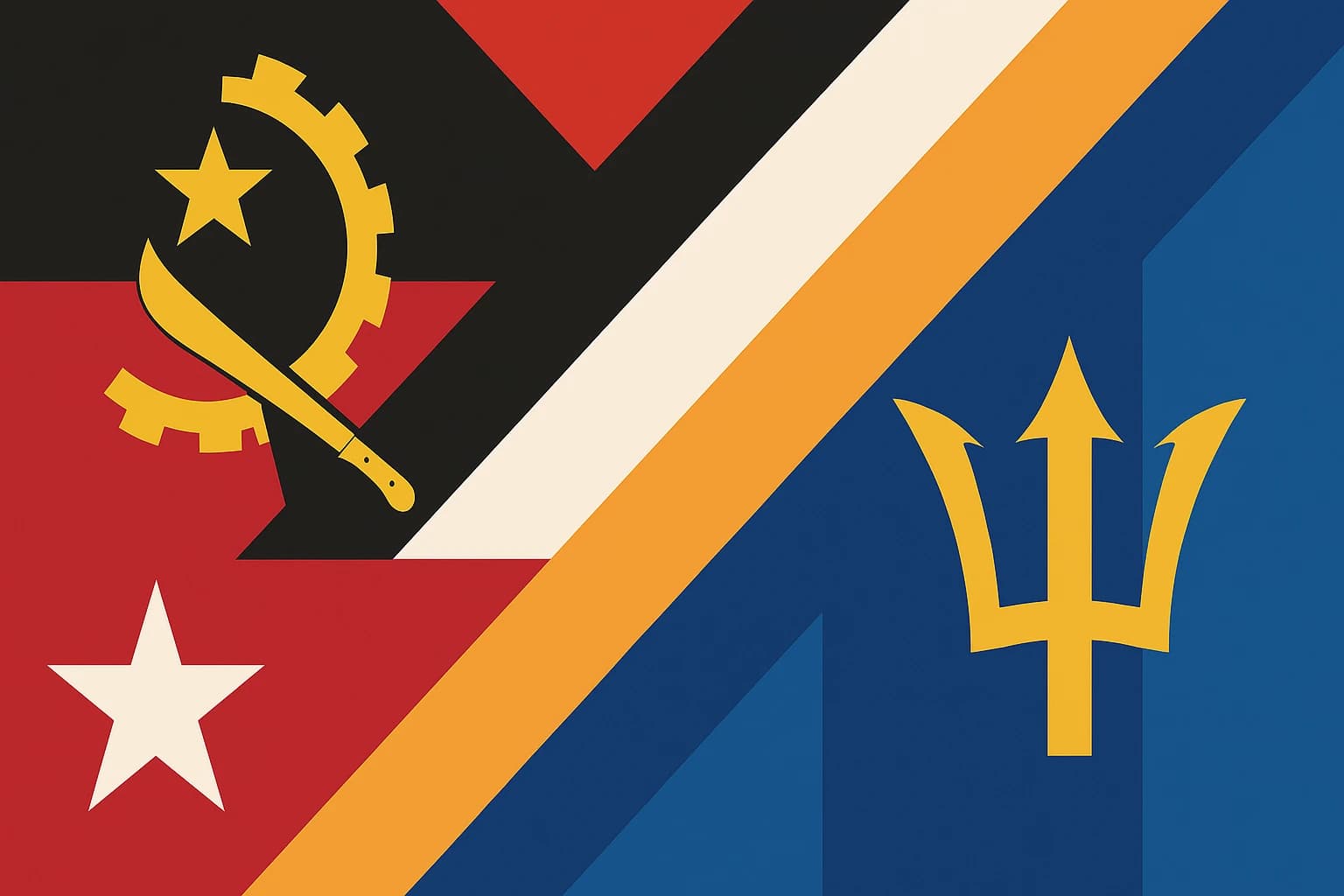
Angola's flag is red and black, with a golden gear and machete across the middle.
The red stripe is for the blood shed for independence and the black stripe for the African continent. The design came out of the end of colonial rule, and it does not soften that: the colors name the cost and the emblem names the work. It is a plain flag that carries a lot.
Barbados
Barbados uses deep blue and gold vertical stripes with a black trident in the center.
The stripes are the ocean and the island's golden sand. The trident is the part that matters: its shaft is broken, which marks the break from colonial ties. Barbados became independent in 1966 and the flag has been a fixture of Barbadian life since.
Stripes everywhere else
The pattern is close to universal. Germany's bands and Russia's are both instantly readable as national flags without any further explanation.
Simplicity is not the same as emptiness. Depending on the country, a set of stripes can mean unity or division, peace or war, and the design gives you no way of telling which without knowing the history.
The colors inside the stripes
Color does most of the talking. Blue is often tied to freedom, as in the United States flag, and red to revolutionary energy.
But the associations are not automatic. Colors get picked for political reasons as often as cultural ones, and a shade that means one thing in one flag can mean the opposite two borders away.
Designs do change
Flags get revised. A historical event adds a stripe or shifts a color, and the new version records what changed. Globalization has pushed flags towards a shared visual language while countries keep pulling them back towards their own histories. That tension is what most flag redesigns are actually about.