A flag is a claim before it is a decoration. Raising one asserts that this territory has a government, that the government answers to a people, and that the people will accept a single piece of cloth as their stand-in. Almost everything flags do culturally follows from that.
The pride part is mostly ritual, and the rituals are small. Children reciting a pledge. A ceremonial march. A flag raised at sunrise. Repeat those often enough and the design starts carrying the feeling rather than the argument, which is why people react to a flag long before they can explain what its colors mean.
Afghanistan, redrawn again and again
Afghanistan has changed its flag many times, and the changes track who was in charge: monarchies, empires, republics. Each version is a snapshot of a political settlement that did not last.
The black, red, and green bands stand for the dark past, the struggle, and hope. The emblem at the center, a mosque with a pulpit, is there for the place of Islam in Afghan life. That combination has survived several redesigns even as almost everything else about the flag moved.
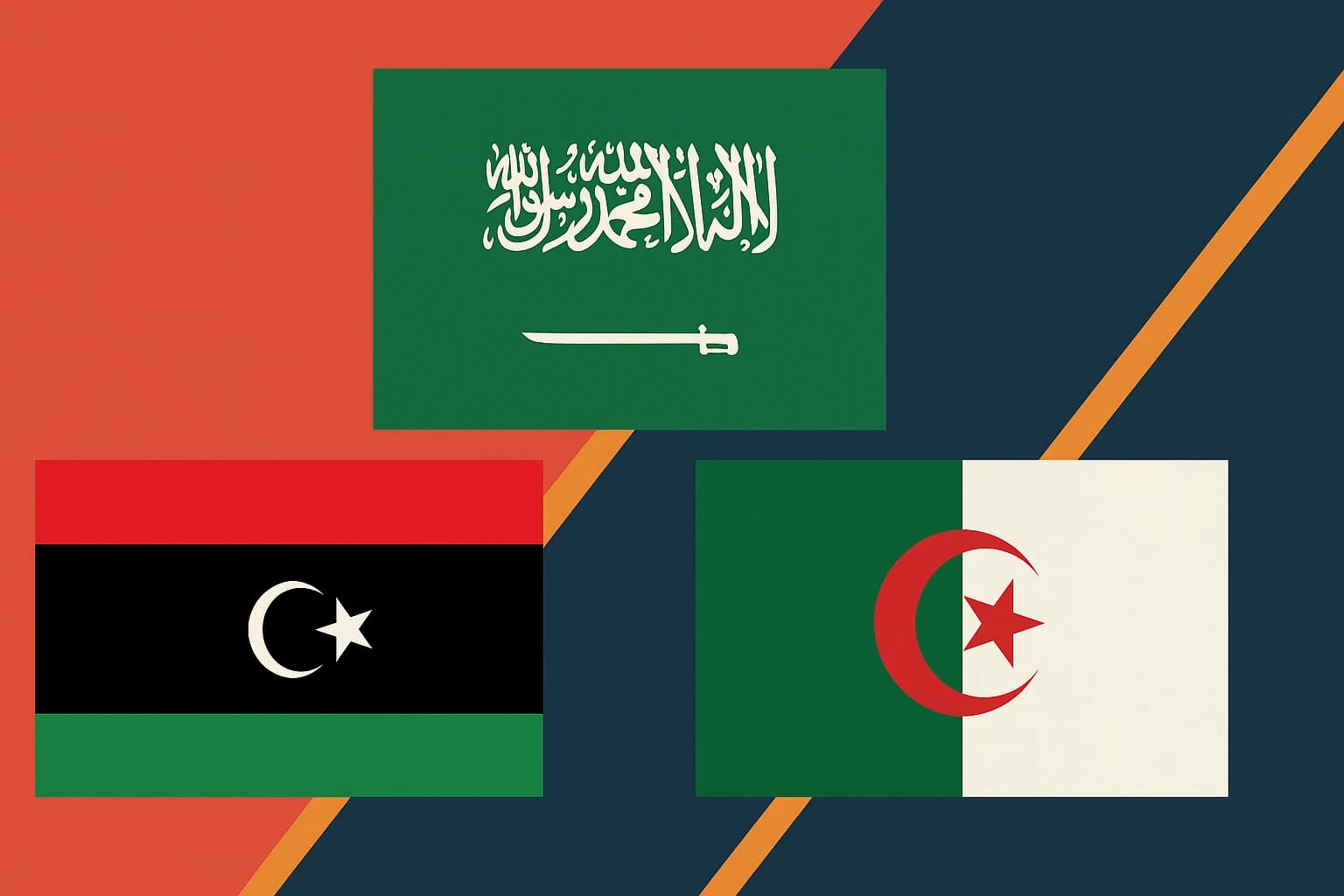
Algeria's crescent and star
Algeria's flag came out of the fight against colonial rule, and it has never really stopped being read that way.
Green and white stand for peace and prosperity. The crescent and star, in white, are there for Islamic faith. During the Algerian War of Independence the flag worked as a resistance symbol, which is the reason it reads less like a design decision than like a record of what the country went through to exist.
South Africa and Rwanda after the conflict
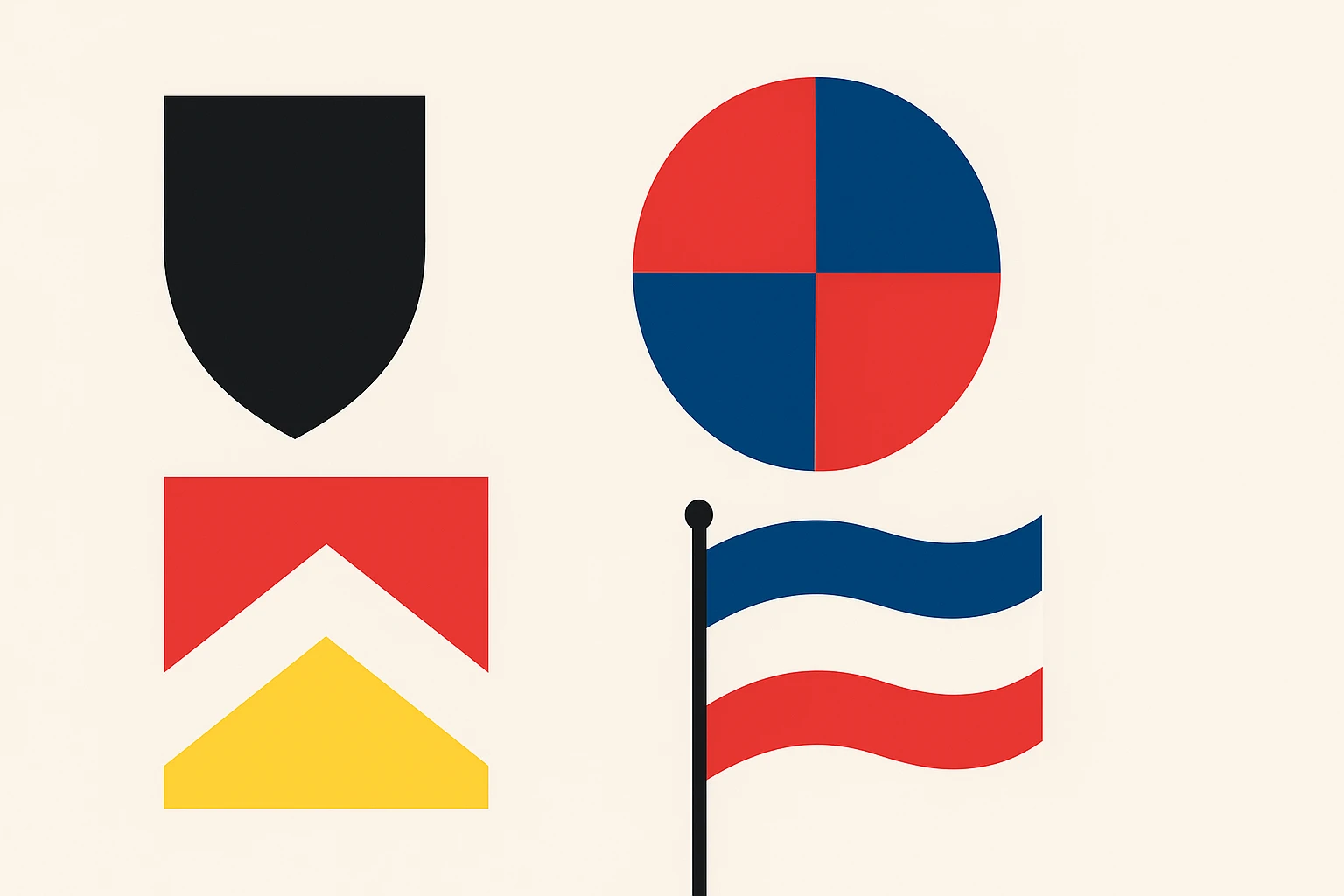
These two flags had a harder job than most: represent a country to people who had recently been on opposite sides within it.
South Africa's multicolored design stands for the unity of very different communities.
Rwanda's is about healing and reconciliation after a period of intense conflict.
In both cases the new flag arrived with a new political order and had to carry the claim that the order really had changed. A flag cannot make that true. It can make it visible, and repeated often enough, visibility does some of the work.
Flags that are still changing
Symbols move with the societies using them. Grassroots movements have pushed design changes meant to include communities the old flags left out, and current arguments about identity and inclusion are turning up in flag proposals the same way arguments about independence did two generations ago. A flag is never quite finished, it is just currently agreed on.
Vexillology
Vexillology is the study of flags: their history, their symbolism, and their sociopolitical significance. There are societies devoted to it and a fair amount of published material for anyone who wants to go further. It is a more interesting field than the name suggests, largely because flag design is where political arguments get compressed into two or three colors and a shape, and the compression is where you can see what a country thought it was doing.