Most modern national flags are downstream of a medieval European system for telling armored men apart on a battlefield. Heraldry gave Europe a visual code for lineage and military affiliation, and that code, along with its assumptions about what colors mean, survives in the flags flying over parliaments today.
Where heraldry came from
Heraldry began as a practical problem. Knights in armor were unidentifiable, so they needed marks that could be read at a distance and in motion. What started as identification hardened into a formal code of arms, with rules about which charges and colors a family could use and how they were inherited.
The vocabulary was small and repeatable. Lions stood for courage, eagles for power, the fleur-de-lis for purity and light. Banners carried those symbols into battle, announcing the bravery of a family or the standing of a commander before either had a chance to prove it.
What the colors were supposed to mean
Heraldic color carried assigned meanings alongside the charges. Red meant bravery and valor. Blue meant loyalty and trust. Green meant hope and joy. Those readings were conventions rather than facts about the colors themselves, but they were consistent enough within European heraldry to function as a shared language, and the same associations turn up again and again in the official explanations modern states give for their flags.
Heraldic patterns in national flags
Heraldic layouts did not stay in the medieval period. They moved into flag design, and the transition often happened at exactly the moments when a nation needed to declare something: a revolution, an independence, a change of regime.
Afghanistan is the clearest example of a flag that keeps being rewritten. It has changed repeatedly, tracking the country's political upheavals and the competing cultural influences behind them.
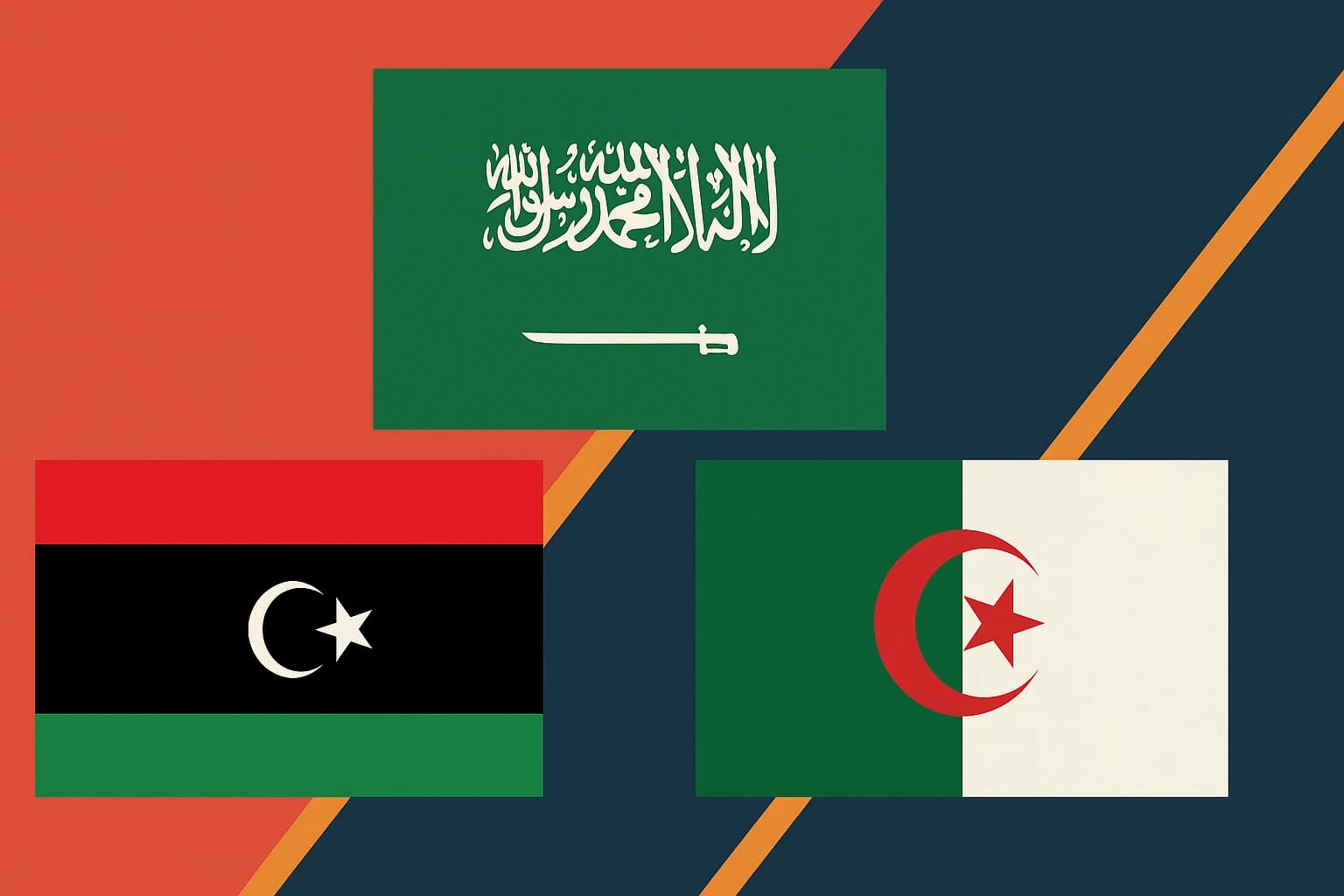
Algeria's flag works differently. Its design draws on Islamic visual tradition and on the country's revolutionary history, holding both in a single emblem.
Flags of former colonies frequently show the same layering, with pre-colonial symbols sitting alongside forms introduced by colonial rulers. The United Kingdom's own flag is a compound of separate national crosses, which makes it a heraldic document as much as a national one.
When flags get redesigned
Redesigns are rarely just design arguments. They surface a question about what a country now wants to say about itself, and older symbols can carry associations that make them hard to keep.
South Africa is the obvious case, having changed its flag to match a changed political reality.
Those debates tend to be loud because a flag is one of the few pieces of national iconography that everyone sees and everyone feels entitled to argue about. The heraldic inheritance is part of what makes the argument possible: the symbols already carry meanings that people can dispute.