In 2014 a Malaysian flag was accidentally flown upside down at a Southeast Asian sporting event, which turned it into the flag of Indonesia. Social media erupted, diplomats issued statements, and the incident made international headlines. What tends to get lost is that Indonesia's flag is not only confused with Malaysia's. It is pixel-for-pixel identical to Monaco's. Monaco has been flying theirs since 1881; Indonesia argues theirs dates to the 13th century. The dispute has never been formally resolved.
That small absurdity opens a larger question. Red, white and blue is the most common color combination among the world's 195 sovereign flags, appearing in roughly 30% of them. Americans tend to assume the combination belongs to the Stars and Stripes, to liberty and July Fourth fireworks, but the palette predates the United States by centuries and its meanings fracture depending on which border you are standing behind.
Three flags share those colors and none of that mythology: Indonesia's Sang Saka Merah-Putih, born from a medieval Javanese empire; the Netherlands' Prinsenvlag-turned-tricolor, which accidentally invented the template France made famous; and Croatia's checkerboard triband, whose shield survived centuries of appropriation.
The world's most common color scheme
Around 30% of the world's sovereign flags use red, white and blue, more than any other trio. Some of the reasons are practical. Red and blue dyes were historically available and durable, and white, the color of undyed cloth, was the cheapest base material available. Outfitting a navy or an army in the 16th century meant reaching for what was affordable and held up in the rain.
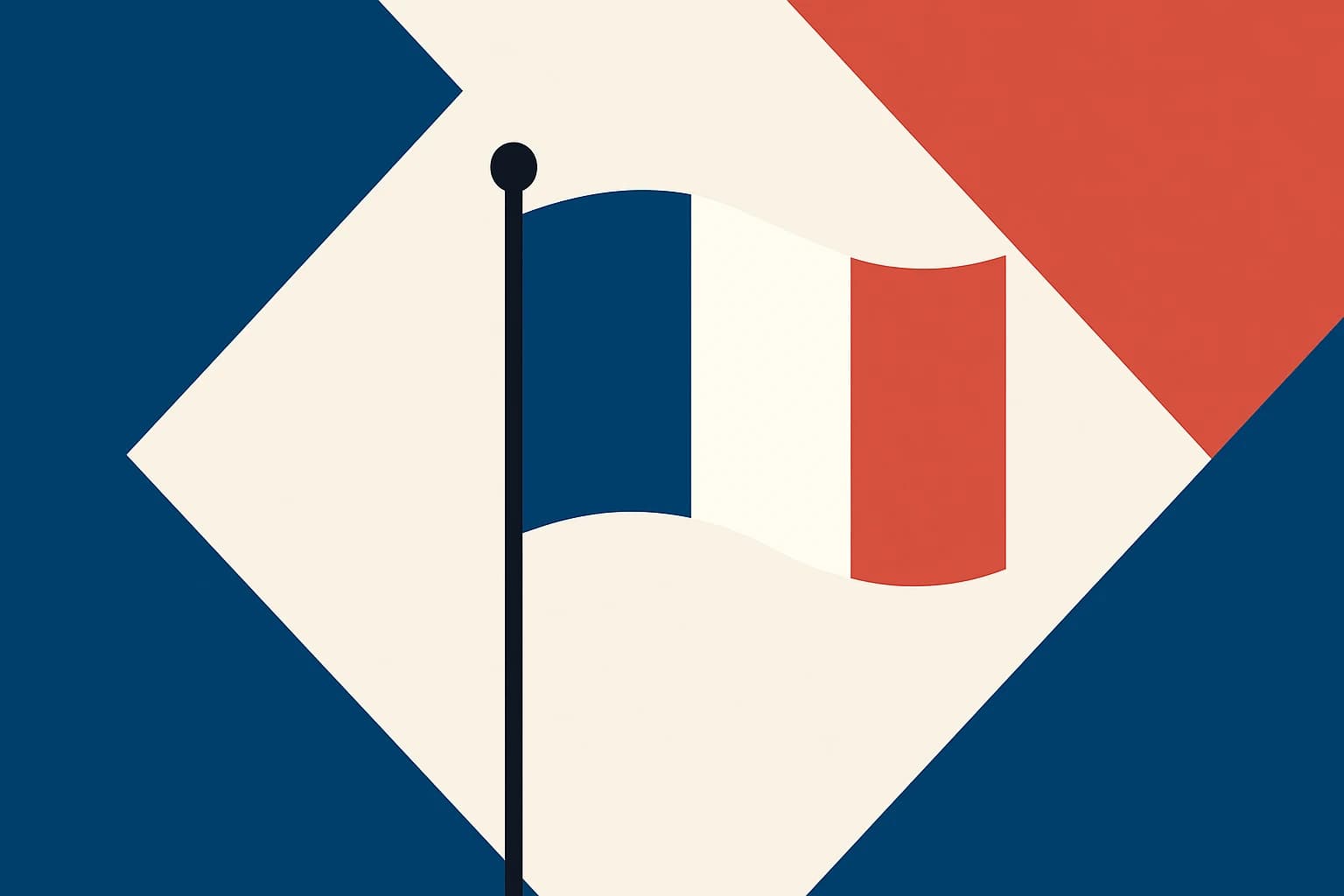
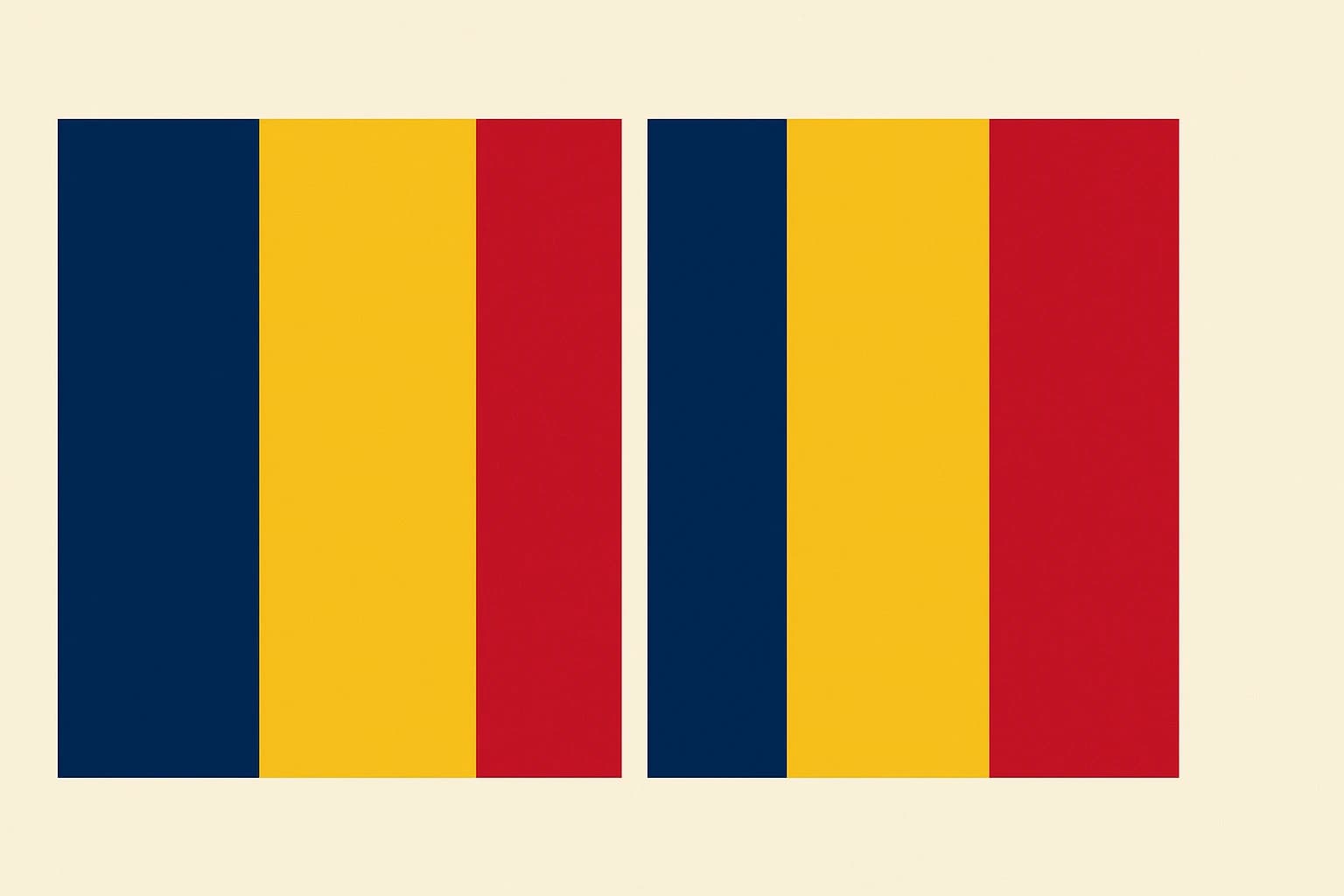
Then came the tricolor effect. After the French Revolution popularized the vertical tricolor in 1794, dozens of nations adopted the format as shorthand for republican ideals. Italy followed in 1797, Ireland in 1848, Chad in 1959. But plenty of red-white-blue flags have nothing to do with France, and many predate it by centuries.
Flag confusion is one of the most searched vexillology topics online. Google Trends data consistently shows spikes for "Indonesia vs Monaco flag," "Netherlands vs Luxembourg flag," and "France vs Netherlands flag" during the Olympics and the FIFA World Cup. People notice, get confused, and go looking.
Identical colors create an illusion of shared meaning. The stories behind these flags are built on entirely different histories of empire, revolt and reclaimed identity.
Indonesia's Sang Saka Merah-Putih
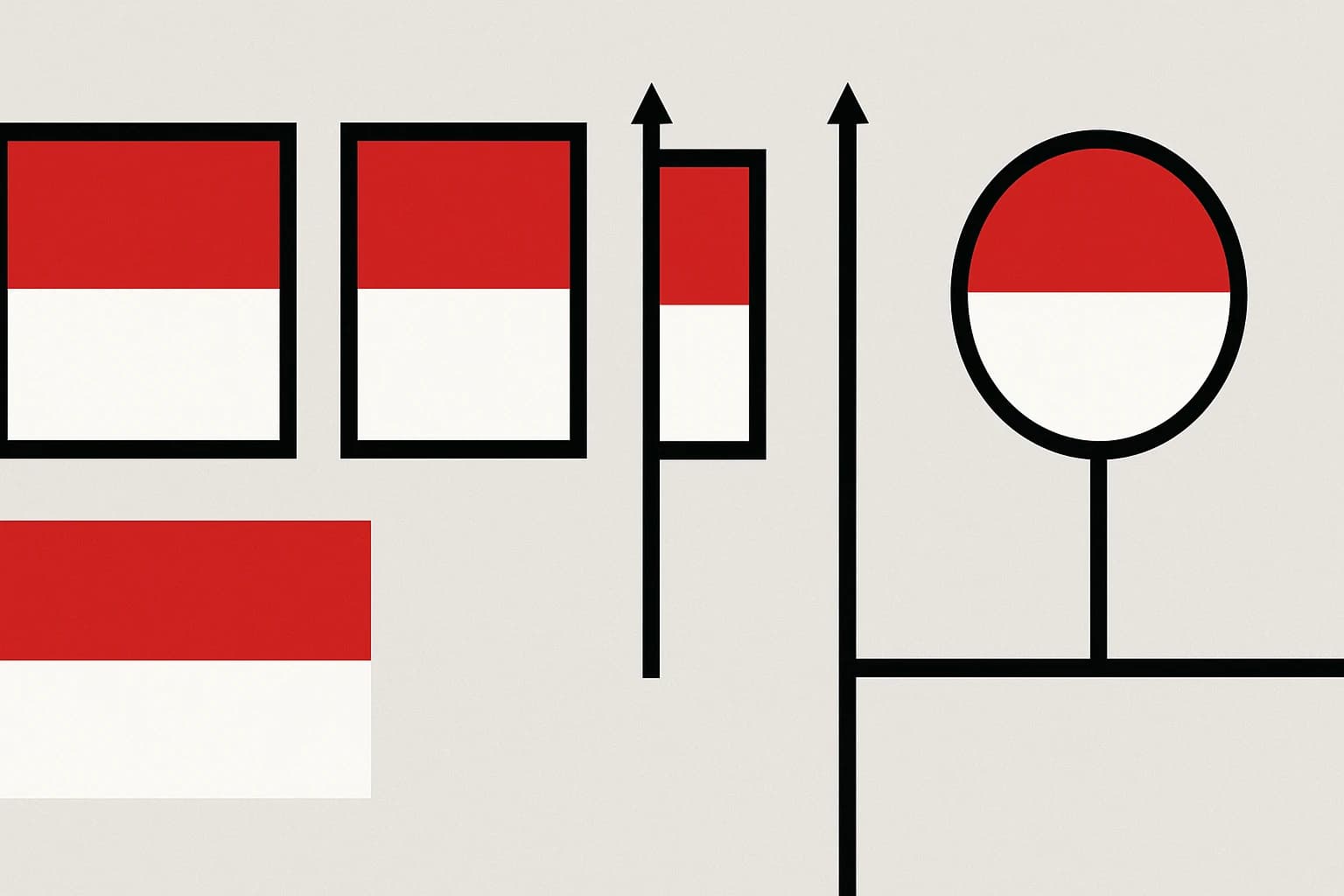
Indonesia's flag is about as simple as a flag gets: a horizontal bicolor, red over white. It is called Sang Saka Merah-Putih, "The Sacred Red and White," and its origin reaches back long before any European set foot in Southeast Asia.
The Majapahit Empire (1293-1527) was the last major Hindu-Buddhist kingdom in Southeast Asia, and it flew red-and-white banners across an archipelago covering modern-day Indonesia, Malaysia and parts of the Philippines. The colors carry specific meaning in Javanese and broader Austronesian culture: red for physical courage and the human body, white for spiritual purity and the soul. That dualism sits in animist and Hindu-Buddhist cosmologies and predates European contact entirely.
The modern flag was first raised on 17 August 1945, at Indonesia's declaration of independence from Japan and the Netherlands. The flag raised that day, the Bendera Pusaka (Heritage Flag), was reportedly sewn by Fatmawati, wife of founding president Sukarno. It was flown each Independence Day until 1968, when the fabric had become too fragile and it was retired.
Then there is the Monaco problem. Monaco's flag, adopted in 1881 from the heraldic colors of the Grimaldi dynasty, is identical in design. The only technical difference is the official aspect ratio: Monaco uses 4:5, Indonesia uses 2:3. Indonesia has protested, but no international body governs flag uniqueness, so the two nations simply coexist with the same banner.
Poland adds another layer with the same colors inverted, white over red.
The three of them illustrate something vexillologists have long known: the simplest possible flag designs inevitably produce doppelgängers.
The Dutch tricolor, the accidental template
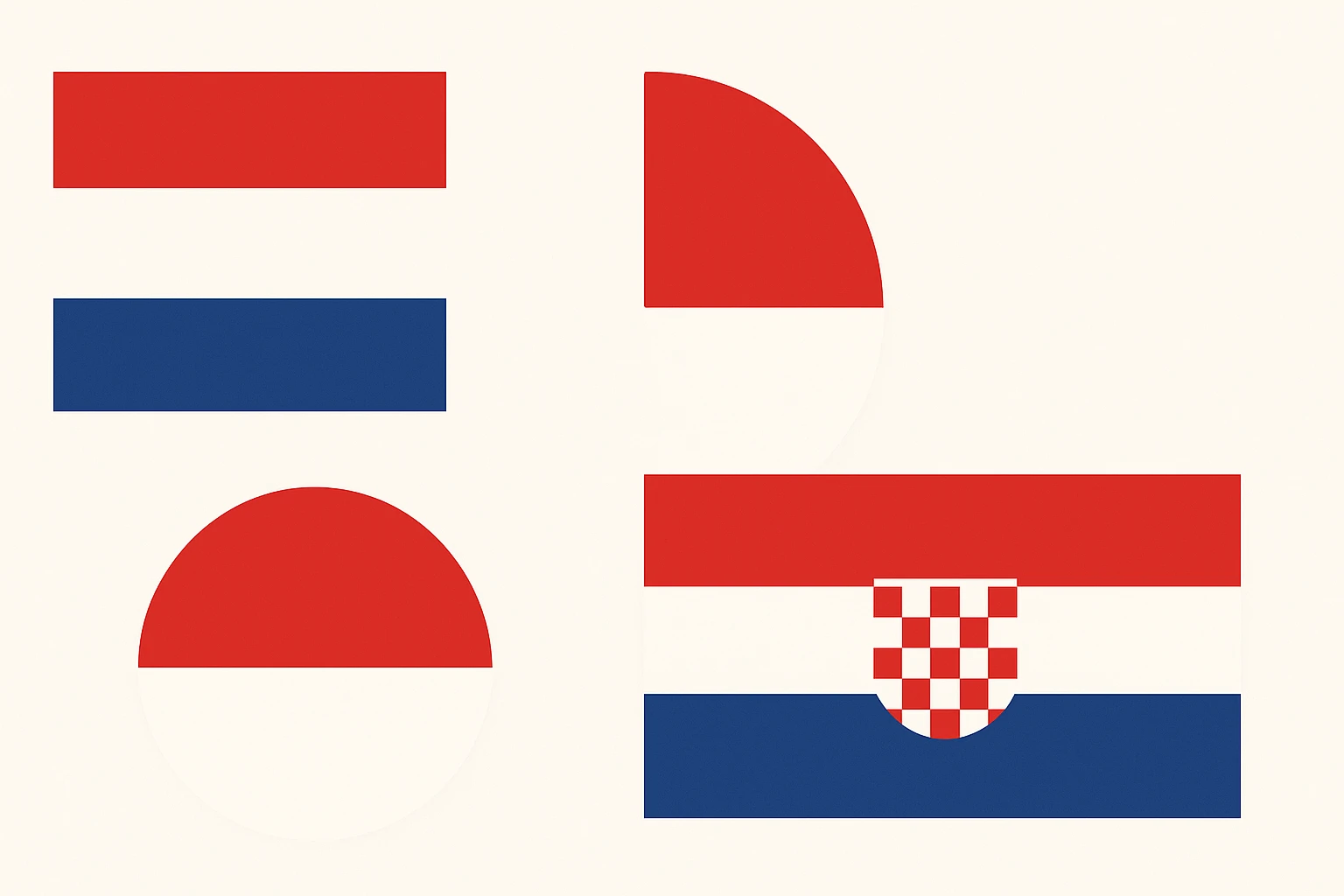
The Dutch flag, a horizontal tricolor of red, white and blue, is widely considered the oldest tricolor in continuous use. It began as the Prinsenvlag ("Prince's Flag"), an orange-white-blue banner flown by William of Orange during the Dutch Revolt against Habsburg Spain from 1568.
The orange stripe shifted to red over the course of the 17th century, and the reasons are still debated. Some historians point to the instability of orange dye, which faded toward red, especially on ships exposed to salt and sun. Others cite political distancing from the House of Orange during periods of republican governance. By 1660 the red-white-blue version was standard, though the Dutch government did not formally codify it until 1937 under Queen Wilhelmina, nearly three centuries after people started using it.
The tricolor's influence is easy to underrate. It directly inspired the Russian flag: Peter the Great worked in Dutch shipyards in 1697 and adapted the colors into a vertical arrangement.
The Russian flag in turn produced the pan-Slavic color tradition visible in Serbia, Slovakia, Slovenia and the Czech Republic. France's tricolor, often credited as the original, came later in 1794 and drew on both the Dutch and American models. The family tree is messier than the usual story suggests.
The confusion is real and ongoing. The Dutch flag gets mistaken for Luxembourg's, which uses a lighter shade of blue, and for France's, which is vertical rather than horizontal. During the 2024 Paris Olympics, social media posts tagged the wrong nation repeatedly and broadcasters swapped graphics.
A flag born from revolt against empire became the visual template for dozens of post-colonial independence flags, including, indirectly, those of nations the Dutch Empire colonized.
Croatia's šahovnica
Croatia's flag uses the same red-white-blue tricolor as the Netherlands, in the same horizontal arrangement, but the central coat of arms makes it unmistakable: the šahovnica, a red-and-white checkerboard shield crowned by five smaller shields for Croatia's historic regions.
The checkerboard motif dates to at least the 10th century. A popular and probably apocryphal legend has Croatian King Stjepan Držislav winning his freedom from a Venetian captor by beating him at chess and adopting the chessboard as his royal emblem. The earliest verified use appears on a stone tablet from around 1059. The chess story may be nonsense, but the symbol stuck for a thousand years.
It also has a dark chapter. The Ustaše, Croatia's World War II fascist puppet regime allied with Nazi Germany, put the checkerboard on their flag and started it with a white square in the upper-left corner rather than the traditional red. That one detail, white-first versus red-first, became enormously significant. The association haunted the symbol for decades, and Yugoslav-era Croatia was not permitted to display it prominently.
When Croatia declared sovereignty in 1991, the new government deliberately adopted the šahovnica with a red first square to distinguish it from the Ustaše version, and added the five-crown arrangement above the shield to emphasize continuity with medieval Croatian statehood. The claim being made was that the symbol belongs to the 10th century rather than the 20th.
The checkerboard is still contested in some contexts, and far-right groups occasionally co-opt it. For most Croatians, though, its defining modern moment was the 2018 FIFA World Cup, where a nation of four million people reached the final in red-and-white check jerseys and put the emblem on every screen in the world.
The illusion of shared meaning
When Americans see red, white and blue, they think "freedom" or "democracy." Indonesia's red and white encode a pre-colonial Javanese cosmology of body and soul. The Dutch tricolor memorializes a Protestant revolt against a Catholic empire. Croatia's palette is a pan-Slavic political statement layered over medieval heraldry. Same colors, different vocabularies.
Color symbolism in flags is also almost always assigned after the fact. The United States did not officially ascribe meanings to its flag's colors until Charles Thomson's 1782 description of the Great Seal, which gave white for purity, red for valor and blue for justice. Most nations' official color meanings were codified decades or centuries after the flag was first flown. The colors came first and the mythology followed.
What actually distinguishes these flags is their genealogy. Who designed them, which empire they were resisting, which earlier flag they were quoting or rejecting. Indonesia's flag quotes Majapahit to assert pre-colonial sovereignty. Croatia's coat of arms quotes medieval kingship to leapfrog the fascist and communist eras. The Dutch flag quotes nothing at all; it drifted from orange to red through chemistry and politics.
Vexillologists call this convergent design: unrelated cultures arriving at similar visual solutions for entirely different reasons. Biologists use the same word for eyes, which evolved independently in vertebrates and octopuses. They look alike and work alike, but the underlying structures have nothing in common.
Why flag confusion carries weight
Flag mix-ups are not just trivia. In 2017 the Indonesian government formally complained after a SEA Games event in Malaysia printed the Indonesian flag upside down in a souvenir guidebook, turning it into a Polish flag. The hashtag #ShameOnYouMalaysia trended across Southeast Asia and ambassadors got involved, all over a printing error.
At international sporting events, broadcast graphics routinely swap the Netherlands for Luxembourg, or run France's vertical tricolor when the horizontal Dutch flag is intended. The errors reinforce a sense that small or non-Western nations are interchangeable, and people notice.
Emoji flags have made all of this more visible. The Indonesia and Monaco emoji flags are distinguishable only by their Unicode labels, not by their pixels. In 2026, with digital communication carrying much of both diplomacy and fandom, the gap between a flag's visual simplicity and its historical complexity is wide.
So the next time red, white and blue reads as one particular nation, it is worth remembering that at least 55 others fly the same colors, each for reasons that have nothing to do with anyone else's.