Quebec's Flag Went Up Before the Vote: How Duplessis Beat a Motion to the Flagpole
Julio Song · · 8 min read

At 3 p.m. on 21 January 1948, a blue flag with a white cross and four white lilies went up the central tower of Quebec's Parliament Building. It took the place of the Union Jack. Nobody in the chamber below had voted for it.
That afternoon, the Legislative Assembly was due to debate a motion asking for a Quebec flag. Premier Maurice Duplessis got there first. His cabinet had made the flag official by decree that morning, and by the time he told the house, it was already flying over his head.
So the fleurdelisé began its official life as a procedural ambush. The design was much older than the decree. It started 46 years earlier, on a pole outside a parish priest's house in a small Quebec village.
 QuebecView flag →
A priest, a presbytery and a pole
The village is Saint-Jude, in the Montérégie region. In 1902 its curé was Elphège Filiatrault, and he wanted French Canadians to have a national flag of their own. The Quebec government's 2018 heritage notice says he designed it himself and a local craftsman sewed it. On 26 September 1902 it went up the flagpole at his presbytery.
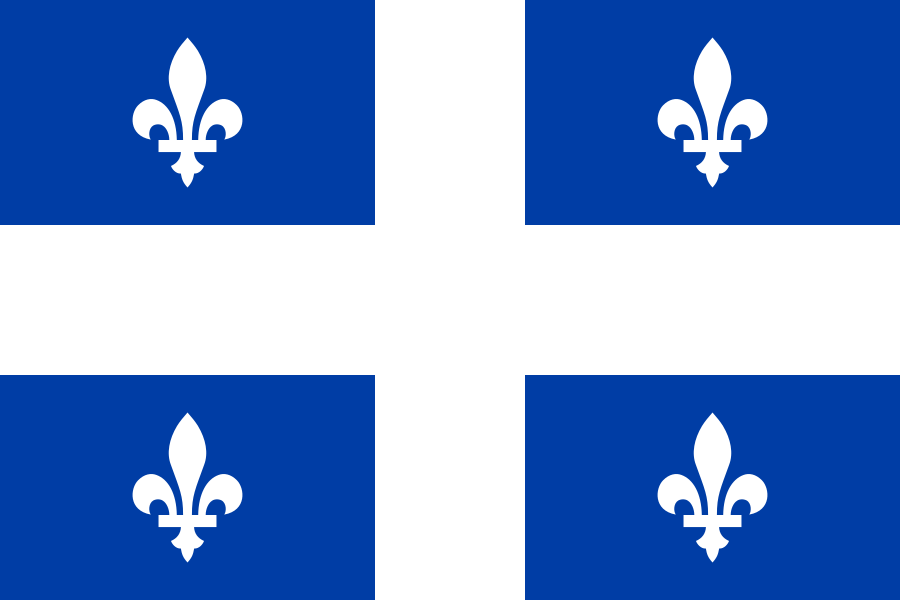
He called it the Carillon. It had a white cross on an azure field, with a white fleur-de-lis in each quarter. Put it next to today's flag and you'll spot one difference straight away. Filiatrault's lilies were tilted, with their tips pointing in toward the centre.
The original cloth went missing for decades. It turned up again in 1955 and now sits in the Centre d'histoire de Saint-Hyacinthe. On Flag Day in 2018, Quebec's culture minister classified it as a heritage object under the province's cultural heritage law, and the government called it the direct ancestor of the fleurdelisé.
The banner nobody has pinned down
Why "Carillon"? The name points back to one of the last French victories in North America.
On 8 July 1758, at Fort Carillon (today's Ticonderoga, in New York State), a French force of nearly 4,000 under the Marquis de Montcalm beat back a British army of about 16,000 led by James Abercrombie. The account on Histoire sainte du Canada calls it one of the bloodiest battles of the war.
About a century later, a pale blue banner with lilies in its corners resurfaced in Quebec City. People believed it had flown over the French lines at Carillon. Québec City's official tourism history dates the rediscovery to 1848. The banner became a relic, carried in nationalist processions through the capital.
Filiatrault borrowed its blue field and its inward-pointing lilies. Then he added the white cross that the old French army and navy had flown.
The weak link is the battle itself. The connection between the banner and Montcalm's victory rests on oral history. In September 2022, Dave Noël gave a talk at Montreal's Pointe-à-Callière museum on that exact question: is the story tying the banner to the battle authentic? So part of the origin story of Quebec's flag is a tradition about a piece of cloth, and that tradition is still up for debate.
That doesn't make the flag a fake. It does mean you should hold the 1758 story a little more loosely than the 1902 one, which is on record.
Then somebody added a heart
The Carillon caught on. Within a year it had a rival that looked almost the same.
In 1903, according to Flags of the World, an image of the Sacred Heart of Jesus went into the middle of the white cross. The result was called the Carillon-Sacré-Coeur. FOTW notes that many people disliked the religious addition, and Filiatrault was one of them.
His objection didn't stop it. The Québec City history says the Sacred Heart version dominated for several decades. On 11 November 1926, the Quebec government recognised the Carillon-Sacré-Coeur as the flag of the Société Saint-Jean-Baptiste.
The pushback grew in the 1930s. In 1935 the nationalist review L'Action nationale argued for dropping the religious emblem and going back to a plain fleur-de-lis flag. By the 1940s, patriotic groups were running a hard campaign for the Carillon design, and the heart was on its way out.
The motion Duplessis outran
Ottawa forced the question. In 1946 the Quebec assembly asked the federal government for a distinctly Canadian flag. Radio-Canada's archive history records that Ottawa refused to give up the Red Ensign, which carried the Union Jack in its corner. With that door shut, Quebec nationalists turned to a flag for the province.
René Chaloult took the argument into the chamber. He sat as an independent for Québec-Comté. He had first won a seat for Duplessis's Union nationale in 1936 and left the party a year later, as his Wikipedia biography sets out. On 19 November 1946 he tabled a motion to give Quebec a distinctive flag.
The motion sat for more than a year. It finally came up for a vote on 21 January 1948. Here is how that day went:
- In the morning, Duplessis's cabinet approved a decree giving the fleurdelisé the status of "drapeau officiel du Québec", in the words of the Quebec government's flag history.
- At 3 p.m. sharp, by the government's own account, the flag went up the central tower.
- When Duplessis announced the decision in the house, the flag was already flying, Radio-Canada notes.
Put yourself in Chaloult's seat. His motion asked the government to act. The government acted, a few hours before the debate. Duplessis took the credit for a flag an independent had spent fourteen months pushing, and the members never got their vote that day.
There's a stranger footnote. The English Wikipedia article on the flag says the banner raised that afternoon was a Carillon with tilted lilies, because a flag in the new upright pattern wasn't available until 2 February. If that's right, the first fleurdelisé over Parliament was the old parish design from Saint-Jude.
Straightening the lilies
The decree changed one thing about Filiatrault's flag. It stood the lilies up.
Québec City's tourism history says the lilies were straightened to follow the rules of heraldry. The official blazon, as the government gives it, makes no mention of any tilt: "d'azur à la croix d'argent cantonnée de quatre fleurs de lys du même". In English, that's azure, a cross argent between four fleurs-de-lis of the same.
Each element in that line has a long history in Quebec. The government's 2026 Flag Day release traces the lily to the cross Jacques Cartier raised at Gaspé. It traces the blue field and white cross to the square ensigns French merchant ships flew in Samuel de Champlain's time.
A few practical details, if you ever need to draw one:
- The official proportions are 2:3, per Wikipedia's summary of the flag. A 1:2 version is common because it matches the Canadian flag flying beside it.
- The official blue is Pantone 293. Lighter blues turn up all the time on unofficial copies.
- Quebec law gives the fleurdelisé precedence over other flags on provincial buildings.
One botanical argument has never gone away. Radio-Canada points out that Quebec botanists say the flowers on the flag are irises, not lilies. The name has stayed put all the same. Nobody flies a "fleurdirisé".
 FranceView flag →
Paperwork after the fact
The decree left a gap. The elected assembly had never approved the flag. It closed that gap two years later: according to Wikipedia, legislation governing the flag passed on 9 March 1950.
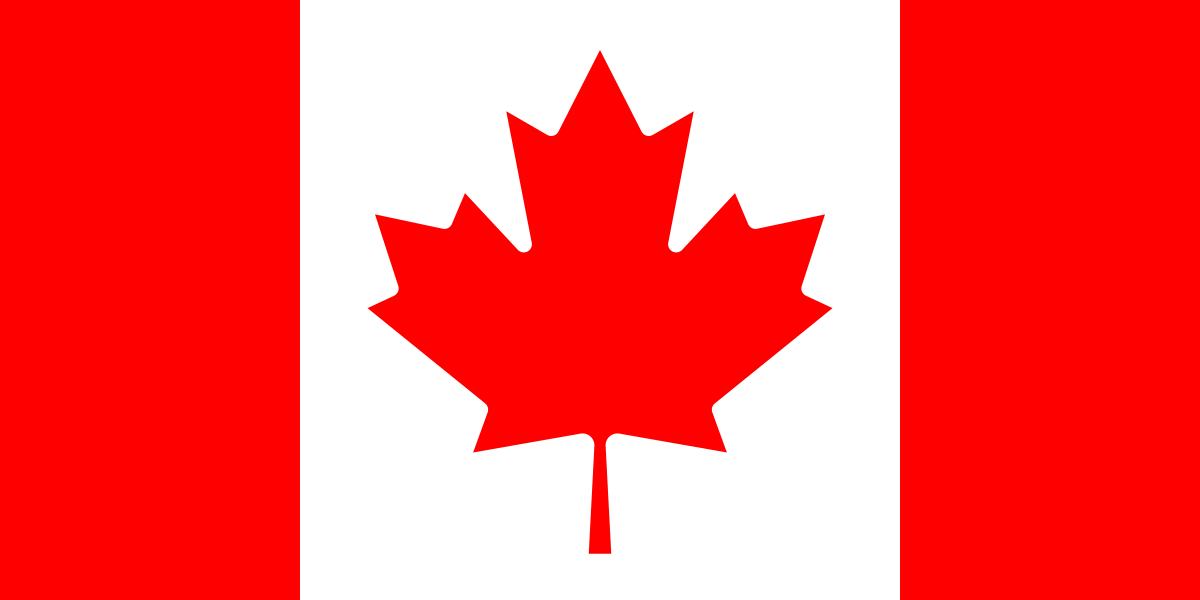
The rest of Canada waited longer. The maple leaf flag came 17 years after Quebec's. Canadian Heritage records that Queen Elizabeth II proclaimed it on 28 January 1965, and it was raised on Parliament Hill on 15 February. Until then, Canada flew the Union Jack and the Red Ensign.
 CanadaView flag →
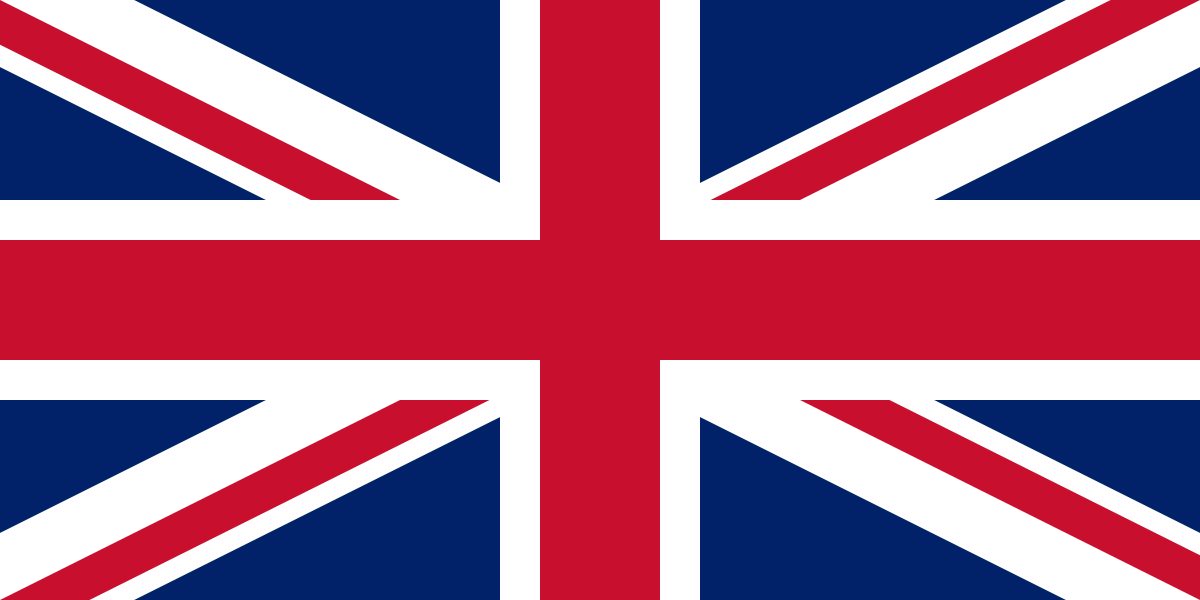 United KingdomView flag →
The flag's popularity moved with politics. Radio-Canada's archive cites Montreal manufacturers who reported that retail sales of the fleurdelisé rose 50 percent after 15 November 1976, the day the Parti Québécois first won enough seats to form the government. Two years later, the Société Saint-Jean-Baptiste called for an official flag day.
Quebec took its time with that request. Flag Day on 21 January became official by decree in 1998, for the flag's 50th birthday. In 2001, a survey by the North American Vexillological Association ranked the fleurdelisé the best provincial or territorial flag in Canada, as Wikipedia reports.
A tidy flag from an untidy process
Look at the sequence again. A parish priest designs a flag in 1902, borrowing from a banner whose battle story is still argued over. A Sacred Heart goes onto it a year later, and that version leads for decades. Nationalists spend the 1930s and 1940s pushing the heart back out. An independent member forces the question in 1946. Then the premier adopts the flag by cabinet order on the morning of the vote, and the legislature signs off two years later.
None of those steps was neat. The result is one of the simplest designs in North America: a cross, four lilies, two colours.
Next time you see the fleurdelisé, think of the tower at 3 p.m. on a January afternoon in 1948, with a flag already up there and a debate below that had nothing left to decide.
Julio Song
Writer
Julio is a staff writer at FlagDB. He studied Mathematics at the University of Madrid and has a passion for vexillology.
More from Julio Song →