The Flag of Quebec
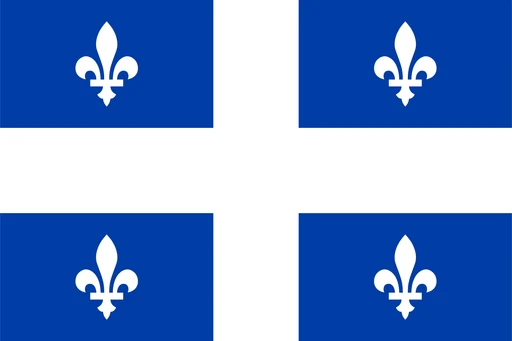
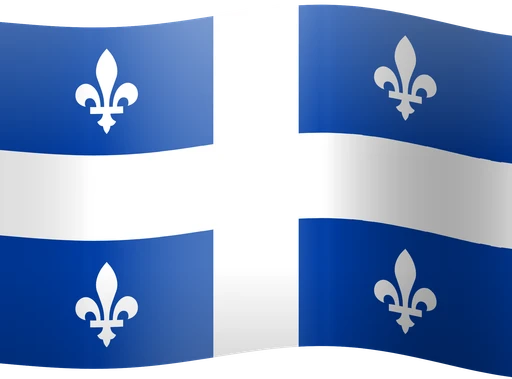
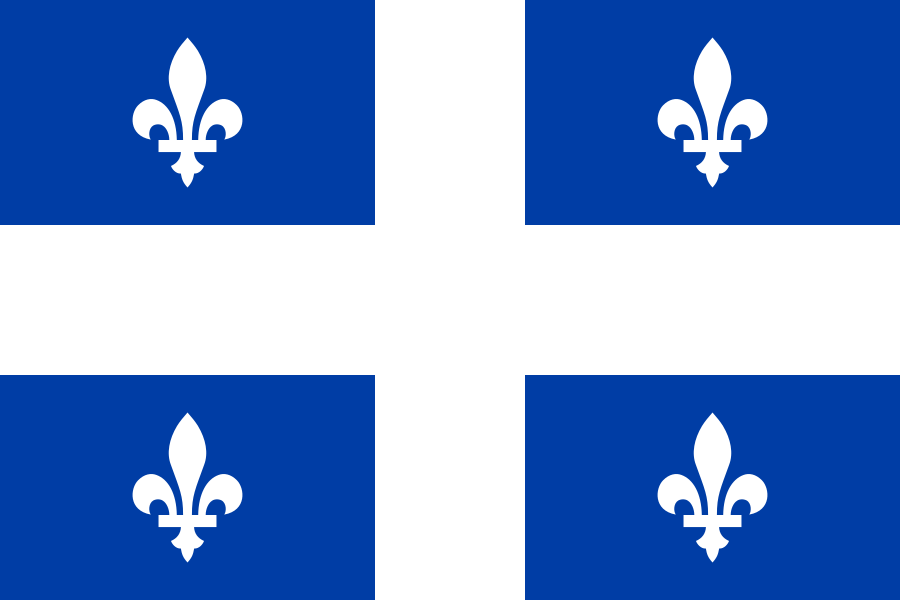
The flag of Quebec, called the fleurdelisé, is a white cross on a blue field with a white fleur-de-lis in each of the four quarters. The cross echoes the white-on-blue flags of French ships. The lilies recall the French crown and, in Catholic tradition, the Virgin Mary. The blue is Pantone 293, a shade the government fixed in 2004. Under provincial law the flag is the national emblem of Québec, and it outranks any other flag flown beside it. Its proportions are three by length and two by width.
The flag of Quebec carries a white cross and four white lilies on a field of blue. Quebecers call it the fleurdelisé. It looks old, and parts of it are. Its ancestors fly in French naval flags of the 1500s and on a banner from 1758. Yet it has been the official flag of the province only since 21 January 1948, and the story of how it got there involves a rural priest, a persistent independent member of the Assembly and a cabinet order drafted in a few hours.
What the law says it looks like
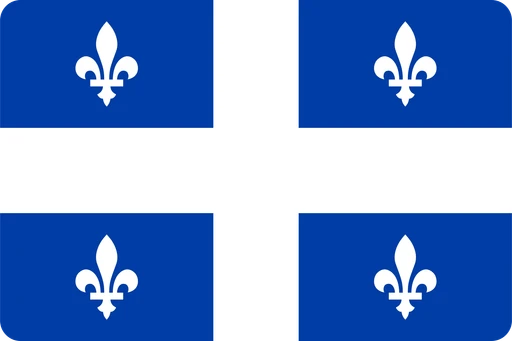
Quebec is unusual in writing the flag's design into statute. Section 1 of the Act respecting the flag and emblems of Québec, assented to on 5 November 1999, describes it as "a white cross on a blue field, with a white fleur-de-lis in each canton" or, in heraldic terms, "azure, a cross between four fleur-de-lis argent." The same section sets the proportions at three by length and two by width.
The Act does not name a shade of blue. That came later. A flag reference site reports that the government prescribed Pantone 293 in 2004, after critics said the flag had long been flown in a blue that was too light. The same source gives the layout as 10 units, 4 units and 10 units across, and 6, 4 and 6 down, with each lily four units high. The master image on this page follows that grid.
A priest, a banner and a parish house
The ancestor is the Carillon banner. According to the parish history of Saint-Jude, a sky-blue banner with four silver lilies in its corners flew over the French camp at Carillon in 1758. After the British took Quebec in 1760 the French colours vanished and the Union Jack replaced them. In 1832 the Patriote committees chose a green, white and red tricolour. It became the flag of the rebellions of 1837 and 1838, then was dropped because it sounded too revolutionary.
In September 1902, the Abbé Elphège Filiatrault, parish priest of Saint-Jude near Saint-Hyacinthe, hoisted a flag he had made himself over his rectory. It was blue, with four lilies tilted so their points aimed at the centre. People welcomed it. In 1903 a Sacred Heart ringed with maple leaves was added at the middle, a change Filiatrault himself disliked. In 1926 the legislature assigned that version to the Société Saint-Jean-Baptiste de Québec. In 1935 a proposal to drop the religious image gave the design the name it still carries, fleurdelisé.
Chaloult's motion and the order in council
The war paused the campaign. On 19 November 1946, the independent member René Chaloult tabled a motion asking the government to fly "a flag that is clearly Canadian" over its Parliament. On 19 March 1947 a committee of the Assembly agreed with the principle. On 2 December 1947 Chaloult tabled a second motion, urging Quebec to follow Nova Scotia's example and adopt a flag of its own.
The government acted a few hours before the sitting of 21 January 1948. A minister proposed an order in council and cabinet approved it unanimously. Its preamble noted that Canada had no distinctive flag and that federal authorities seemed to oppose one. It ordered the fleurdelisé raised on the central tower of the Parliament Building, with one change: the lilies were to stand upright, in line with heraldic practice. When the Assembly opened at 15:00, Premier Maurice Duplessis announced that the flag was already flying. Members applauded. The Union Jack was gone from the tower that day.
Flying it properly
Since 1999, the Act has made the flag the national emblem of Québec. It must be flown from the central tower of the Parliament Building and displayed at official events. It outranks every other flag in every case. The Act also sets 21 January as Québec Flag Day and makes it an offence to use an emblem of Québec to falsely suggest a link to the government, with fines from 250 to 50,000 Canadian dollars.
A few conventions follow from the design. Hung vertically, the top left quarter must stay on the viewer's left. At half-mast, the white band should sit in the middle. Many private owners fly a 1:2 version to match flags beside it, which is why that size is sold everywhere. Provincial buildings normally use the official 2:3.
The blue and the lilies
The lily is old French heraldry. Jacques Cartier planted a cross bearing lilies at Gaspé in 1534. In Catholic tradition the flower is tied to the Virgin Mary, and so is the colour blue. The white cross has been associated with France since the Hundred Years' War. Quebecers read the whole as a statement of French origin more than a code to be decoded piece by piece.
One more detail matters. The lilies stand upright in the corners because of the 1948 order. Filiatrault's lilies leaned inward. It is a small correction, and it is the only edit the government made to a design the public had been flying for more than forty years.
References
[1] "An Act respecting the flag and emblems of Québec," Bill 49 (1999, chapter 51), National Assembly of Québec. https://www.publicationsduquebec.gouv.qc.ca/fileadmin/Fichiers_client/lois_et_reglements/LoisAnnuelles/en/1999/1999C51A.PDF
[2] "L'histoire du drapeau québécois passe par Saint-Jude," Saint-Jude parish, quoting the order in council of 21 January 1948 and the motions of René Chaloult. https://saint-jude.ca/pdf/historique/histoire-drapeau-quebecois.pdf
[3] "Quebec," Flags of the World. https://crwflags.com/fotw/Flags/ca-qc.html
[4] "The Québec Flag History," Québec City. https://www.quebec-cite.com/index.php/en/quebec-city/quebec-flag-history
[5] "La petite histoire du drapeau du Québec," Noovo Info, 21 January 2023. https://www.noovo.info/nouvelle/la-petite-histoire-du-drapeau-du-quebec.html
[6] "Flag of Quebec," Wikipedia. https://en.wikipedia.org/wiki/Flag_of_Quebec
Common questions
- What does the Quebec flag mean?
- The government does not publish a single official reading. The blue field and white cross trace back to the flags of French ships in the 1500s and 1600s. The fleur-de-lis was a French royal emblem and is tied to the Virgin Mary in Catholic tradition. Together they mark the province's French origins. The 1948 order in council itself says little about symbols. It notes that Canada had no distinctive flag and that the province deserved one suited to its traditions.
- When was the Quebec flag adopted?
- On 21 January 1948, by order in council under Premier Maurice Duplessis. The flag was raised the same day over the central tower of the Parliament Building in Québec City. A statute followed on 9 March 1950, and the current Act respecting the flag and emblems of Québec was assented to on 5 November 1999. Every 21 January is Québec Flag Day.
- Who designed the Quebec flag?
- No single designer is credited for the 1948 flag. It descends from the Carillon banner of 1758 and from a flag made in 1902 by the Abbé Elphège Filiatrault, parish priest of Saint-Jude. The 1948 order added one change, placing the lilies upright instead of tilted toward the centre. René Chaloult was the member of the Assembly who campaigned for it.
- Why is the Quebec flag blue and white?
- Blue and white come from the French tradition behind the design. The parish history of Saint-Jude says Jacques Cartier arrived with a white cross on a blue field, a flag common in the French navy of his day, and that Champlain flew one at the founding of Québec in 1608. The province fixed its blue as Pantone 293 in 2004.
- Is the Quebec flag above the Canadian flag?
- On provincial property, yes. The Act states that the flag of Québec has precedence over any other flag or emblem. Federal buildings follow federal rules, so the order varies by who owns the pole. Many civilians and companies fly a 1:2 version, but provincial buildings normally fly the official 2:3 proportions.
Download this flag
Free in 12 styles, from 32px icons up to 2000px, as SVG, PNG, WebP and JPG.