Ghana Swapped Its Gold Stripe for Party White in 1964. A Coup Swapped It Back.
Julio Song · · 8 min read
For about two years in the 1960s, Ghana flew a flag most people have never seen. The red and green stripes and the black star were all where they had always been. The gold stripe in the middle, the one that stood for the country's mineral wealth, was white.
Nobody made that change for design reasons. White was a colour of the Convention People's Party, Kwame Nkrumah's party, and in 1964 it became the only party Ghanaians were allowed to join. The flag followed the party. Then, in February 1966, soldiers and police took power, banned the CPP and put the gold back.
Most accounts of Ghana's flag skip this episode, and the sources that mention it don't agree on the dates. Even so, it answers a question every newly independent country of that decade had to settle: is the flag for the nation, or for the people who won the election?
A flag about land, gold and a continent
Start with the original. Ghana became independent on 6 March 1957 and hoisted its flag that day. It was designed by Theodosia Okoh, a Ghanaian artist and teacher.
The design is three horizontal stripes of red, gold and green in a 2:3 ratio, with a black five-pointed star in the centre. Ghana's mission to the United Nations gives each part a meaning:
- Red for the blood of those who died in the struggle for independence
- Gold for the country's mineral wealth
- Green for the forests and natural wealth
- The black star for African emancipation
The star came from the Black Star Line, the shipping company Marcus Garvey ran from 1919 to 1922. Ghana's was the second African flag, after Ethiopia's, to use these three colours, and others followed.
Look at what that flag talks about: land, gold, forests, the dead, and a whole continent. There's no party in it and no leader. That was the arrangement in 1957.
The flag goes on tour
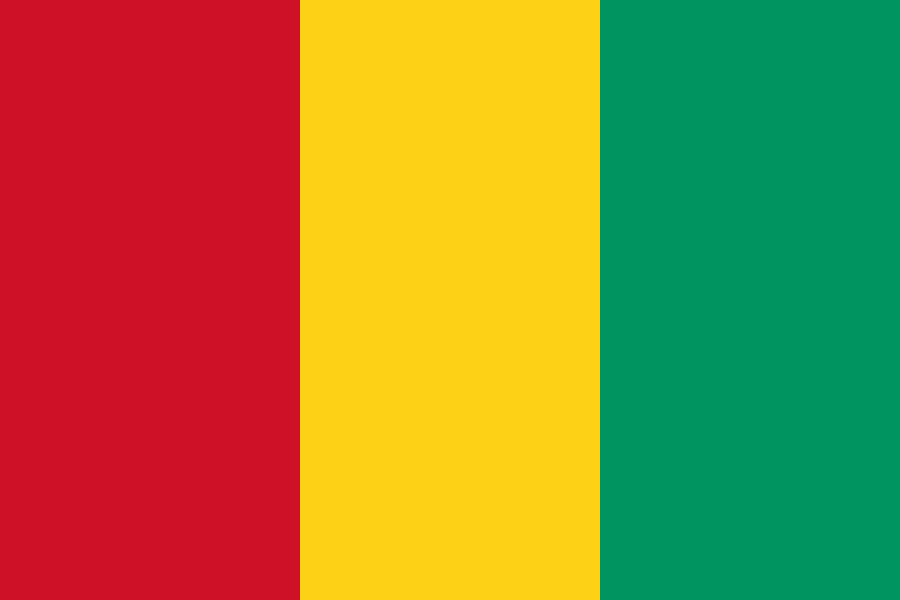
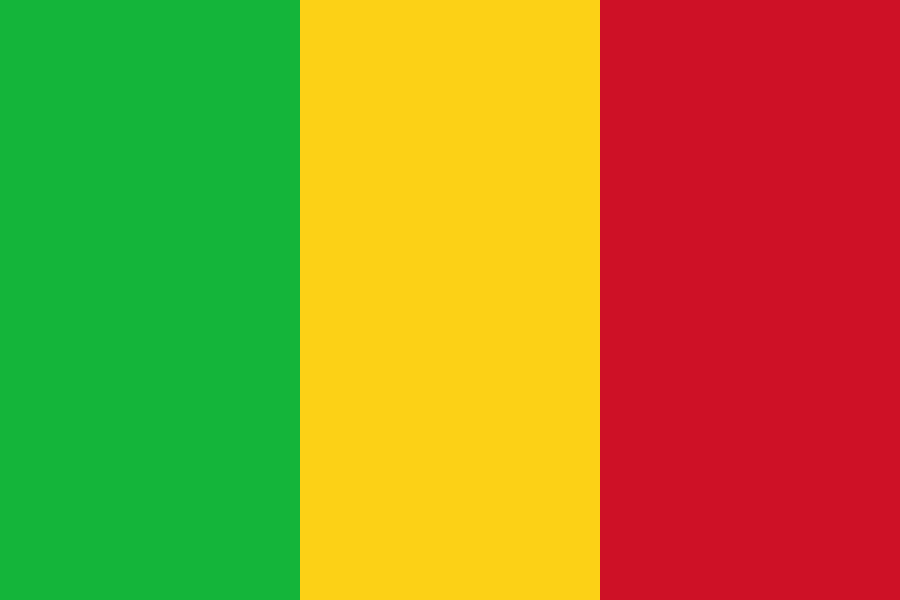
Nkrumah had plans bigger than one country, and he took the flag with him. In November 1958 he and Sékou Touré of Guinea announced a union of their two states. Talks with Mali began in 1960, and in July 1961 the three published a charter for the Union of African States.
The union's flag was to be Ghana's flag with more stars, one black star for each member. It started with two stars, for Ghana and Guinea, and later gained a third.
 GuineaView flag →
 MaliView flag →
Guinea and Mali kept their own national flags through all of this, and the union faded out in 1963. But the episode shows how Nkrumah thought about Ghana's flag. He treated it as a template, a draft for something larger that he was free to edit. Once a national flag is a draft, the next edit comes easier.
Ninety-nine point nine one percent
The next edit happened at home. On 31 January 1964 Ghana voted in a constitutional referendum on becoming a one-party state. The official count was 2,773,920 for and 2,452 against, or 99.91% in favour, on a reported turnout of 96.5%. Critics called the result rigged.
The amendments made the CPP the sole legal party and made Nkrumah president for life of both the nation and the party. Elections planned for 1965 were cancelled, and Nkrumah appointed the members of parliament himself.
Nkrumah had founded the CPP on 12 June 1949, after breaking with the United Gold Coast Convention. Its colours were red, white and green.
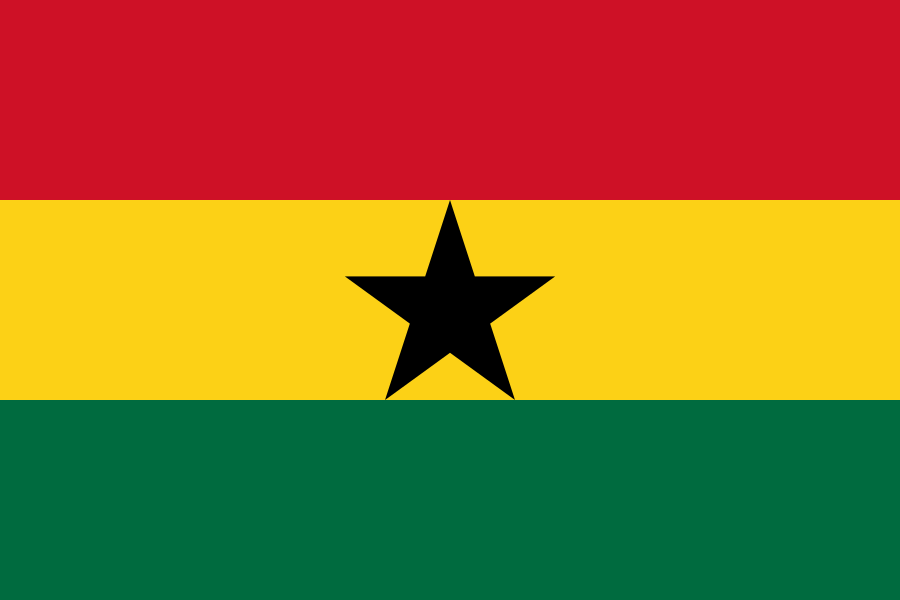
The logic is easy to follow. If the party is the state, why should the state's flag look different from the party's? After the referendum the gold stripe was replaced with white to match the CPP.
 GhanaView flag →
The exact start date is murky. Flags of the World lists the white-stripe version from 1 January 1964, a month before the vote. The Ghana mission's own page says the 1957 flag was used until 1962 and then reinstated in 1966. Whichever date you pick, the result is the same: red, white and green with a black star. Remove the star and the layout matched Hungary's flag. A design that had spoken for a continent now spoke for an organisation with membership cards.
What went missing with the gold
Gold was the one colour on the 1957 flag tied to Ghana in particular. Red, gold and green together pointed at Ethiopia and at pan-Africanism. The gold stripe on its own pointed at the Gold Coast, the colonial name, and at the gold mines around Obuasi and Tarkwa. It was the most local thing on the cloth.
White carried none of that. It carried the CPP. And with the CPP as the only legal party, a Ghanaian who opposed it had no flag left. The old one was gone, and the new one wore the colours of the people they opposed.
A party is a side. A national flag has to cover the people who lost the vote too, or in Ghana's case the people who never got a fair one.
Four days in February 1966
On 21 February 1966 Nkrumah left Ghana for a trip that was to include a meeting with Ho Chi Minh. Three days later, on 24 February, army and police officers seized power while he was abroad. They formed an eight-member National Liberation Council, four from the army and four from the police.
The first broadcast named its target. "The Convention People's Party is disbanded with effect from now," the coup leaders announced. The NLC suspended the constitution, dissolved parliament and made CPP membership illegal.
The flag went the same way. FOTW records the gold stripe back on 28 February 1966, four days after the coup, and the design hasn't changed since.
That speed tells you something. The new rulers had a country to run and a deposed president abroad, and they still found time inside a week to restore the gold. The white stripe was a CPP badge, and the coup had banned the CPP in its first broadcast.
Kenya saw the same problem coming
Ghana wasn't the only new state where a ruling party's flag pushed to become the national one. East Africa faced the same pressure in the early 1960s, and settled it in different ways.
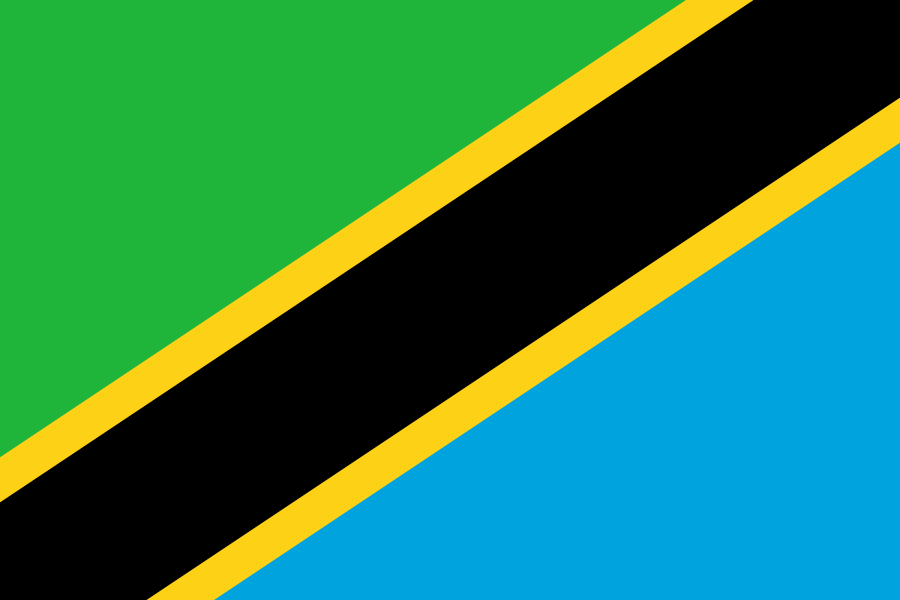
In Tanganyika, the governing TANU party flew green, black and yellow. After TANU won the 1960 elections, British officials advised it to base the national flag on the party's, and Tanganyika's 1961 flag did. When Tanganyika and Zanzibar united in 1964, the green and black stayed. The blue came from Zanzibar's flag, which was itself based on the Afro-Shirazi Party's colours.
 TanzaniaView flag →
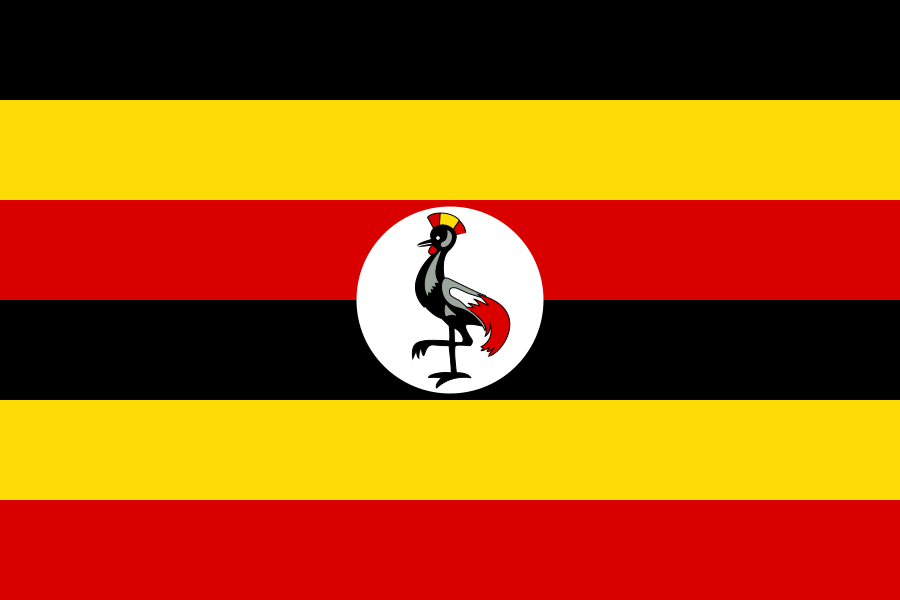
Uganda went the same way. A provisional 1962 flag in the colours of the Democratic Party was dropped after the Uganda People's Congress won the April 1962 election. The flag raised at independence on 9 October 1962 was based on the UPC's flag instead.
 UgandaView flag →
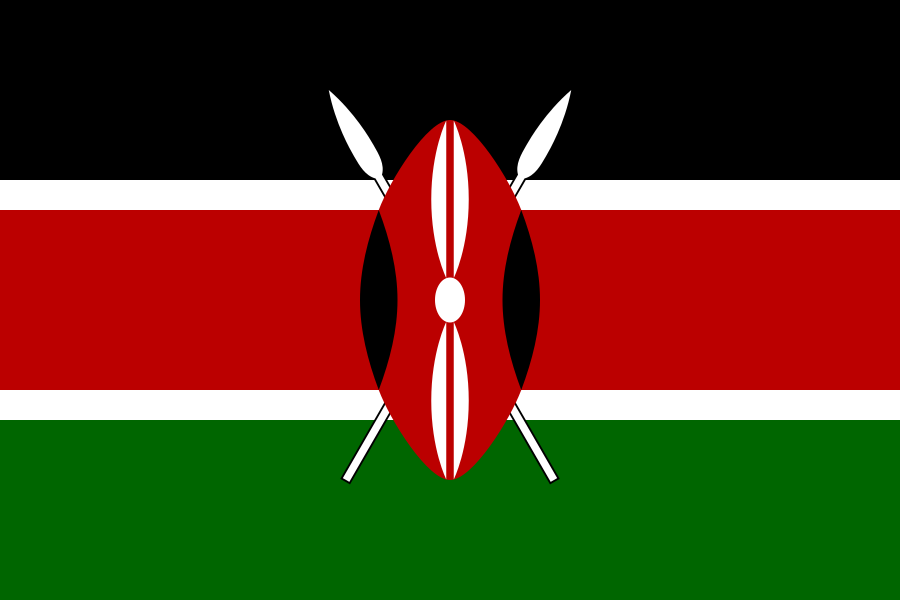
Kenya had the same option and pushed back. Hardliners in Jomo Kenyatta's cabinet wanted the black, red and green flag of KANU, the ruling party, as the national flag. Tom Mboya, then minister for justice and constitutional affairs, argued against it. In cabinet papers he warned that a partisan flag "would undoubtedly give rise to considerable bitterness and resentment" and alienate the opposition party, KADU.
The compromise kept KANU's three colours and inserted white stripes borrowed from KADU's flag. A Maasai shield and two crossed spears went in the middle. In the Nation's account, the shield also set Kenya apart from Tanganyika and Uganda, which had adapted their ruling parties' colours. Kenya adopted the flag on 12 December 1963.
 KenyaView flag →
Kenya's flag still began as a party flag. But it took a piece from the losing side and stitched it in. Ghana in 1964 did the opposite, removing the one colour that belonged to no party.
So who is a flag for?
Put the four cases next to each other:
- Tanganyika and Uganda used party colours at independence, and both still fly flags built from them.
- Kenya used party colours plus a visible concession to the opposition.
- Ghana started neutral, went partisan, and reversed within days of the party's fall.
The party flags that survived are the ones whose party link faded into the background over time. Ghana's white stripe never had that chance. It came in with a 99.91% referendum and went out with a coup, and both events were about one party's hold on power. So the stripe never meant anything except that party.
When you're judging any flag change, it helps to ask who would want to change it back, and why. In Ghana in 1966 the answer was everyone the CPP state had shut out, and they had their gold back in four days.
The stripe is gold again, the star sits where Okoh put it, and Ghana's national football team still plays as the Black Stars. The white-stripe years mostly survive as an entry in flag catalogues.
Julio Song
Writer
Julio is a staff writer at FlagDB. He studied Mathematics at the University of Madrid and has a passion for vexillology.
More from Julio Song →