The Flags of Resilience: How Countries Use Symbols to Overcome Adversity
Julio Song · · 3 min read

Some flags are designed to look pleasant. Others are designed to record what a country went through, and they tend to be blunter about it. Afghanistan and Algeria both put their history directly onto the cloth, with colors assigned to specific experiences rather than to general virtues.
Why the study of flags is not trivia
Vexillology sounds like an obscure specialism until you notice how much a flag has to carry. It has to communicate history, values and intent in a shape that can be sewn and recognized at a distance. When a country is in crisis, the flag becomes the thing people gather under, and the meanings loaded into it years earlier are what make that possible.
The flag of Afghanistan
Afghanistan's flag has been redesigned repeatedly, each version corresponding to a period of the country's history, from the era of kingdoms through the conflicts of recent decades.
The design combines black, red and green. Black is the dark days of past struggles, red the bloodshed during them, green hope and prosperity. It is an unusually literal flag: two thirds of it is an acknowledgement of what went wrong, and only the last stripe looks forward.
The flag of Algeria
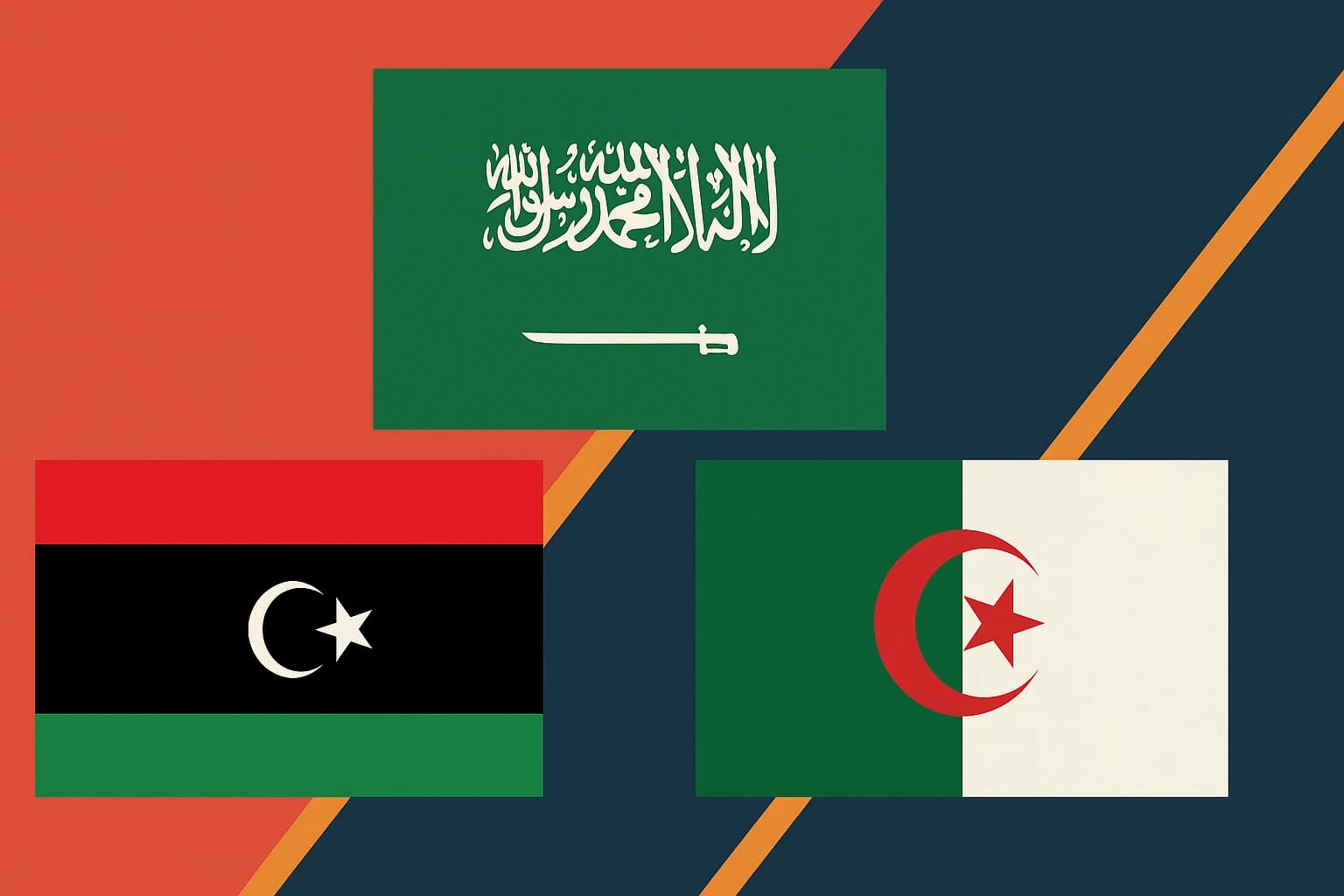
Algeria's flag came out of a long fight for independence, and it also assigns its colors precisely.
Green stands for Islam, white for purity and peace. The red crescent and star stand for sacrifice and freedom. Placing the red on the crescent rather than in a band of its own puts the cost of independence at the center of the design rather than off to one side.
The same problem, solved elsewhere
Other countries have faced the same design problem after catastrophe. Rwanda's flag was made to stand for hope and reconciliation after the genocide. South Africa's was built to represent unity across a divided population after apartheid. Vietnam's carries the country's victory over colonial and wartime occupation.
What these have in common is that the flag was part of the settlement, not an afterthought to it. Deciding what goes on the flag means deciding whose version of events the new state accepts, which is why the process is rarely quick and rarely uncontested.
The flag after the crisis
Once adopted, a flag becomes the object people use to say things the state cannot say officially. It goes to protests, to memorials, and to demonstrations against the very government flying it on its buildings. That double life is normal, and it is a sign the symbol is working. A flag nobody contests is usually a flag nobody cares about.
Julio Song
Writer
Julio is a staff writer at FlagDB. He studied Mathematics at the University of Madrid and has a passion for vexillology.
More from Julio Song →