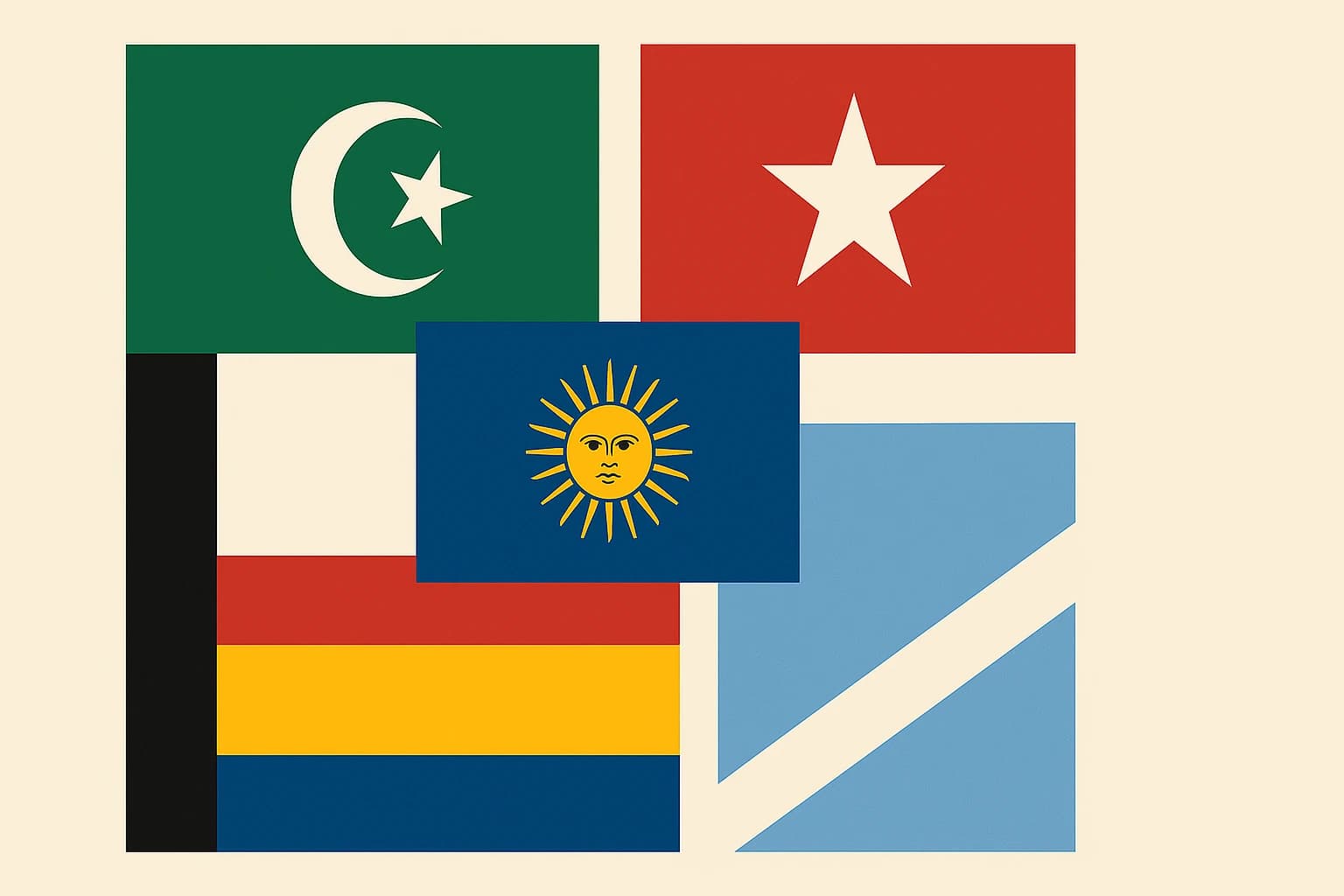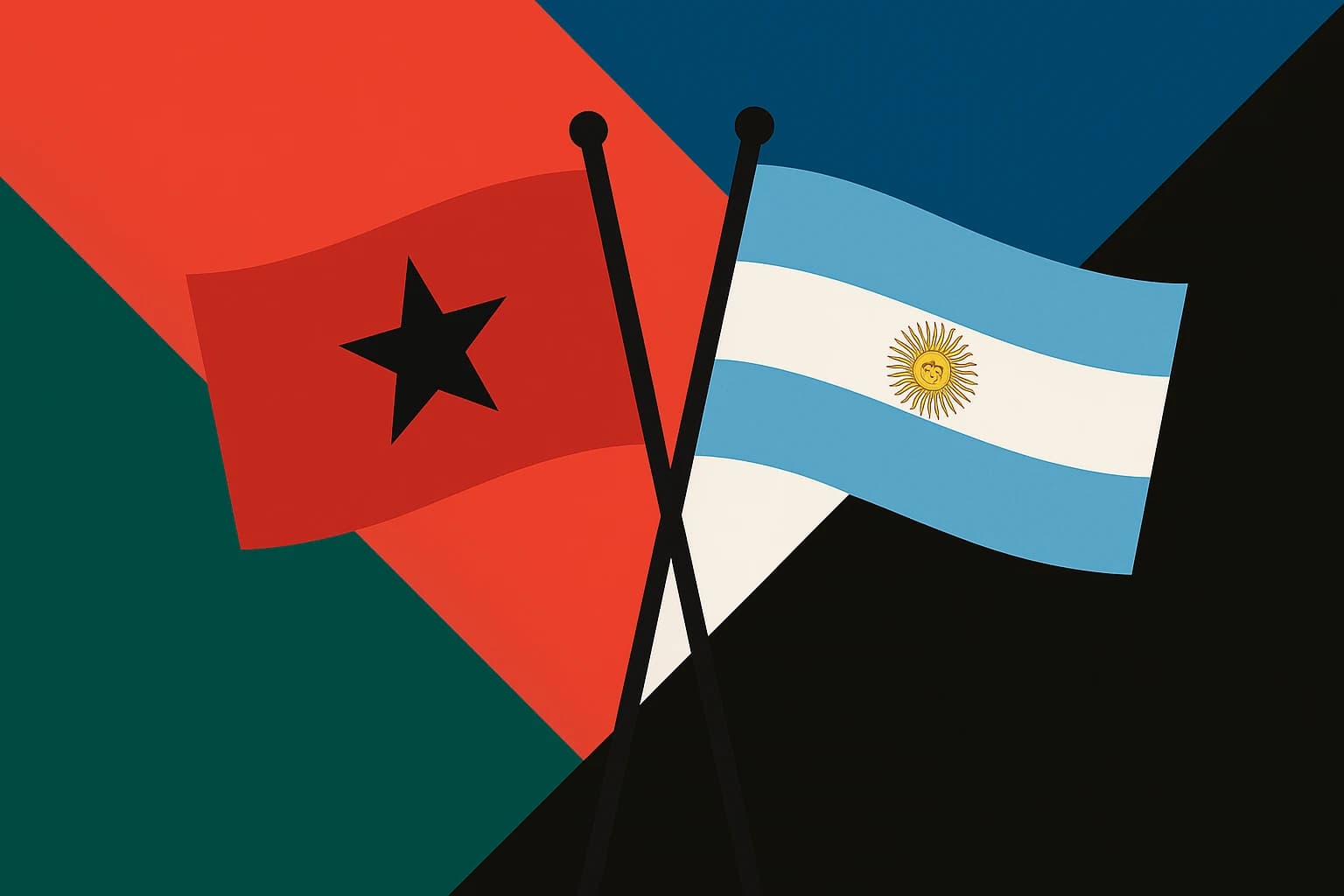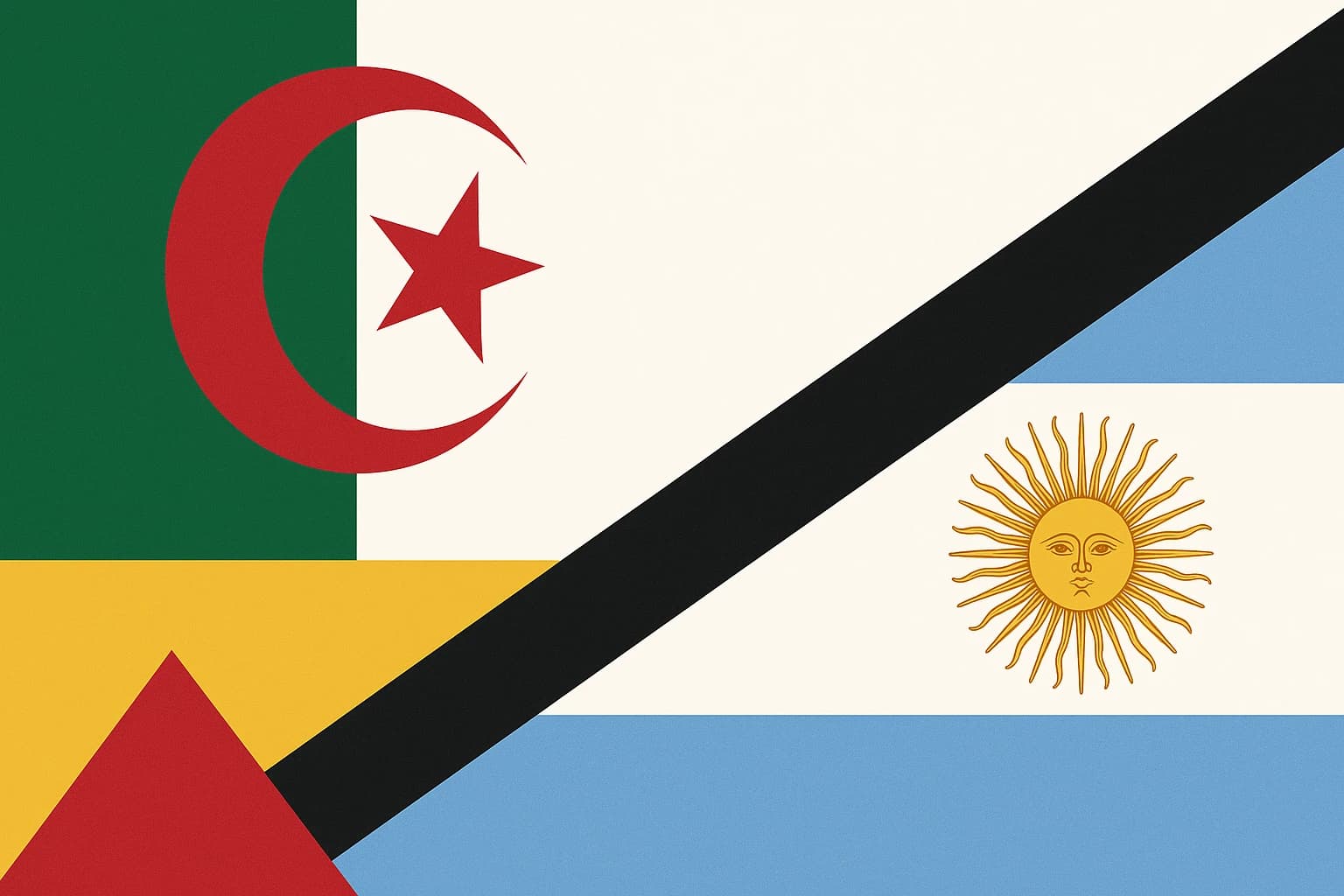
Algeria and Argentina had almost nothing in common in how they became independent, and their flags show it. One was designed in the middle of a war against a colonial power that intended to stay. The other came out of a fragmented colonial region working out what it wanted to be. Both are now the most recognizable object either country produces.
Why a new state needs a flag quickly
A flag is the first thing a new government can put on a building, a passport and a uniform, all at once. It becomes a rallying point in crisis and a backdrop for celebration, and it does that without needing a single word of explanation. That is why declarations of independence and new flags tend to arrive within days of each other.
The Algerian flag
Algeria's independence came after a long and brutal war against colonial rule, and the flag is bound up with that.
Green stands for Islam and white for peace. The red of the crescent and star is tied to the bloodshed of the liberation struggle, which makes the flag unusually direct about its own origins. Most national flags describe an ideal; this one records a cost.
The Argentine flag
Argentina's independence came through a different route, driven by social mobilization and a cultural revival as much as by fighting.
The flag is blue and white with a sun at the center. Blue is read as the sky and the waters, white as purity, and the sun, the Sun of May, refers to the Incan sun god Inti. That reference matters: it anchors the new republic in something older than the colonial period.
Two very different independences
The contrast is worth spelling out. Algeria went through a grueling war; Argentina fought its wars of independence inside a fragmented colonial region, with no single opponent to expel. Both flags reference the historical struggle, Algeria through the crescent and star, Argentina through the sun. And they land differently on the people who use them. Algeria's reads as defiance. Argentina's reads closer to hope.
Symbols get reinterpreted
National symbols do not stay fixed in meaning, and flag redesigns come up regularly, usually driven by arguments over colonial history or over who a modern national identity is supposed to include. Contemporary designs run from stripped-back minimalism to deliberately loud statements, depending on what the designers want the flag to do.
Flags that carry more than one culture inside them, like the Australian Aboriginal Flag, complicate the usual one-country-one-banner assumption in a useful way. They are a reminder that a national flag is a claim about who belongs, and claims like that get contested.
Which is really the argument for knowing what the symbols mean. Read Algeria's flag and you learn what the war cost. Read Argentina's and you learn what its founders wanted to be descended from.