Why rebellions need a flag
Vexillology is the study of flags, and one of the first things it makes obvious is how often a flag arrives before the country does. A movement fighting an established power needs something people can carry, copy and recognize at a distance, and it needs it long before it has territory or institutions. That is why so many national flags are, in origin, resistance flags that happened to win.
The Algerian flag and the war against French rule
Algeria's flag came out of a fierce struggle against French colonial rule.
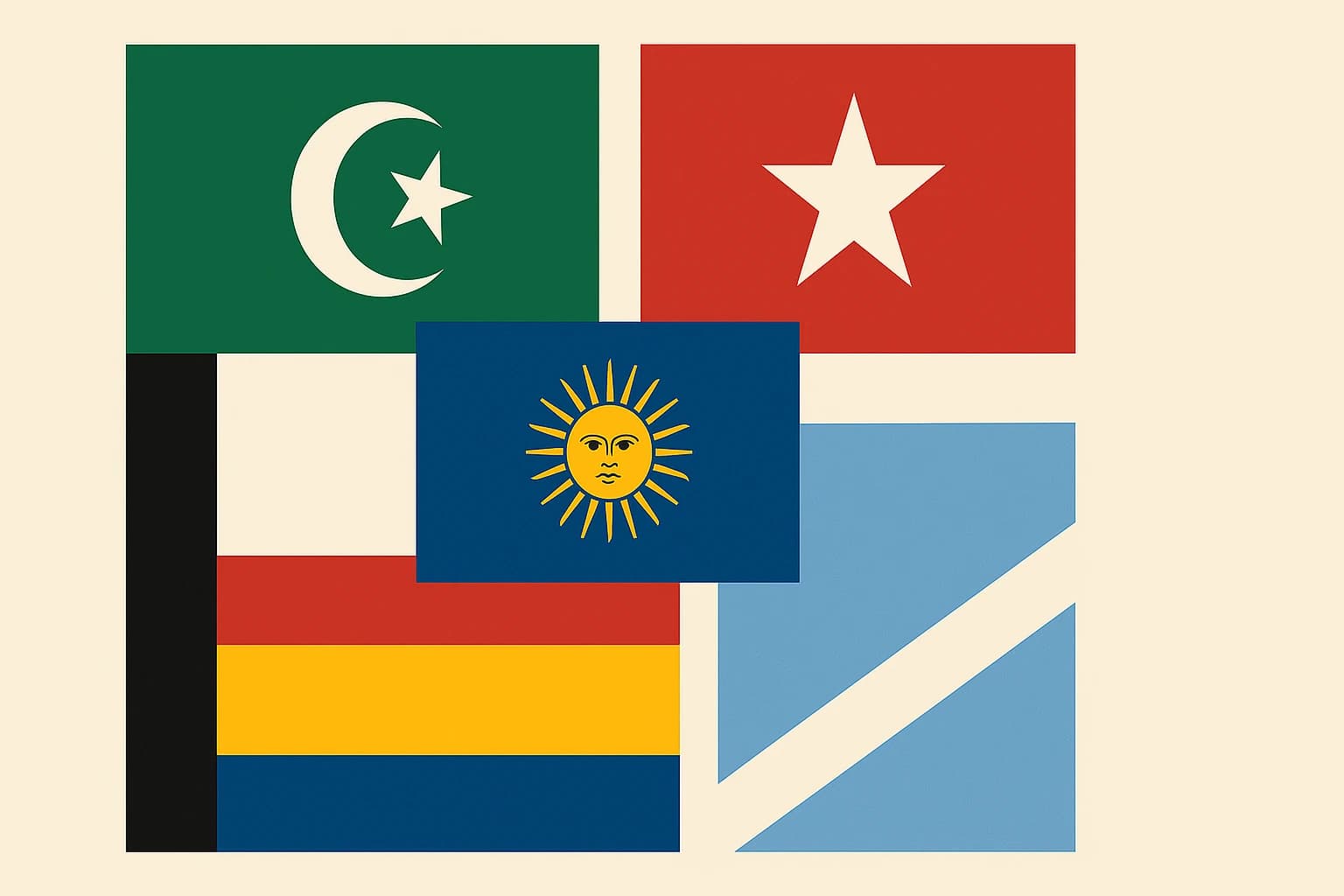
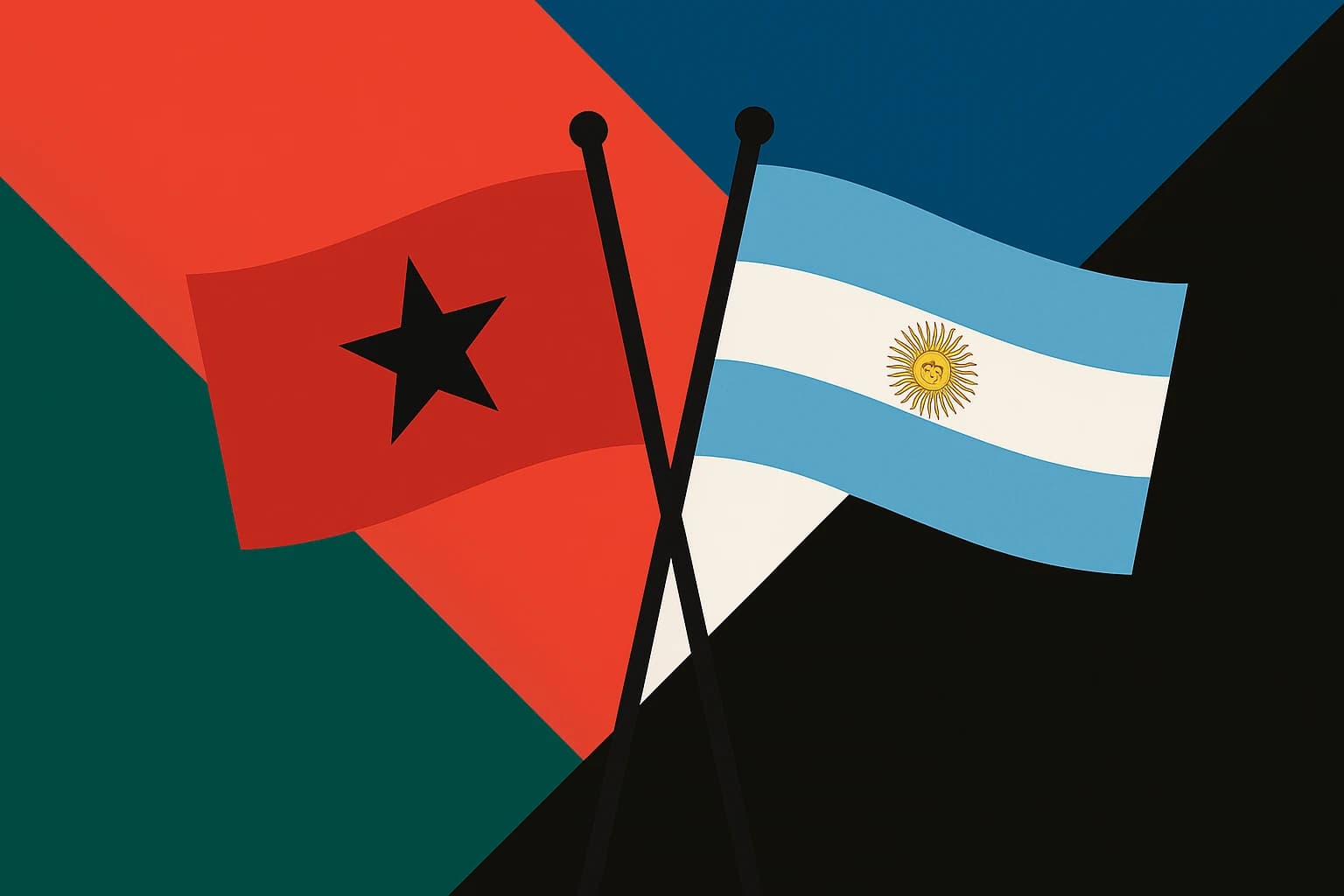
Green stands for Islam and white for peace, and the star and crescent, long associated with Islamic culture, were chosen to express the unity of Algerians in the fight for independence. That choice is worth pausing on. In a war against a power that presented itself as a secular civilizing force, putting a religious symbol at the center of the flag was a deliberate refusal of the colonizer's terms.
The Argentine flag
Argentina's flag came out of the fight against Spanish rule.
The blue and white are said to represent the sky and clouds, a reference to divine inspiration during the independence struggle. The sun, El Sol de Mayo, refers to the sun god of Incan mythology, reaching past the colonial period to indigenous roots. That is the same move Algeria made in a different register: both flags claim a source of legitimacy older than the empire being expelled.
Where the two diverge
Both countries fought colonial powers and both chose symbols with deep cultural weight, but they drew on different wells. Algeria's flag emphasizes Islamic unity. Argentina's reaches for indigenous and mythological reference. Continents apart, the two designs solve the same political problem with entirely different material.
Flags beyond the nation state
The technique did not stay with countries. Political movements adopted it wholesale, from suffragette banners to the Pride Flag, because it works for any group that needs to be visible and countable in public.
These flags do exactly what national resistance flags do. They make a dispersed group legible to itself and to everyone watching, and they can be carried by someone who owns nothing else.
Designs keep moving
Flags change as the countries and movements behind them change. Historical events, political shifts and globalization all leave marks, and new symbols or colors appear as values change while the core of the design usually holds.
Artists and writers have worked this material for as long as it has existed, using flags in narratives of rebellion and identity. That is not a separate phenomenon from the political use. A flag only works as a rallying object because it already carries a story, and every use of it in art or literature adds to the story it carries next time.