Flags from smaller countries and territories rarely make it into the general conversation, which is a shame, because a few of them are doing more interesting work than the famous ones. Here are seven, from Anguilla to Zambia, and what each of them is trying to say.
Anguilla: three dolphins on blue
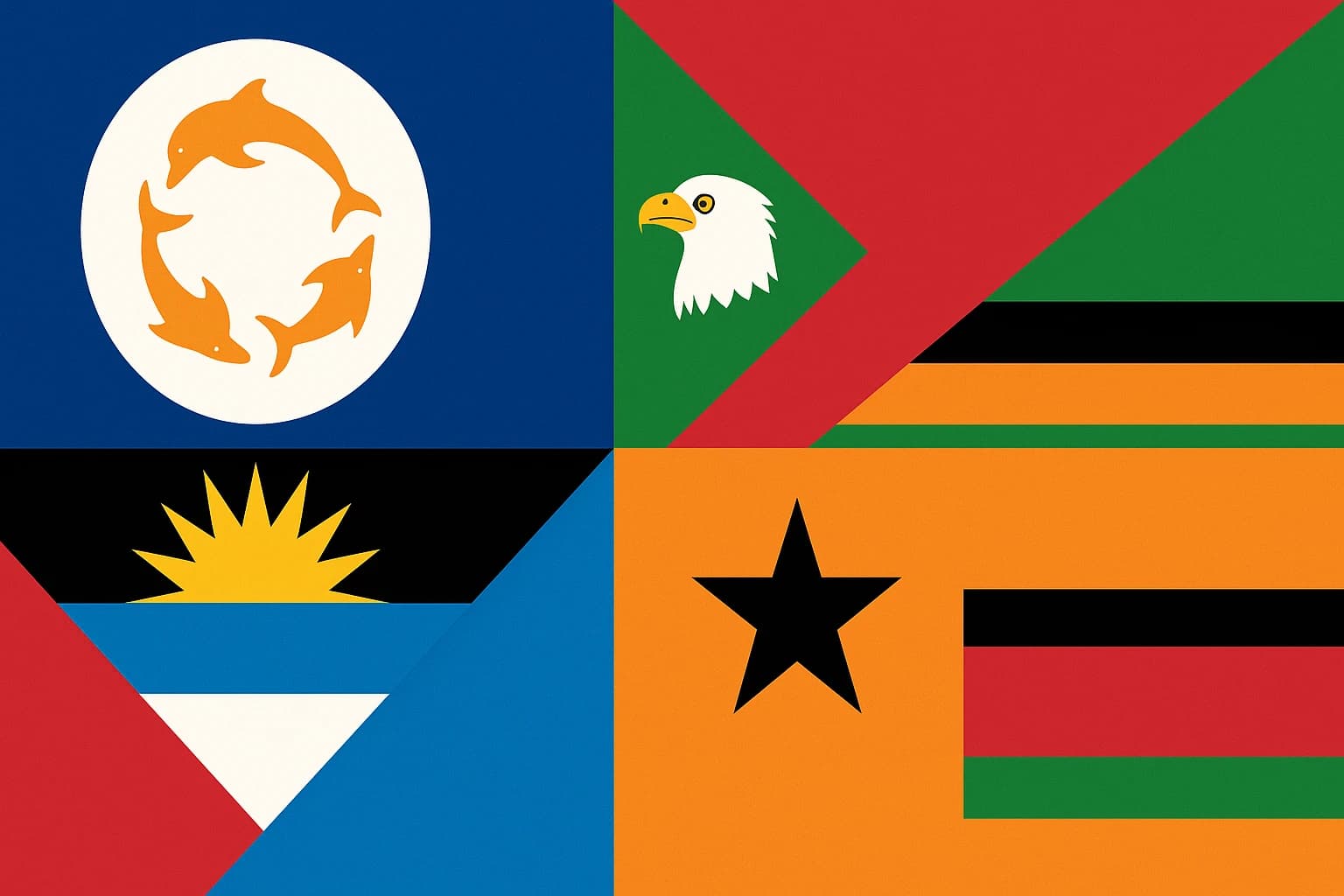
Anguilla's flag puts a coat of arms on a blue field, with three dolphins arranged inside it. The dolphins are not decorative: they stand for friendship, strength and resilience. The flag as a whole records both the island's colonial past and its complicated political status today.
Benin: green, yellow, red
Benin's flag uses green for hope, yellow for wealth, and red for the blood of ancestors. The influence of the Fon people runs through the design, which gives the three colors a cultural weight they would not have on their own.
Comoros: the crescent and four stars
The flag of Comoros carries a crescent and stars across a field of several colors. The crescent marks the place of Islam in the islands, and the stars stand for the four main islands. The design took its current form after independence from France.
Djibouti: sea, land and independence
Djibouti's flag uses light blue, green and a red isosceles triangle. Blue is the sea and sky, green is the land, and red marks the blood shed for independence. The country's ethnic mix is part of what the design is meant to hold together.
Lesotho: the Basotho hat
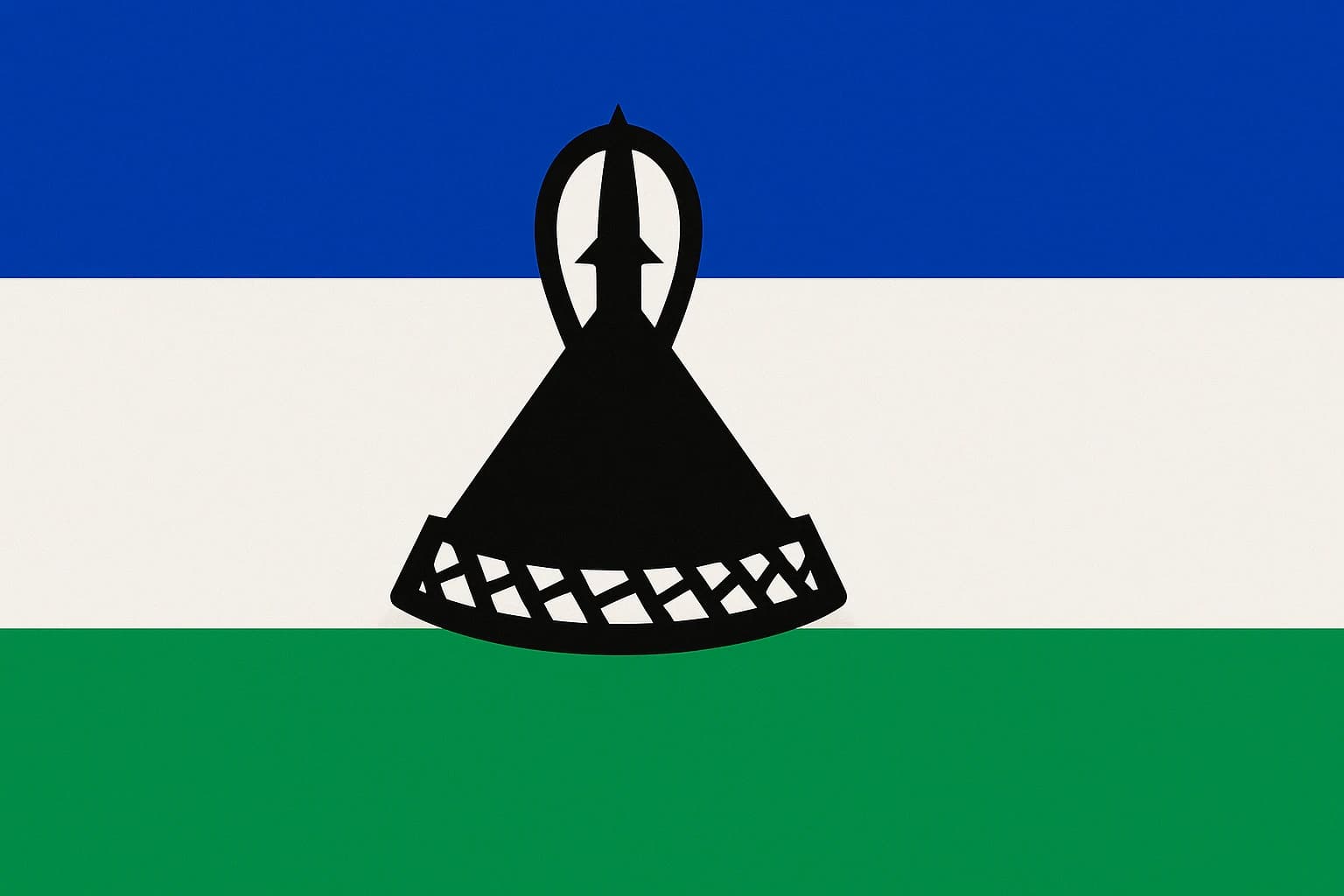
Lesotho's flag puts a black Basotho hat above three horizontal bands. The hat is a cultural emblem of the Basotho people, and it does a lot of work: as an enclave entirely surrounded by South Africa, Lesotho has good reason to make its distinctiveness explicit.
Tajikistan: the crown
Tajikistan's flag carries an intricate crown at its center, standing for the unity of the Tajik people, with colors chosen for peace and harmony. The design leans on the country's history rather than its politics.
Zambia: the eagle
Zambia's flag sets an eagle, signifying freedom, above a background of green, red and black. Green is agriculture, black is the people, and red commemorates the struggle for independence. It reads as a statement of post-colonial identity and sovereignty, written in four elements.