What a flag is actually saying
Vexillology, the study of flags, is really the study of how a country wants to be seen. A flag has to hold a collective story, keep a nation together, and stand for shared values, all in a rectangle that reads at a distance.
That means every element is doing double duty as art and as message. Red often means bravery, green fertility, blue peace. The icons run to stars, crescents and birds, and the same handful of shapes recur across continents that had no contact when they chose them.
Four flags, four approaches
Bhutan: the dragon and the colors around it
Bhutan's flag is a colorful mosaic built around a dragon, which carries both the country's mythology and its spiritual life.
The dragon clutching jewels stands for power and wealth, while the yellow and orange fields stand for civil tradition and spiritual practice. There is a lot of detail packed into one banner.
Belgium: the strength of three stripes
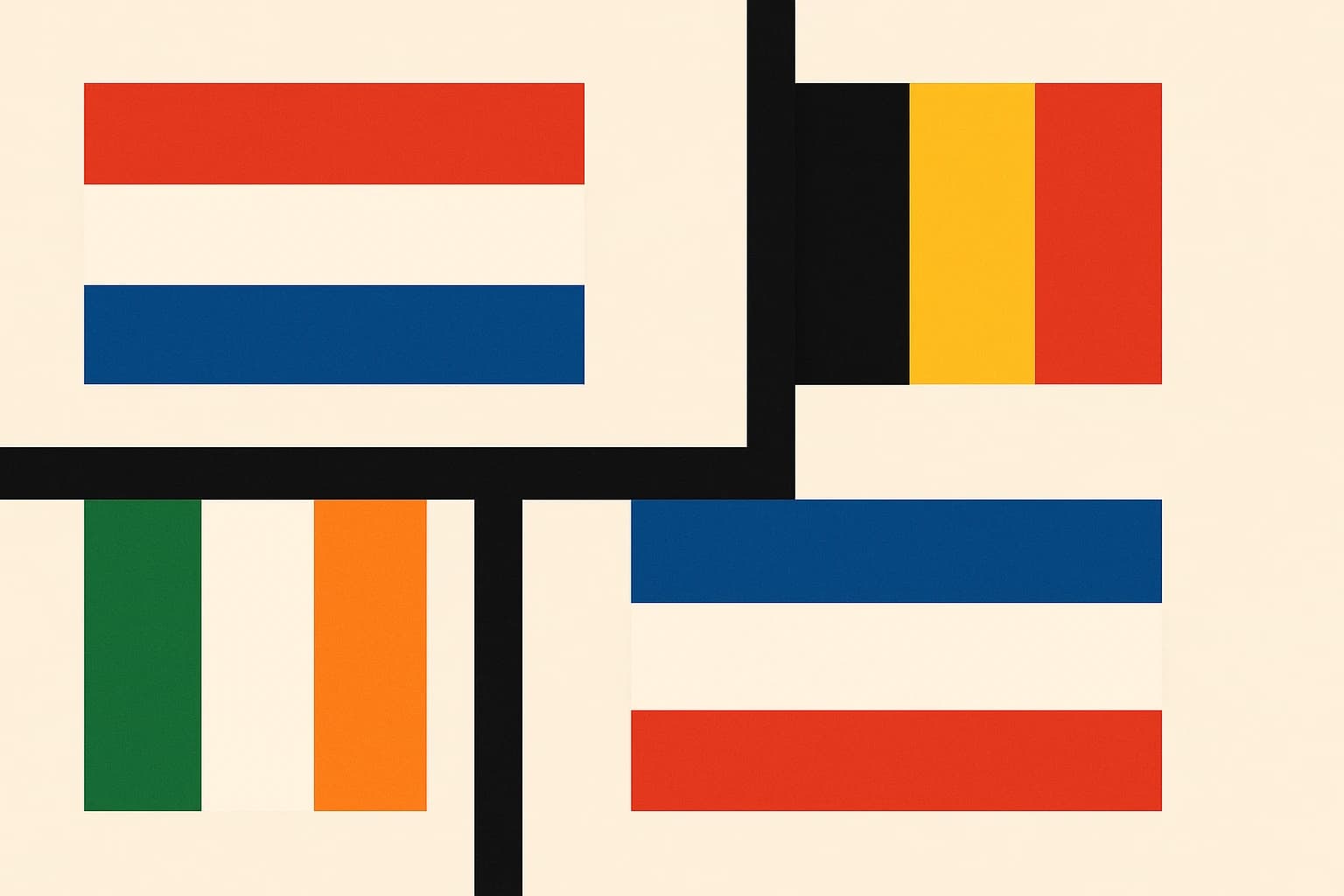
Belgium goes the other way, with bold vertical stripes of black, yellow and red and nothing else.
Each color is a historical nod to the Brabançonne rebels of the Belgian Revolution, which is a fair amount of narrative for a design this plain.
Japan: a single red circle
Japan's flag is a stark red circle on a white field, and the restraint is the point.
The circle is the sun, a direct reference to Japan's identity as the "Land of the Rising Sun." One shape, one meaning, no explanation needed.
Brazil: green, yellow and blue
Brazil's flag is loud where Japan's is quiet: green, golden yellow and deep blue.
Green stands for the forests, yellow for wealth, blue for the sky and ocean. Together they tell a story about the land itself.
Regional patterns
Asia: spiritual and natural elements
Asian flags tend to weave spiritual themes into natural ones. Bhutan's dragon is one example, and Nepal's pennant design is another.
Both connect what a country believes to where it sits.
Africa: liberation on the flagpole
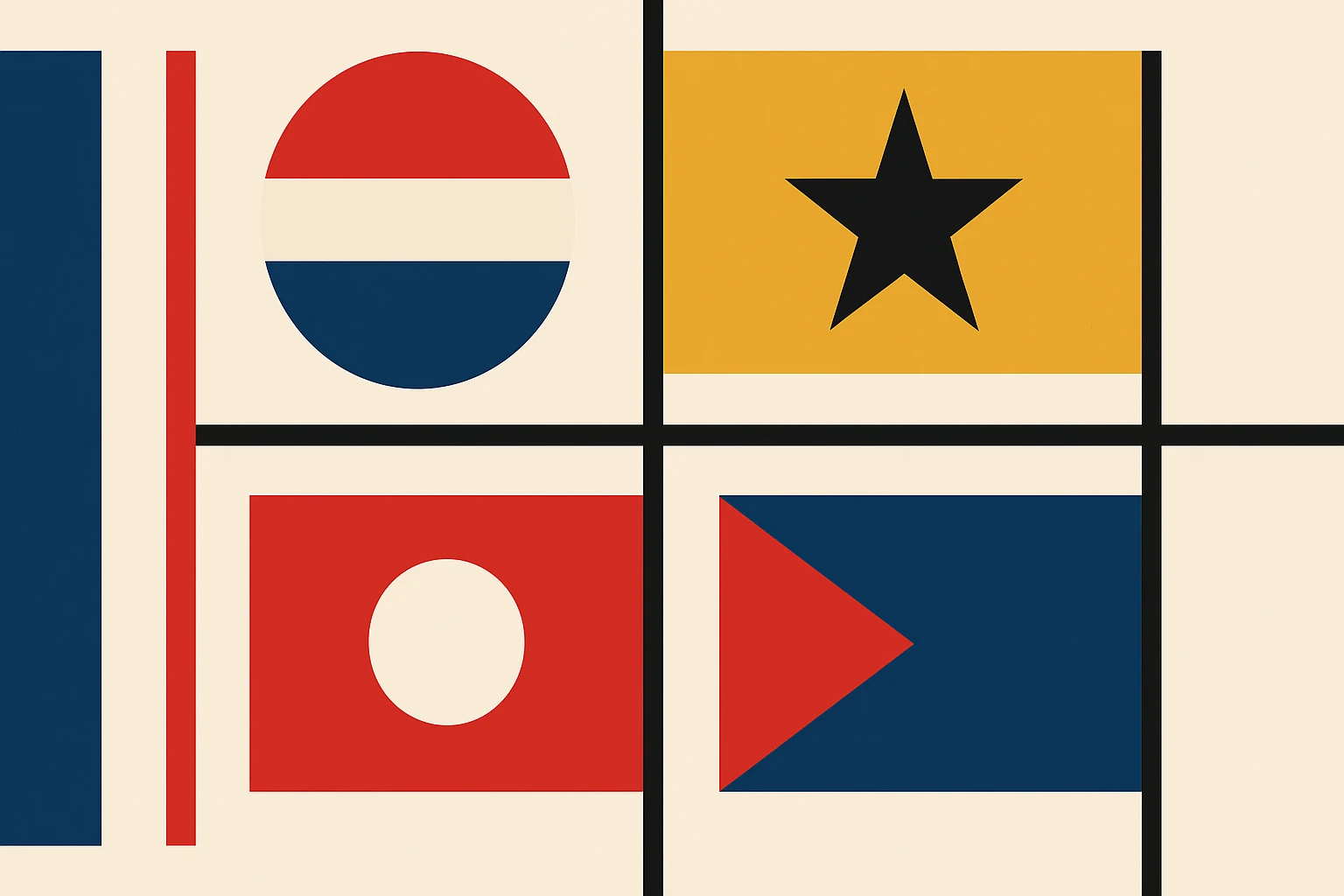
African national flags frequently record struggles for liberation. Ghana and Angola both use stars and stripes to tell that story.
The shared vocabulary connects nations that went through independence around the same time.
Europe: heritage and unity
Europe's flags lean on heritage, whether that is Italy's tricolor or Croatia's checkerboard.
Each color has a story behind it, and most of those stories are older than the current borders.
Flags as political statements
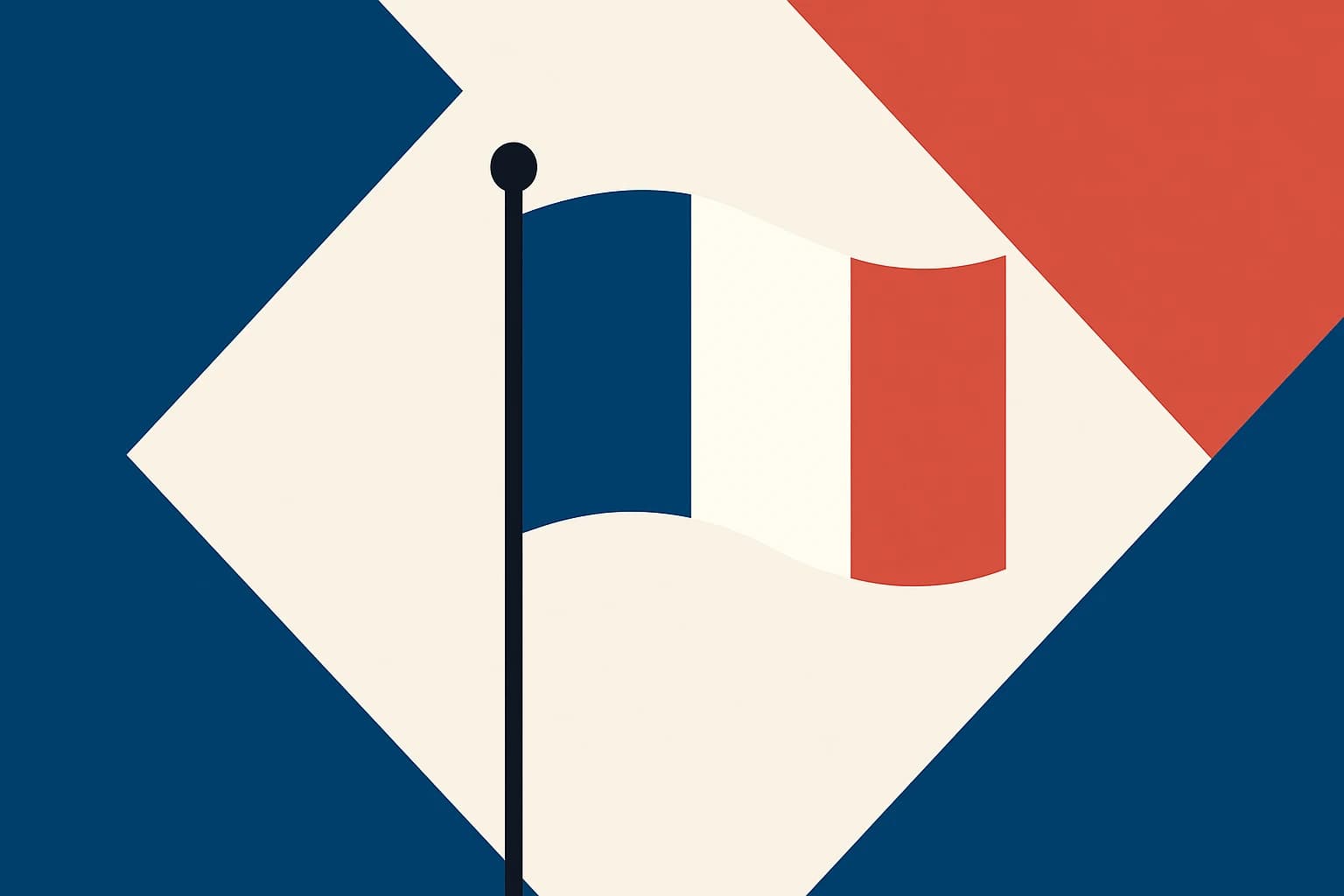
Flags do not stay decorative for long. In revolutions they become the shorthand for the change itself. France's tricolor did exactly that during the French Revolution.
Egalitarian ideals arrived in the form of a radical simplification: three bands, no crown, no crest.
The Pride flag works on the same principle for a different cause.
Each color stands for a different trait, running from life to spirit, and the whole thing reads as a claim to diversity and acceptance. Climate protests and social justice campaigns have followed the same route, turning flags into visual slogans that work from across a square.
The craft of flag design
Colors on flags are chosen, not stumbled into, and they are chosen partly for how they make people feel. Blue tends to read as calm, red as urgent. Shapes work the same way: stars and crescents are instantly recognizable at any size, which is why they turn up everywhere.
Not every flag manages it. Some designs become permanent fixtures of national life and others are quietly forgotten, and working out which is which is most of what flag design has to teach.
Beyond politics
Flags are an intrinsic part of parades and ceremonies, whether that is Brazil's Carnival or the Guelaguetza in Mexico.
They also leak into local craft, appearing in woven textiles and painted onto pottery, where identity and patriotism get made by hand rather than by committee.
Then there are international events, where flags do their most straightforward job of all.
The Olympics puts every national flag in one stadium, which is about as literal a demonstration of the form as exists.
For all the cultural differences, the same handful of themes keep recurring across the world's flags: freedom, peace, and the land itself.