The Flag of Italy
Italian Republic
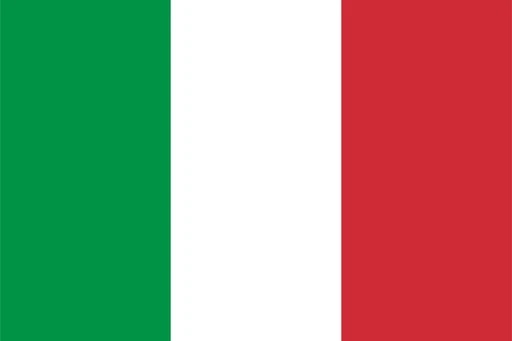
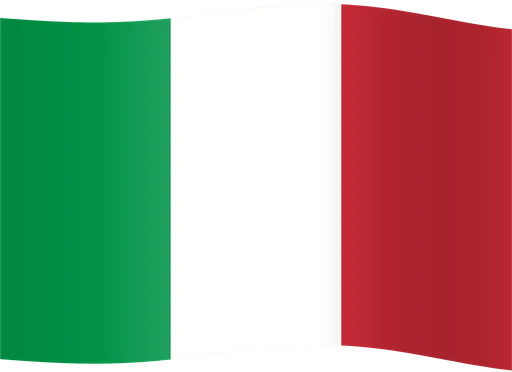
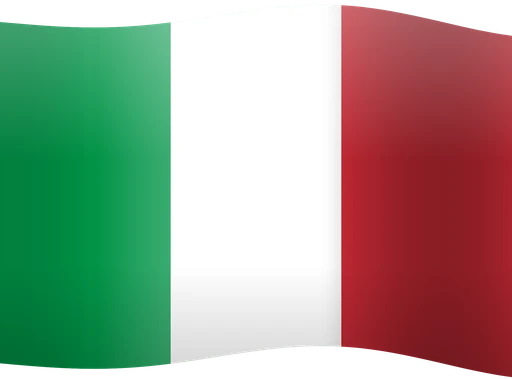
The flag of Italy, known as 'il Tricolore', has three equal vertical bands of green, white, and red, running from the hoist to the fly. The usual reading is green for the plains and hills, white for the snow of the Alps, and red for the blood shed in the wars of Italian independence and unification, though none of it is fixed in law.
Italy's tricolore was born in the Napoleonic-era revolutions, carried through decades of conspiracy and rebellion by secret societies, and finally raised over a unified Italy in 1861. The green, white, and red vertical triband runs from a student militia in 1797 to the constitutional republic of today. It is also close to identical to Mexico's flag, which is less of a coincidence than it looks.
The origins of the tricolore
On January 7, 1797, in the small Emilian city of Reggio Emilia, a congress of delegates from four provinces voted to adopt a new flag for the newborn Cispadane Republic: a horizontal triband of green, white, and red. That date is still celebrated in Italy as the Festa del Tricolore. The flag didn't appear out of thin air. Napoleon's armies had swept into the Italian peninsula carrying the French Tricolor, and Italian revolutionaries, drawn to its promise of liberty and republic, adapted the design for themselves, swapping blue for green.
Why green? Nobody's entirely sure. Some historians point to the uniforms of the Milan civic guard, whose green jackets were already a symbol of local pride. Others credit Napoleon himself, who reportedly favored the colour. A more poetic theory ties it to hope and the Italian landscape. Whatever the reason, the choice stuck.
Before the flag ever became official, student militias and the Lombard Legion had been wearing green-white-red cockades on their lapels, which gave the tricolore a grassroots identity from the start.
The flag passed through a string of short-lived Napoleonic states: the Cisalpine Republic, then the Italian Republic, then the Kingdom of Italy under Napoleon's direct rule. When Napoleon fell in 1814, most of these creations vanished. The tricolore didn't, because it had already become something bigger than any single regime.
During the Restoration period from 1815 to 1848, Austrian censors and Bourbon police did their best to stamp it out. The Carbonari and other clandestine nationalist societies kept it alive, smuggling tricolore cockades and ribbons as tokens of a future free Italy. Possessing one could land you in prison. People wore them anyway.
From rebellion to unification
The tricolore returned to public life during the revolutions of 1848. Across the peninsula, barricades flew the green, white, and red. King Charles Albert of Sardinia made a fateful decision that year: he adopted the tricolore as his kingdom's war flag, adding the coat of arms of the House of Savoy, a white cross on a red shield, to the centre white band. That act turned the flag of revolution into the flag of a state with an army.
Three figures of the Risorgimento each had their own relationship with the tricolore. Giuseppe Mazzini, the republican idealist, saw it as the banner of a people's Italy, free of kings. Count Cavour, the calculating prime minister of Sardinia, used it as a diplomatic tool, wrapping realpolitik in patriotic colours. Giuseppe Garibaldi carried it into battle. When his "Thousand" (I Mille) sailed from Genoa in 1860 to conquer the Kingdom of the Two Sicilies, the tricolore was both their standard and their propaganda. Villages that saw it flying knew which side was coming.
Unification came in 1861. The Kingdom of Italy was proclaimed, and the Savoy-emblazoned tricolore became the national flag. But a tension simmered underneath. Republicans wanted a plain tricolore, free of royal heraldry. Monarchists insisted the Savoy shield belonged there. That argument wouldn't be settled for another 85 years.
Stripping the crown
On June 2, 1946, Italians voted in a referendum to abolish the monarchy. The republic was proclaimed, and one of the first symbolic acts of the new state was stripping the Savoy coat of arms from the flag. The plain tricolore, the flag the republicans had always wanted, became the flag of Italy, and its adoption doubled as a visible break from fascism and monarchy alike.
Article 12 of the 1948 Italian Constitution enshrined it in a single flat sentence: "The flag of the Republic is the Italian tricolour: green, white and red, in three vertical bands of equal dimensions." No elaboration, no symbolism explained.
What's remarkable is that nobody bothered to specify exactly which green, which white, or which red for over half a century. Precise colour standards weren't legally codified until the 2003 Italian Flag Law (Law No. 22 of February 5, 2003), which finally pinned down the official shades: Fern Green (verde felce), Bright White (bianco), and Flame Red (rosso fiamma), with corresponding Pantone values. Before that, Italian flags at international events could vary noticeably in hue.
What the colors actually mean
Italy has never officially legislated what the colours mean. Unlike France, where liberty, equality, and fraternity are firmly tied to the blue, white, and red, Italy's tricolore is open to interpretation.
The most popular reading comes straight from the Risorgimento: green for the hills and plains, white for the Alpine snows, red for the blood shed in the wars of independence. The Nobel Prize-winning poet Giosuè Carducci offered a theological alternative: green for hope, white for faith, red for charity, the three theological virtues of Christianity. Others have mapped the colours onto Italy's landscapes, from Mediterranean coastline to Apennine forest.
The ambiguity is itself historically interesting. France's flag symbolism was codified almost immediately; Italy's never was. The plain tricolore, bearing no emblem, no motto, and no coat of arms, says something about republican identity through what it leaves out.
Italy, Mexico, and the tricolor family
Stand an Italian flag next to a Mexican one and you'll see the problem immediately. Both are vertical tribands of green, white, and red. At international sporting events the confusion is real: wrong flags have been displayed at World Cup matches, and diplomatic mix-ups at summits have produced some uncomfortable photo ops.
The key difference is in the centre. Mexico's flag bears its national coat of arms, an eagle perched on a prickly pear cactus devouring a serpent, in the white band. Italy's is blank. Without the emblem, the two flags are hard to tell apart at a distance, though Mexico's green and red are slightly darker shades.
The resemblance isn't pure coincidence. Both flags trace their ancestry to the French Tricolor and the revolutionary movements it inspired across two continents. Italy's dates to 1797, Mexico's to 1821.
Vexillologists call this a "flag family," and Italy's tricolore sits near the root of one of the largest. Ireland, Romania, Côte d'Ivoire, and Chad all belong to the broader tricolor lineage that France set in motion. Italy's version is among the oldest surviving examples, predating most of its relatives by decades.
Protocol, variants, and Italian life
Law No. 22 of 2003 governs the flag's official use: its 2:3 proportions, display protocols, and prohibitions on unauthorized commercial exploitation. It is the most comprehensive flag legislation Italy has enacted.
Several official variants exist. The Presidential Standard overlays the Italian coat of arms, a white star on a cogwheel framed by olive and oak branches, onto the tricolore. The naval ensign adds the shields of Venice, Genoa, Amalfi, and Pisa, the four historic Maritime Republics.
In daily life, the tricolore is everywhere during the Festa della Repubblica on June 2, draped from balconies and pinned to lapels. It flies at Serie A matches, follows the Azzurri to every World Cup, and flutters above the Palio di Siena. During national mourning, flags are lowered to half-mast across every municipality, and the tricolore is draped over the coffins of fallen soldiers and distinguished citizens.
References
[1] Italian Constitution (1948), Article 12. Official text available via the Italian Senate. senato.it
[2] Law No. 22 of 5 February 2003, "Disposizioni generali sull'uso della bandiera della Repubblica italiana." Gazzetta Ufficiale della Repubblica Italiana.
[3] Presidenza della Repubblica Italiana. Official page on national symbols. quirinale.it
[4] Smith, Whitney. "Flag of Italy." Encyclopædia Britannica. britannica.com
[5] Museo del Tricolore, Reggio Emilia. Primary source documents from 1797. tricolore.it
[6] Mack Smith, Denis. The Making of Italy, 1796-1870. Harper & Row, 1968.
[7] Duggan, Christopher. The Force of Destiny: A History of Italy Since 1796. Houghton Mifflin Harcourt, 2008.
[8] Znamierowski, Alfred. The World Encyclopedia of Flags. Lorenz Books, 2014.
[9] Flags of the World (FOTW), Italy entry. crwflags.com/fotw/flags/it.html
Common questions
- Why does the Italian flag look like the French flag?
- Italian revolutionaries adapted the French Tricolore during the Napoleonic period, keeping the vertical triband format and swapping blue for green.
- Where is the Italian flag displayed officially?
- The Italian flag is shown at government buildings, national celebrations, and public events, following display rules set out in national law.
- What do the colors on the Italian flag actually mean?
- Italy has never officially defined what the colors mean. Most people read green as the hills and plains, white as the snowy Alps, and red as the blood spilled during Italy's wars of independence. Others link them to hope, faith, and charity on a more spiritual level. With no official meaning on record, both readings coexist.
- Why did Italy choose green for its flag?
- Honestly, nobody's totally sure. The leading theories point to the green uniforms worn by Milan's civic guard, Napoleon possibly preferring the colour, or it symbolizing hope and Italy's landscape. Italian revolutionaries took the French Tricolor in 1797 and swapped out the blue for green. It stuck, but nobody ever officially wrote down the exact reason why.
Featured in these articles
- The Flag That Had to Please Everyone: How the European Union's Circle of Stars Became the Most Negotiated Image in History
- The Diagonal That Changed Everything: How Saint Kitts and Nevis Turned a Simple Black Stripe Into a Masterclass in Flag Geometry
- The Tricolor That Conquered the World: How France's Revolutionary Flag Became the Template for Modern Nationhood
- Diagonal Lines and Divided Futures: How Guyana, Tanzania, and Saint Kitts and Nevis Used Slashes to Tell Stories of Struggle
Download this flag
Free in 12 styles, from 32px icons up to 2000px, as SVG, PNG, WebP and JPG.