The Flag of South Georgia
South Georgia and the South Sandwich Islands
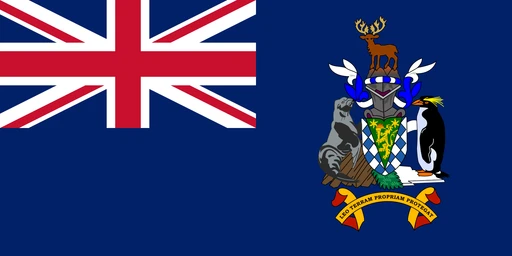
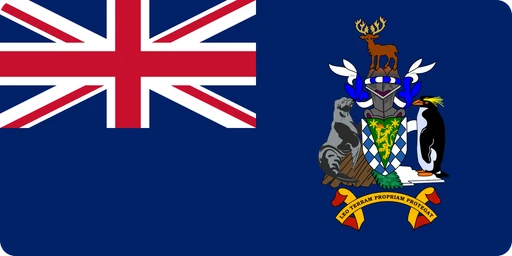
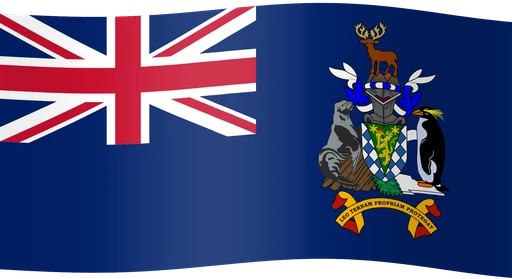
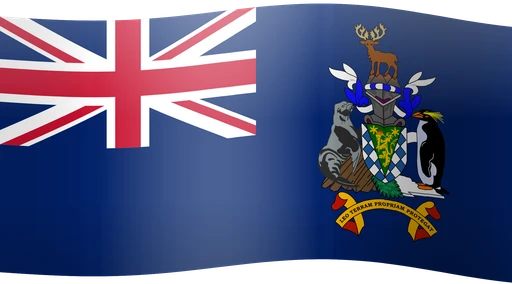
The flag of South Georgia and the South Sandwich Islands is a Blue Ensign with the Union Jack in the upper canton and the territory's coat of arms in the fly. The shield carries a golden lion in the upper half and a blue and white wave pattern below it for the ocean. A reindeer stands above the shield, and a fur seal and a macaroni penguin support it on either side.
South Georgia and the South Sandwich Islands fly a Blue Ensign with the Union Jack in the canton and the territory's coat of arms in the fly. It was adopted on 3 October 1985.
A flag for a territory with no permanent population
The flag dates from the point at which the islands were declared a territory separate from the Falklands. Until then they had been administered as part of the Falkland Islands Dependencies, and the change of status called for a symbol of its own.
The coat of arms placed on the ensign was granted in 1992. The Blue Ensign format itself was not a choice so much as a convention: it is what British Overseas Territories fly, and it fixes the islands' constitutional position at a glance.
Behind that sits the longer history of British exploration and colonization in the South Atlantic. The islands' strategic importance has been recognized since the early twentieth century, and it became sharply visible during the Falklands War.
What is on the shield
The Union Jack in the canton marks allegiance to the Crown. The coat of arms in the fly is where the local detail sits.
A golden lion holding a torch stands for the strength and guidance of the British nation. Crossed swords beneath it refer to defense and sovereignty, an acknowledgement of the islands' strategic position. The supporters are a fur seal and a macaroni penguin, both native to the islands.
The blues, whites, and green of the shield are the colors of the sea and the ice.
Where it is flown
The flag is used on government buildings and at formal occasions, and it marks official documents and government property. Protocol has it flown alongside the Union Jack on significant dates. There are no alternative flags in use in the territory.
At sea, ships registered in the territory may fly the ensign to show where they are registered.
The islands have no permanent residents, so the flag's constituency is unusual: the scientific and conservation staff posted there, and the wider community of people connected to the place. For them it does the work a national flag ordinarily does, marking ceremonies and standing in for a home that nobody quite lives in.
Similar flags and influences
The flag belongs to the family of British Overseas Territories ensigns, which all share the Blue Ensign and the Union Jack in the canton, and it draws on the same heraldic vocabulary, the lion included, that recurs across territories with British ties.
References
Common questions
- Which animals are shown on the South Georgia and South Sandwich Islands flag?
- A fur seal and a macaroni penguin support the shield on the coat of arms. Both are native to the islands.
Download this flag
Free in 12 styles, from 32px icons up to 2000px, as SVG, PNG, WebP and JPG.