What a flag is doing besides being fabric
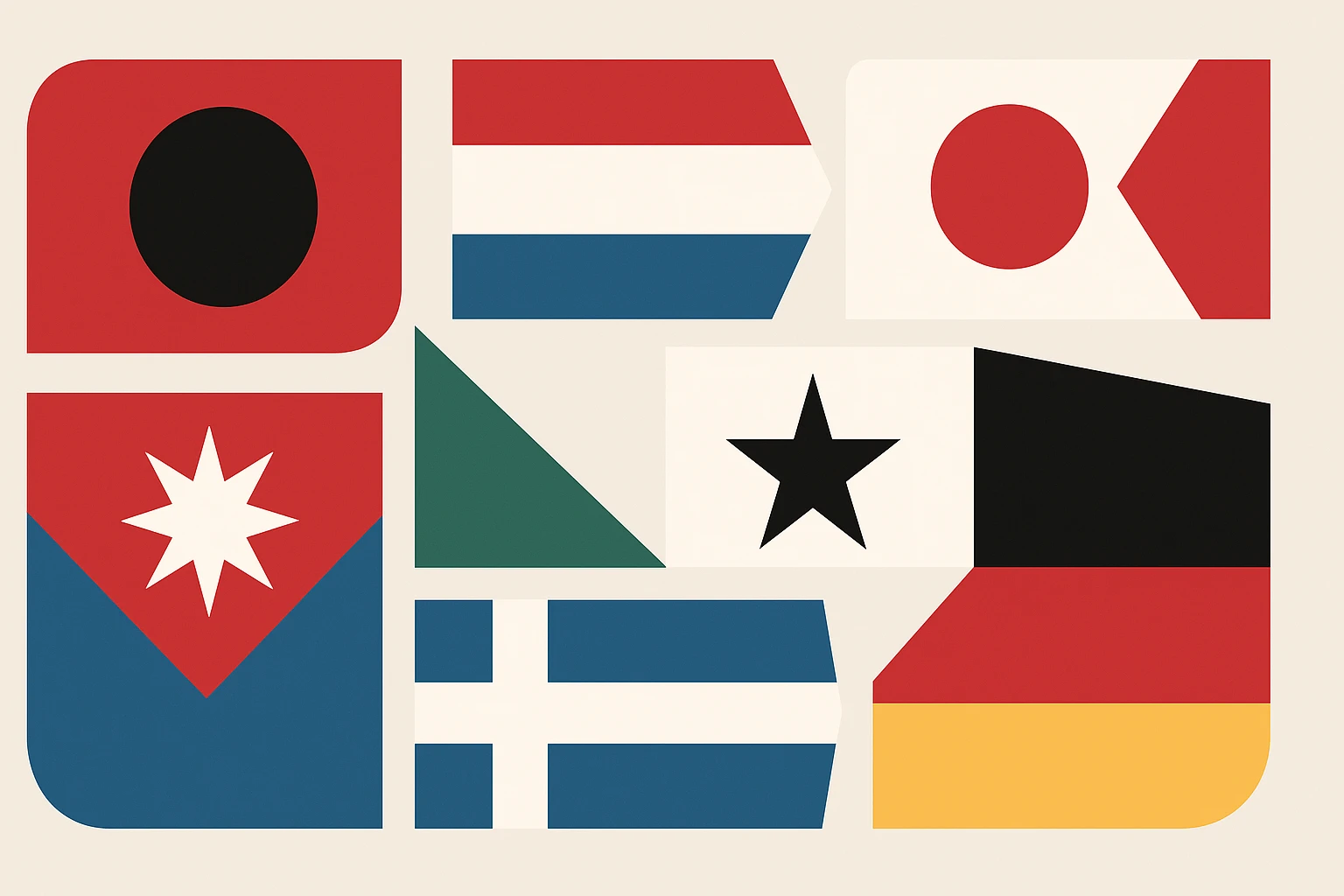
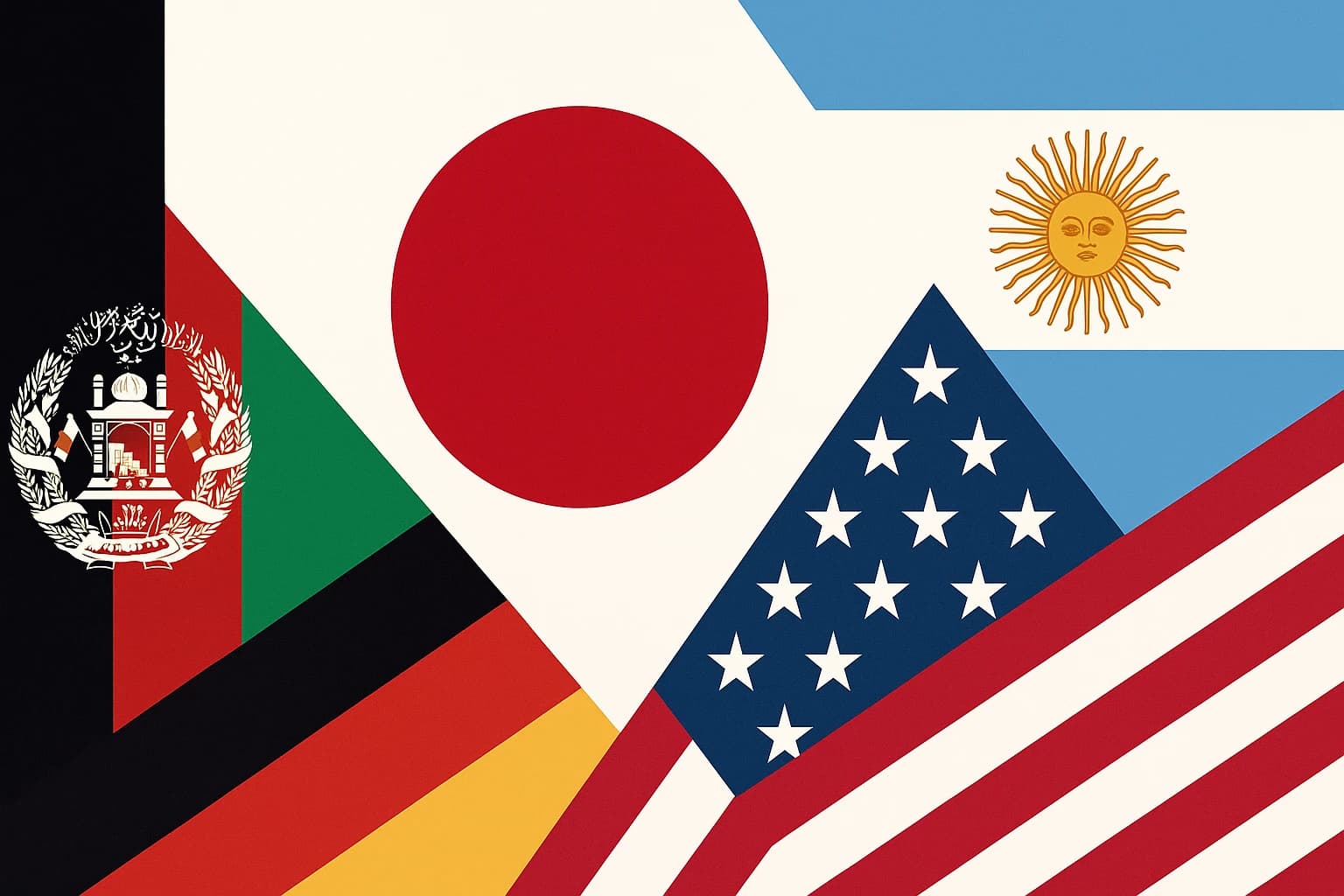
A flag is a compressed argument about who a country thinks it is. Some make the argument with a single shape, like the red circle of the Japanese flag standing in for the land of the rising sun. Some make it with a whole creature, like the dragon on the flag of Wales. Others, the Union Jack and the Stars and Stripes among them, have accumulated so much history that the design itself is almost beside the point.
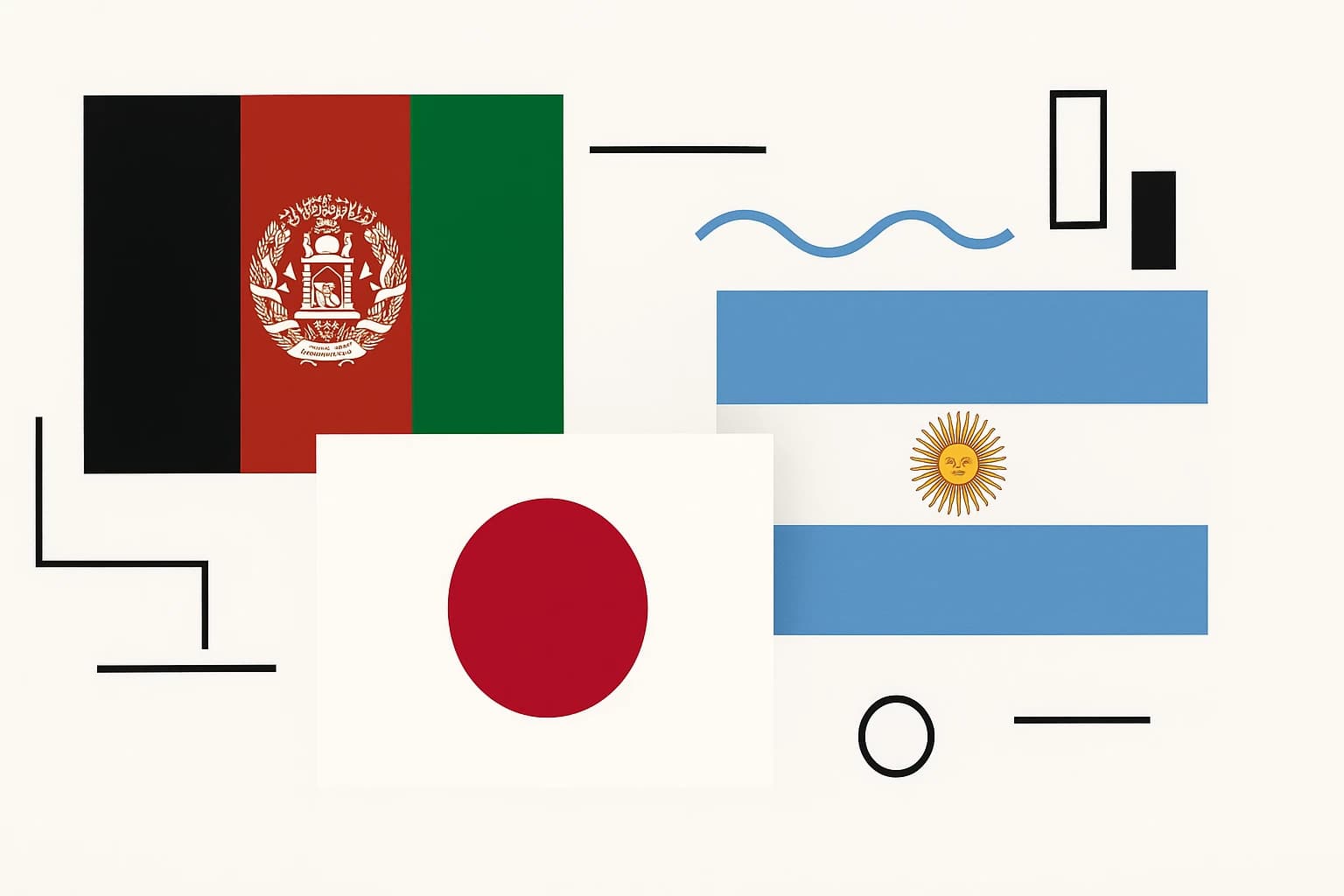
Two flags at opposite ends of the alphabet, Afghanistan and Argentina, show two quite different ways of building that argument.
Afghanistan: a mosque at the centre
The Afghan flag has been redesigned more times than almost any other, each version tracking a change of regime. The current design has three vertical stripes of black, red and green with the national emblem in the middle.
The emblem is a mosque with a pulpit and flags on either side, held inside a wreath of wheat. It is a straightforwardly religious image in the centre of a national flag, which tells you a great deal about how Afghan statehood has been framed. The flanking flags in the emblem stand for governance and sovereignty, so the mosque is not standing alone.
The colours carry more than one reading. Black is taken as sovereignty and also as a reference to a dark past. Red is struggle, and specifically blood shed for independence. Green covers both hope and Islam, and in some readings prosperity. The flag holds Afghanistan's history of conflict and its aspiration at the same time, which is not a comfortable combination but is an honest one.
Argentina: a sun with a face
Argentina's flag works entirely differently. Sky blue and white horizontal stripes, read as clear skies and the snow on the Andes, with a sun in the centre.
The sun has a face, which is unusual anywhere and unique in the region. It is called the Sun of May, and it traces back to Inti, the Inca sun god. It appeared during Argentina's independence struggle, which is how a pre-Columbian deity ended up as the centrepiece of a 19th-century republic's flag.
Blue mirrors the sky over the Pampas. White is read as purity and peace. Next to most Latin American flags, Argentina's is notably restrained, and the sun does all the work the rest of the design deliberately leaves undone.
Two ways of telling the same kind of story
Both flags are about struggle. Afghanistan puts that in the black stripe and Argentina puts it in a sun that dates from a war of independence. But the source material is completely different. Afghanistan's flag reaches for religious symbolism, while Argentina's reaches for landscape and a pre-colonial god.
Neither approach is more national than the other. They are just different answers to the question of what a country wants a stranger to see first.