What a flag has to do with almost nothing
A national flag works with a few colors, sometimes an emblem, and no words. That is the whole vocabulary. Flags were carried into battle long before they flew over ministries, and today they get raised on public buildings and waved at ceremonies by people who would disagree with each other about almost everything else. That is the point of them, and also why the same piece of cloth can mean rather different things to two citizens standing side by side.
Afghanistan's much redrawn flag
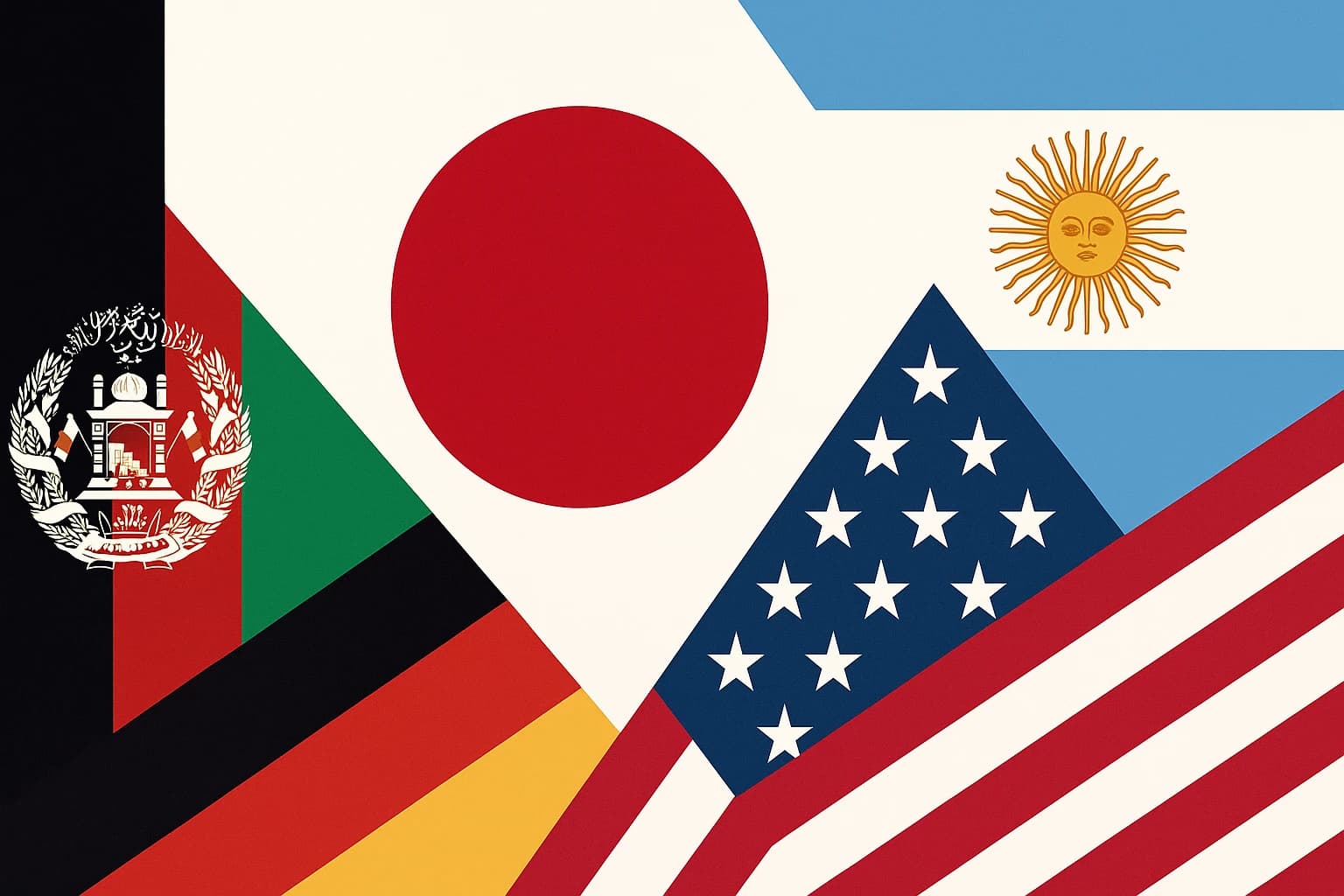
Black, red and green stripes with an emblem in the middle. Afghanistan has redrawn this flag several times over its history.
The emblem contains a mosque with its mihrab facing Mecca, which puts Islam at the center of the design. The country it represents has no single language and no single ethnic story, and the flag is what all of those groups are asked to stand under.
Argentina's sun
Sky-blue and white bands with a golden sun in the center. The design comes out of the fight against Spanish rule in the early nineteenth century, and the Sun of May was attached to the promise of independence rather than to any region or faction.
Two colors and one symbol is not much to work with, but it has held up. Nothing in the design belongs to one province more than another.
Flags with no country behind them
Not every flag represents a state. The rainbow flag has been carried at Pride parades around the world as a symbol of LGBTQ+ rights, and the Black Lives Matter flag appeared during the protests demanding racial equality. Neither has a territory or a seat at the UN. Both work the way a national flag works: people recognize them on sight and gather under them.
Comparing the two
Afghanistan and Argentina have little in common beyond both having flags, and even the work those flags do is different. Afghanistan's is asked to hold together peoples who arrived at the same borders by very different routes. Argentina's marks the end of colonial rule and has been comparatively settled ever since.
Flags in an online age
Social media gave flags a second life. During international tournaments and political protests they spread as avatars and overlays faster than any physical flag could be sewn. At the Olympics and at UN gatherings the older uses continue: flags stand in for delegations, get raised in order, and carry a good deal of diplomatic weight for objects made of cloth.