What vexillology is for
Vexillology is the study of flags, and most of it comes down to reading choices that were made deliberately. Colors get assigned meanings, from peace to courage. Symbols carry cultural heritage or point at a specific historical struggle. Flags have changed a great deal since the banners of the ancient empires, but the job has not: a flag has to say something about a nation and its people in a form you can recognize at a distance.
Afghanistan
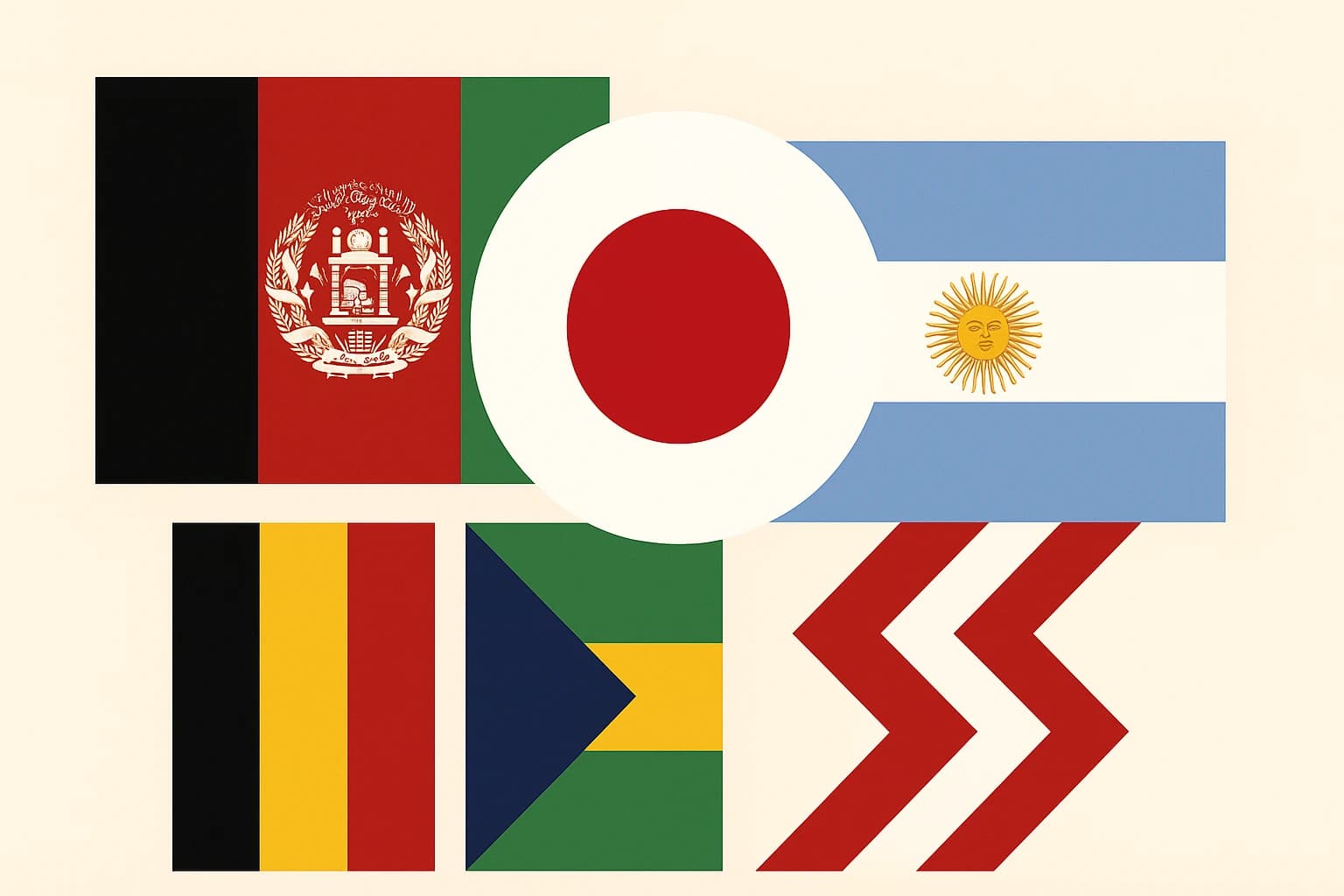
Afghanistan's flag combines black, red and green. Black recalls periods of occupation, red the blood shed for freedom, green hope and prosperity.
The emblem at the center holds a mosque and wheat, which puts peace and prosperity together in one image with obvious cultural and religious roots. Afghanistan is ethnically diverse, and the flag has to work as common ground across that.
Argentina
Argentina's sky blue and white will remind you of a clear sky and light clouds, and that is roughly the intent: the colors are read as the skies over Argentina during the liberation from Spanish rule.
The Sun of May sits in the middle as an emblem of freedom and independence. The flag records a fight for sovereignty in a design most people would describe as calm.
Angola
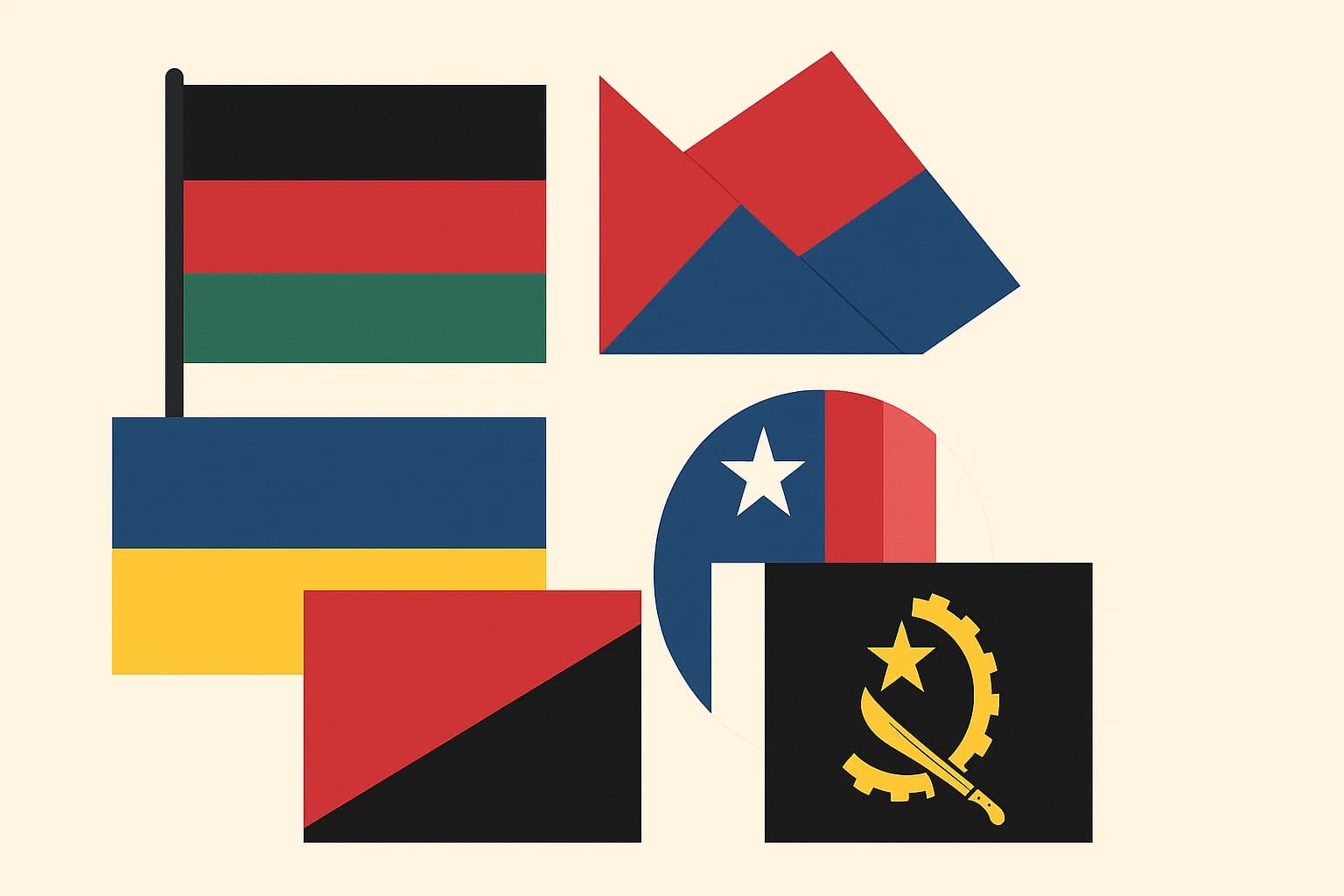
Angola's flag is red and black. Red is the struggle for independence, black is the African continent.
The machete, gear and star in the center stand for labor and progress. Like the colors, they refer back to colonial history and forward to what the country intended to build after it.
Symbols that cross borders
Stars, stripes and crescents show up on flag after flag, and they are not interchangeable. India, South Africa and Mexico all use widely shared symbols to tell stories about freedom, peace and unity that only make sense in their own historical context. Geography leaves its mark too, in colors drawn from a country's landscape or its heritage.
What flags are for now
Flags do more than hang on poles. They come out at cultural celebrations and sporting events, and they shift as the identities behind them shift. Each one is rooted in its own history, and taken together they are a decent record of how differently people have answered the same question about who they are.