Vexillology, the study of flags, formalized as a field only in the mid-20th century, but its material is much older. Flags have been used for navigation, for holding military formations together, and for national display for centuries. Taking the first two countries in the alphabet, Afghanistan and Angola, gives a decent sense of what the discipline actually reads.
Afghanistan's flag
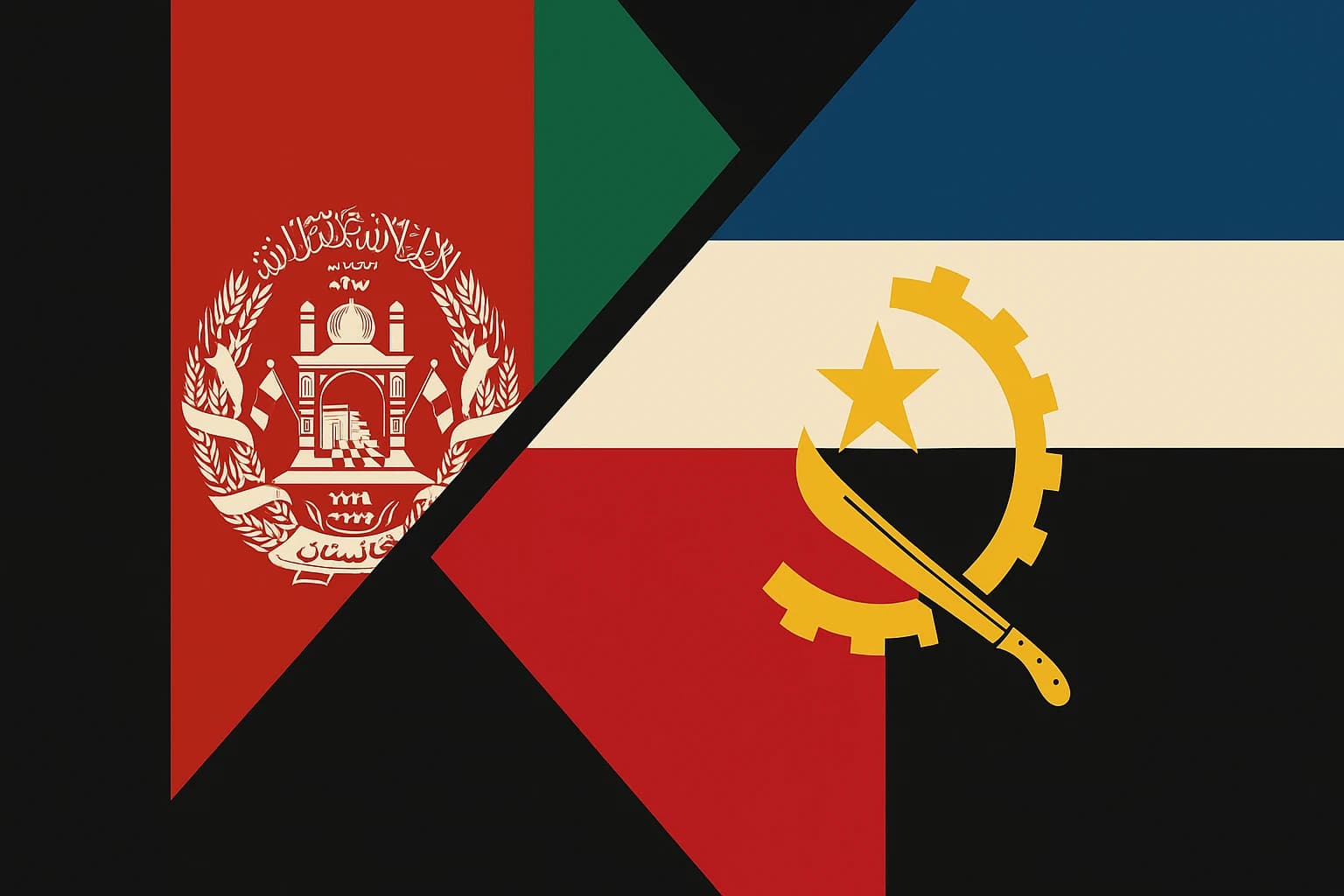
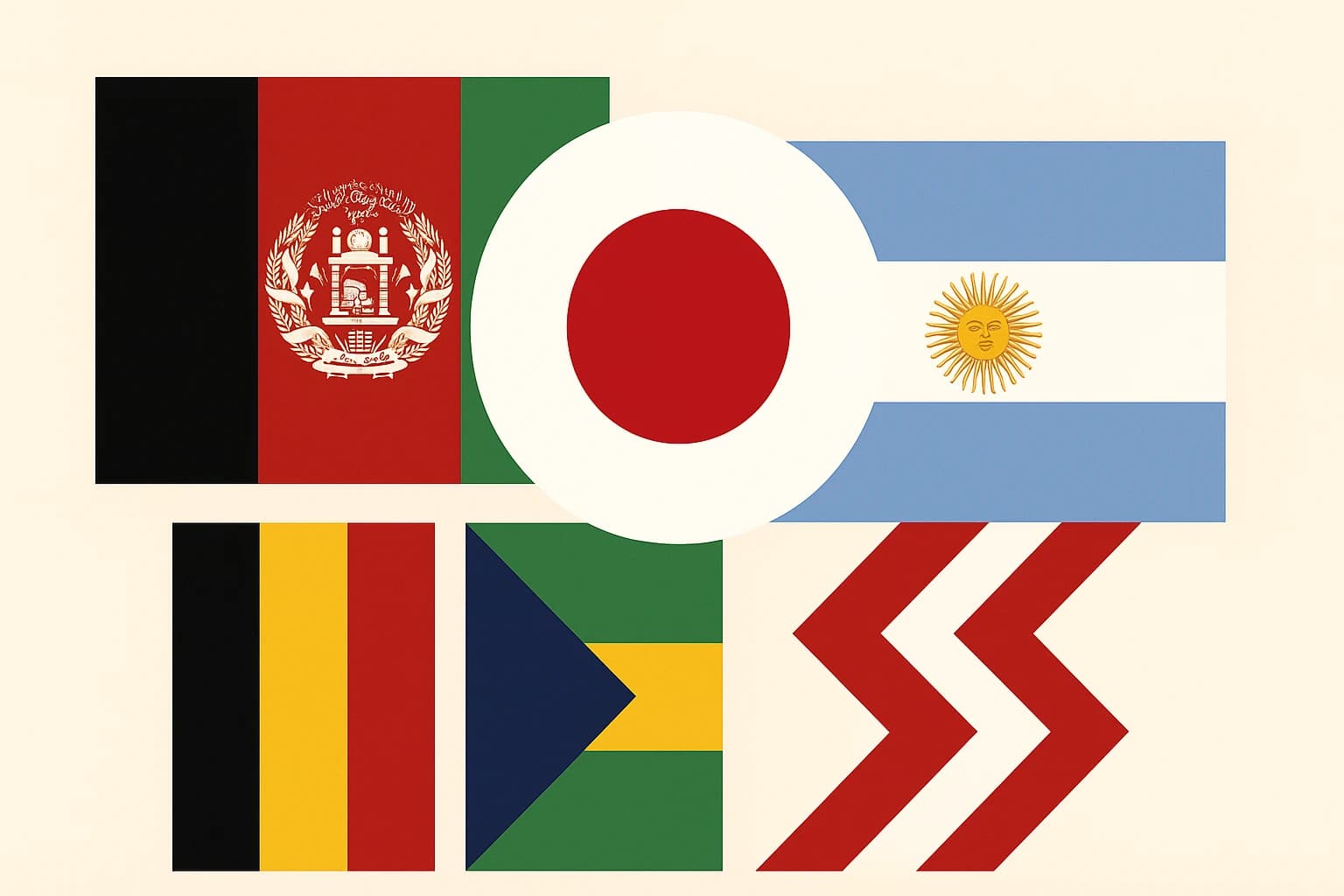
The current flag has black, red, and green vertical stripes. Black stands for the country's troubled past, red for the blood shed for freedom, and green for hope and prosperity.
The emblem carries a mosque, a reference to Afghanistan's Islamic faith, surrounded by wheat for the place of agriculture in Afghan life. Afghanistan's flags have shifted with its regimes, from monarchy to republic, each design attached to the era that produced it.
Angola's flag
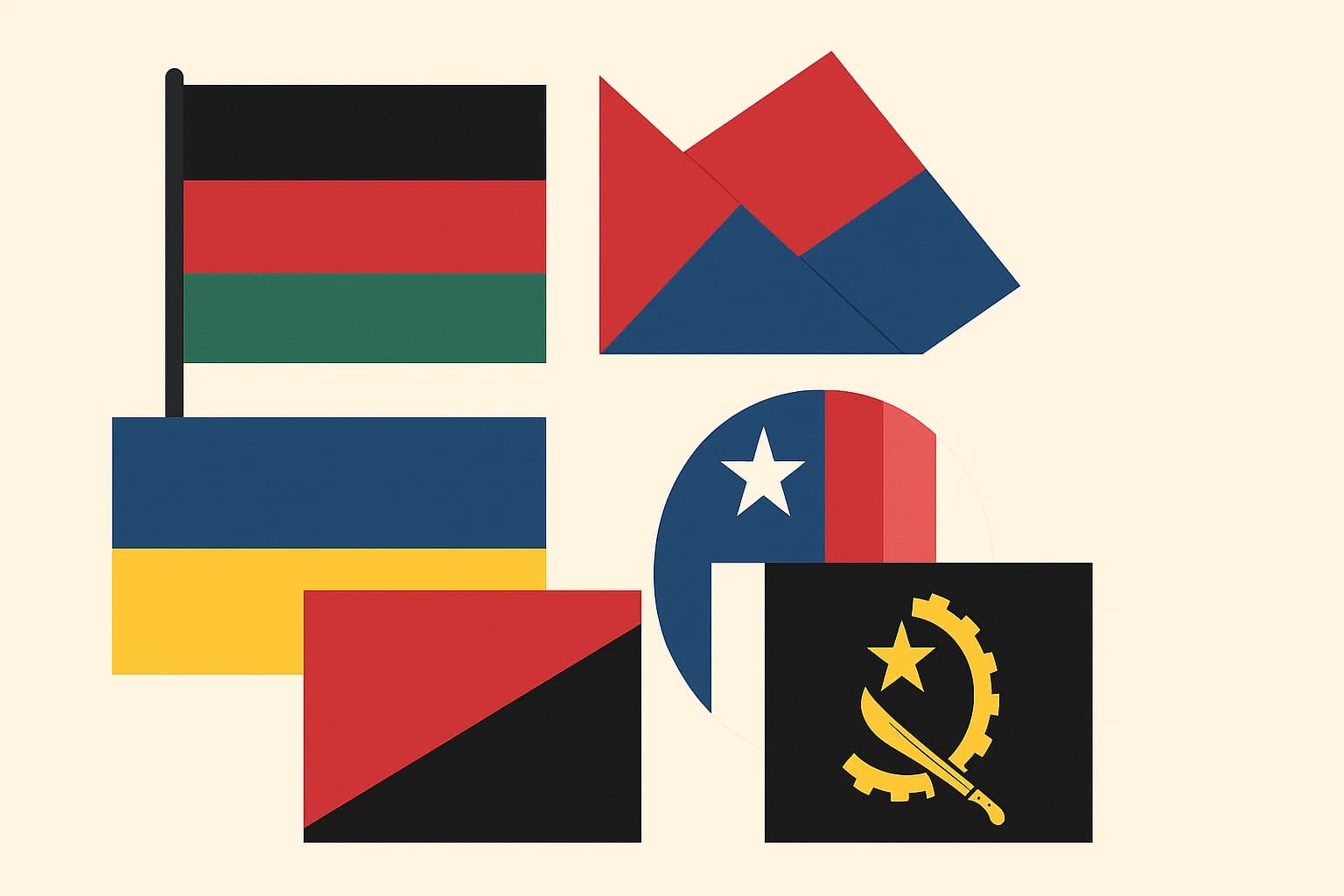
Adopted in 1975 after independence, Angola's flag has red and black stripes with a yellow emblem: a gear crossed by a machete, with a star. Red stands for the blood shed for independence and black for the African continent. The gear and the machete point to industry and agriculture.
The emblem is tied directly to the liberation struggle rather than to older national imagery, which puts the country's post-independence aims at the center of its own flag.
Where the two overlap, and where they part
Both flags encode hardship. Afghanistan's black and Angola's red each refer to periods of bloodshed. From there they diverge. Afghanistan's stripes run vertical, Angola's horizontal. Angola's emblem is industrial and forward-looking, while Afghanistan's is religious, built around the mosque.
Each flag also picks a different anchor for national unity. Afghanistan uses faith. Angola uses labor and agriculture.
Flags in diplomacy
Flags do real work in international relations. They are visual shorthand for cultural identity and political position, which is why the sight of one at a summit or a negotiation carries weight well beyond the fabric. The UN's blue banner works the same way, standing in for the organization every time it appears.
Flags also change. Countries redesign them after political shifts, or to represent a population that no longer matches the last version. That is what makes the two flags above worth comparing at all. Neither is a fixed fact about its country. Both are arguments a particular government wanted to make.