Saddam's Handwriting? The Two Words Iraq Kept on Its Flag and the Hand It Tried to Erase
Julio Song · · 9 min read
Flags usually get their details from a law. For thirteen years, the most famous detail on Iraq's flag was defined by a rumour.
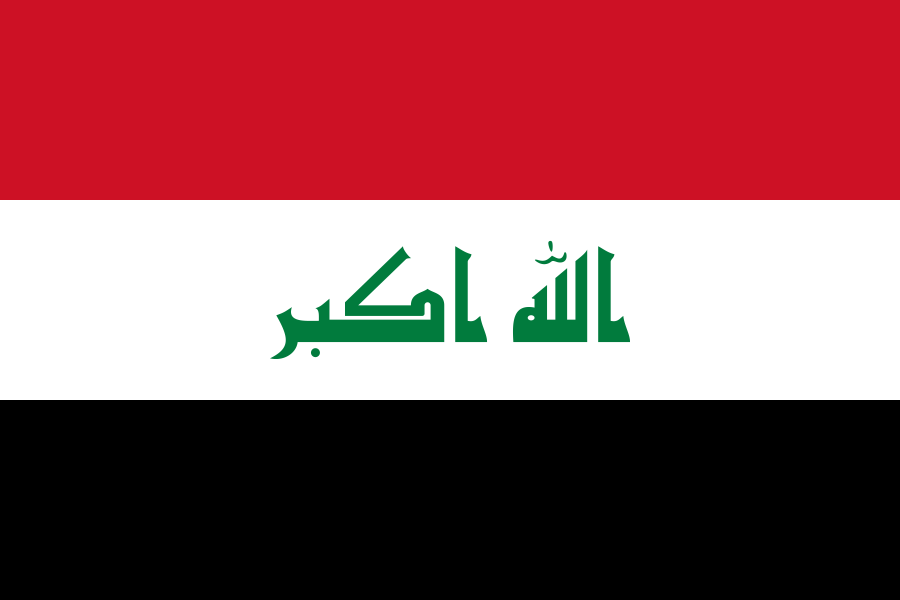
In January 1991, during the Gulf War, Saddam Hussein put two green words on the national flag: Allahu Akbar, "God is greater." The story spread that the letters were his own handwriting. After his fall, Iraqi officials treated that story as fact and spent years trying to get his hand off the cloth. The words stayed. Only the lettering changed.
The odd part is that nobody has ever shown the handwriting was his.
 IraqView flag →
Three stars for a union that never happened
The flag Saddam inherited was older than his rule. Iraq adopted its red, white and black tricolour with three green stars on 31 July 1963, months after the Ramadan Revolution toppled Abd al-Karim Qasim.
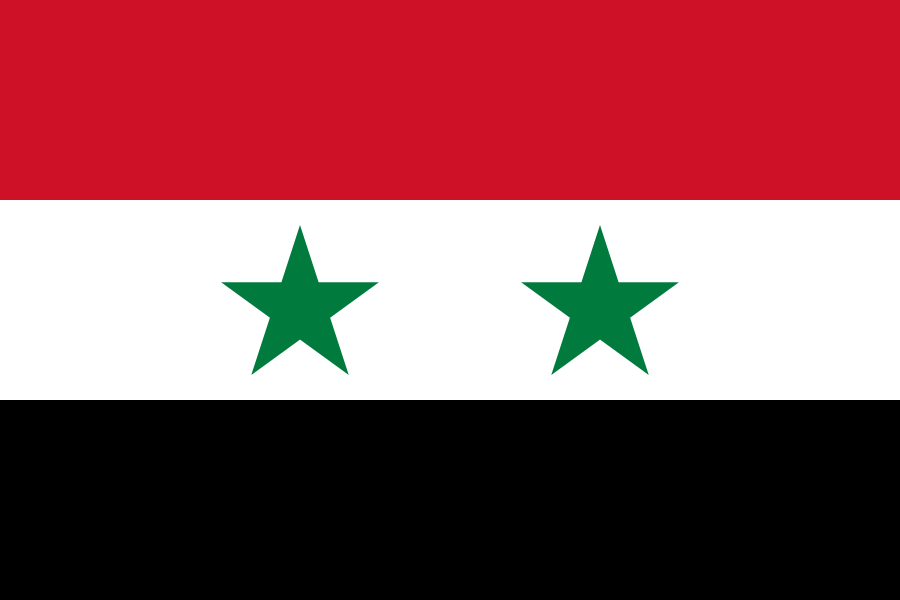
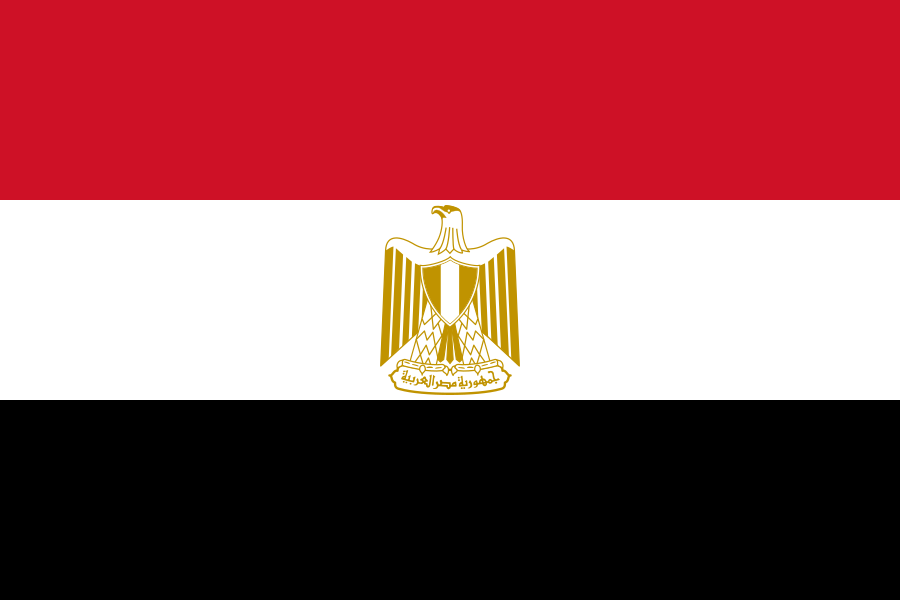
Those stars had a plan behind them. In 1963, Egypt, Syria and Iraq tried to form a new Arab union. Its proposed flag carried three stars, one for each state, and Iraq kept the design after the union failed. The template came from the United Arab Republic, the 1958 merger of Egypt and Syria, whose flag used the same stripes with two green stars.
 SyriaView flag →
Syria walked out of that union in 1961. Egypt kept the name and the two-star flag anyway, until 1 January 1972.
 EgyptView flag →
So the three stars on Iraq's flag began as a promise to two neighbours. Then the Ba'ath Party gave them a new job. Flag Law No. 33 of 1986 reassigned them to the party's motto: unity, freedom and socialism. A pan-Arab hope became a party slogan, and nobody had to change a single stitch.
January 1991: God is greater
The next change came under pressure. FOTW records the takbir as added on 13 January 1991, during the Gulf War. Wikipedia notes its sources give 13 or 14 January, with a law amending the 1986 flag law dated 22 January 1991.
The timing tells you the purpose. The Ba'ath Party had built its identity on secular Arab nationalism. Writing "God is greater" between the stars, in the middle of a war, gave the regime a religious banner to fight under. Wikipedia describes the change as a prelude to the Faith Campaign, the regime's turn toward public piety through the 1990s. Bidoun's analysis frames Saddam's rule as a halfway stage between a secular and a religious political system, and the flag shows that shift in two words.
The words sat on the white stripe, split by the middle star. Then the rumour attached itself.
The handwriting nobody proved
The story gets slippery here. Read the press coverage from the years after 2003 and you'll notice the hedging.
An Associated Press report in 2008 called the calligraphy "believed inspired by Saddam's handwriting." An AFP report from the same month described the line of script as "allegedly" in his handwriting. Two wire services, two careful qualifiers.
The vexillologists at Flags of the World argued about it in public. One contributor in 2002 said the script resembled Saddam's hand. Another, Željko Heimer, pushed back in 2004 and asked: "Is there really any evidence that the inscription is Saddam's handwriting?" Nobody on the thread produced any.
Other outlets were less careful. The Christian Science Monitor stated flatly that "the script was originally in Saddam's handwriting." That version won out in popular memory, because it was the better story.
For flag history, the answer barely matters. Whether the rumour was true made no difference to what happened next. Iraq's post-2003 leaders acted as if it were true. FOTW contributor Chrystian Kretowicz wrote in 2004 that the new government did not want to be associated with that calligraphy. Iraqis believed the letters belonged to the dictator, and for the people redesigning the flag, that belief was enough.
The blue flag that lasted four days
The first attempt to fix the problem went much further than new lettering. It threw out everything.
On 26 April 2004, Reuters reported the design chosen by the US-appointed Iraqi Governing Council. FOTW quotes the description: "a pale blue crescent on a white background", with a yellow strip between two blue lines along the bottom. A council spokesman said white stood for peace and a new start. The blue lines were the Tigris and Euphrates. Yellow stood for the Kurds. The crescent stood for Islam.
The designer was Rifat Chadirji, an Iraqi architect living in London. He was also the brother of Nassir al-Chaderchi, who chaired the council committee that picked the flag. Chadirji said, "I had no idea about a competition to design the flag." That did not calm anyone down.
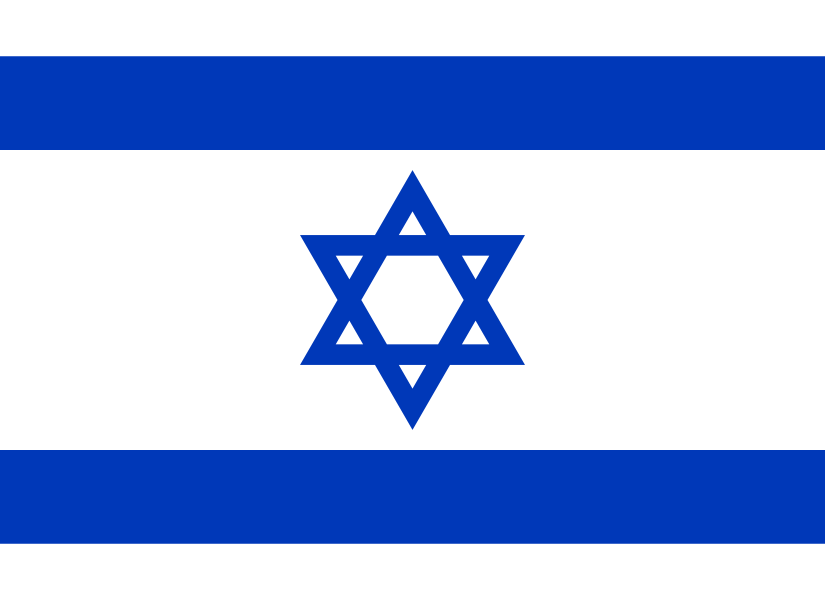
The reaction was fast. Baghdad residents interviewed by NBC said the pale blue matched the dominant colour of Israel's flag. Blue on white, with horizontal lines near the edge. Iraqis saw the problem at once.
 IsraelView flag →
Chadirji denied any intent. He told The Times: "I did not think about Israel. Political opinions don't concern me. I approached the design from a graphic point of view."
The critics had more than one complaint. Bidoun's analysis pointed out the flag gave the Kurds an ethnic stripe but defined Arabs only by religion, and left Christians and Turkmen out entirely. The design also dropped the pan-Arab colours, keeping only the white. On 28 April, the council presented a version with a darker blue. Two days later, British officials at the Coalition Provisional Authority described it as "a proposal" that had never been adopted.
The council had no legislative power anyway. The 1991 flag, rumoured handwriting and all, stayed up.
Kufic script, and a handover under the old flag
Plan B was smaller: keep the stripes, the stars and the words, and change the hand.
The new version replaced the disputed script with Kufic, an angular style of Arabic calligraphy. Kretowicz called it "decorative Kufic script, which originated in Iraq." That choice was smart. The government swapped a dictator's hand for a script with Iraqi roots, and claimed a local pedigree in the bargain.
FOTW dates the modification to 28 June 2004 and records the new design going up over the Iraqi embassy in Washington on 30 June. Bidoun noted an awkward detail from that summer: the transfer of power from the occupation authority was carried out under the flag of the fallen Ba'athist regime.
Look closely at the two versions side by side and you'll see how modest the change was. Same colours, same three stars, same two words of Arabic. Only the letterforms moved. For someone at the far end of a parade ground, the 2004 flag and the 1991 flag look identical.
And no law ever confirmed it. FOTW contributor Jan Oskar Engene noted that no flag legislation appears from after the 2003 regime change before 2008, which suggests the Kufic flag flew for years without a statute behind it.
Stars out, in time for a meeting in Erbil
The Kufic fix solved the handwriting problem. It did nothing about the stars, and for Iraqi Kurds the stars were the bigger issue.
Many Kurdish politicians had survived the Anfal campaign of the 1980s and its gas attacks. In 2006, Kurdish leader Massoud Barzani refused to fly the national flag at government offices. In 2007 he called for it to go, saying "the present flag is not the flag of Iraq, but of the Baath Party."
The deadline came from diplomacy. An international conference of Arab parliamentarians was set for Erbil, in Iraqi Kurdistan, in early 2008. Officials in Baghdad wanted an acceptable flag before that meeting. Adviser Zuhair Humadi put it bluntly: "They won't come if only the Kurdish flag is flying."
So parliament moved. On 22 January 2008, lawmakers adopted an interim flag. According to Engene's report, "proposal B won by 110 out of 165 votes." The three stars came out. The takbir stayed, in green Kufic, now set in bold and pulled closer together.
Not everyone cheered:
- Lawmakers loyal to cleric Moqtada al-Sadr voted against and wanted to keep the old flag until a permanent one was chosen.
- Sunni lawmaker Khalaf al-Alayan called it "an organized conspiracy to change the flag."
- Humam Hamoudi of the Supreme Islamic Iraqi Council said the new flag had "no signs of Saddam's regime".
The presidency signed the act on 29 January 2008. On 5 February, the new flag went up over the Iraqi Cabinet building, nearly five years after the invasion. Kurdish lawmaker Nassih Gahfour called it "a good step toward the new Iraq."
The one-year flag that never left
The 2008 flag came with an expiry date. Parliament said it would fly for one year while a permanent design was found.
That search stalled. Wikipedia records a 2008 design contest with 50 submissions, six of which went to parliament. The law came up for review in 2009. The temporary flag is still the official flag today.
Old versions refuse to fade, too. In March 2025, police in Baghdad arrested a man for raising the 2004 flag over his home. A design from the Kufic interim years now counts as a political statement.
Step back and the pattern is clear. Since 1963, every change to Iraq's flag that stuck has been an edit to the one before. The stars went from union to party slogan to nothing. The words went from wartime propaganda to a fixture that survived every vote. The one design that dropped them, the blue crescent of 2004, lasted four days.
What Iraq's new leaders did erase was the hand. Whether it was ever his is still unproven. If you want to see the change, find a photo of the 1991 flag and set it next to today's. Look at the lettering. That gap is seventeen years of argument, and it started with a rumour.
Julio Song
Writer
Julio is a staff writer at FlagDB. He studied Mathematics at the University of Madrid and has a passion for vexillology.
More from Julio Song →