Afghanistan's Flag Kept Being Rewritten. Andorra's Settled a Negotiation.
Julio Song · · 3 min read
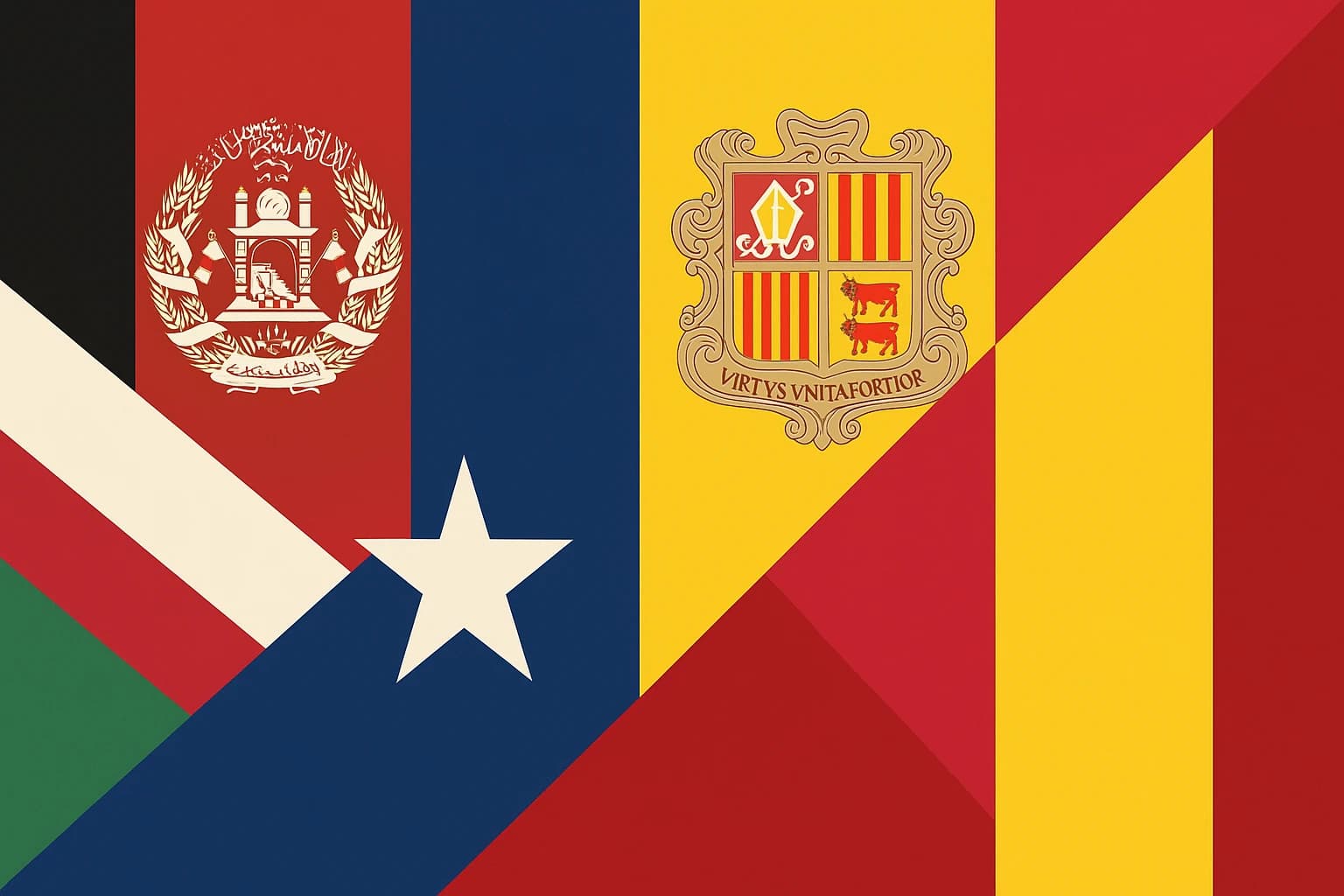
Every national flag is a compressed argument about history and identity, and the arguments differ enormously depending on who was making them and when. Afghanistan and Andorra sit at opposite ends of that range, one flag rewritten again and again by political upheaval, the other holding a settled negotiation between two larger neighbors.
Colors and shapes as a working vocabulary
In vexillology, the study of flags, colors and shapes function as vocabulary rather than decoration. Red commonly signals bravery or struggle. Blue can mean freedom or peace. Stars suggest celestial guidance, stripes often stand for unity.
The catch is that the vocabulary is not universal. A color that means one thing on one flag can mean something unrelated on another, which is why reading a flag without knowing its national context usually produces a confident wrong answer.
Afghanistan: a flag rewritten
Afghanistan's flag has changed through a long run of regimes and periods of turmoil.
Each shift in power tended to bring a shift in the flag, so the design history reads as a record of ideological change. Recurring elements like the mosque and wheat carry faith and prosperity, and their survival across versions is as informative as the changes around them.
The American flag as an accumulation
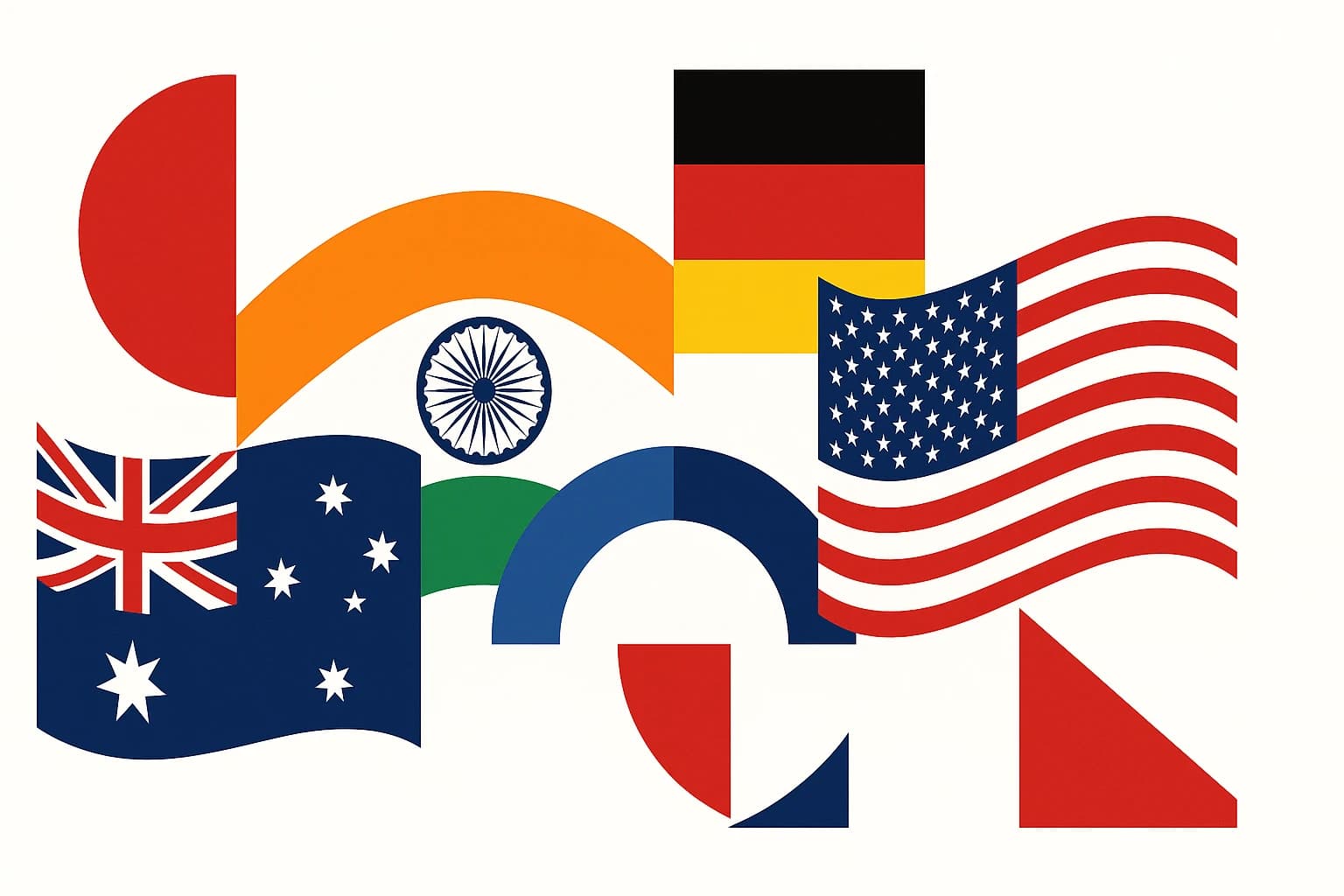
The Stars and Stripes is a flag built by addition.
It began with 13 colonies and now carries 50 stars, one added with each new state. The design is a running tally of the country's expansion, updated rather than replaced.
Andorra between two neighbors
Andorra sits between France and Spain, and its flag says so.
The design incorporates elements from both neighbors while remaining its own thing, and the shared history shows most clearly in the coat of arms, which combines the different heritages into a single emblem.
Flags in wartime and in movements
Flags tend to change when national self-understanding changes. Wars often produce redesigns that reflect a new spirit or a new set of aspirations, and nationalist movements have repeatedly reworked flags into emblems of pride and unity. The design follows the politics rather than the other way around.
The less familiar flags
Beyond the flags everyone can name, there are hundreds that most people have never looked at closely.
Colonial flags now function as historical relics, records of rulers who are gone, and some designs have origin stories that have never been fully settled.
Who studies flags now
Flag design has become a more open field. Historians and designers work together to preserve historical accuracy while accommodating modern needs, and digital flag databases have made the reference material available to anyone who wants it. That accessibility is part of why flag debates now involve far more people than the specialists who once had the sources.
Julio Song
Writer
Julio is a staff writer at FlagDB. He studied Mathematics at the University of Madrid and has a passion for vexillology.
More from Julio Song →