Composite Flags: What Countries Do When No Single Symbol Covers Everyone
Julio Song · · 2 min read
A composite flag combines elements from more than one culture or history into a single design. It is what a country reaches for when no single symbol will cover everyone living there, and it is a harder design problem than it looks: the parts have to read as one flag rather than as a committee's compromise.
The Caribbean Netherlands
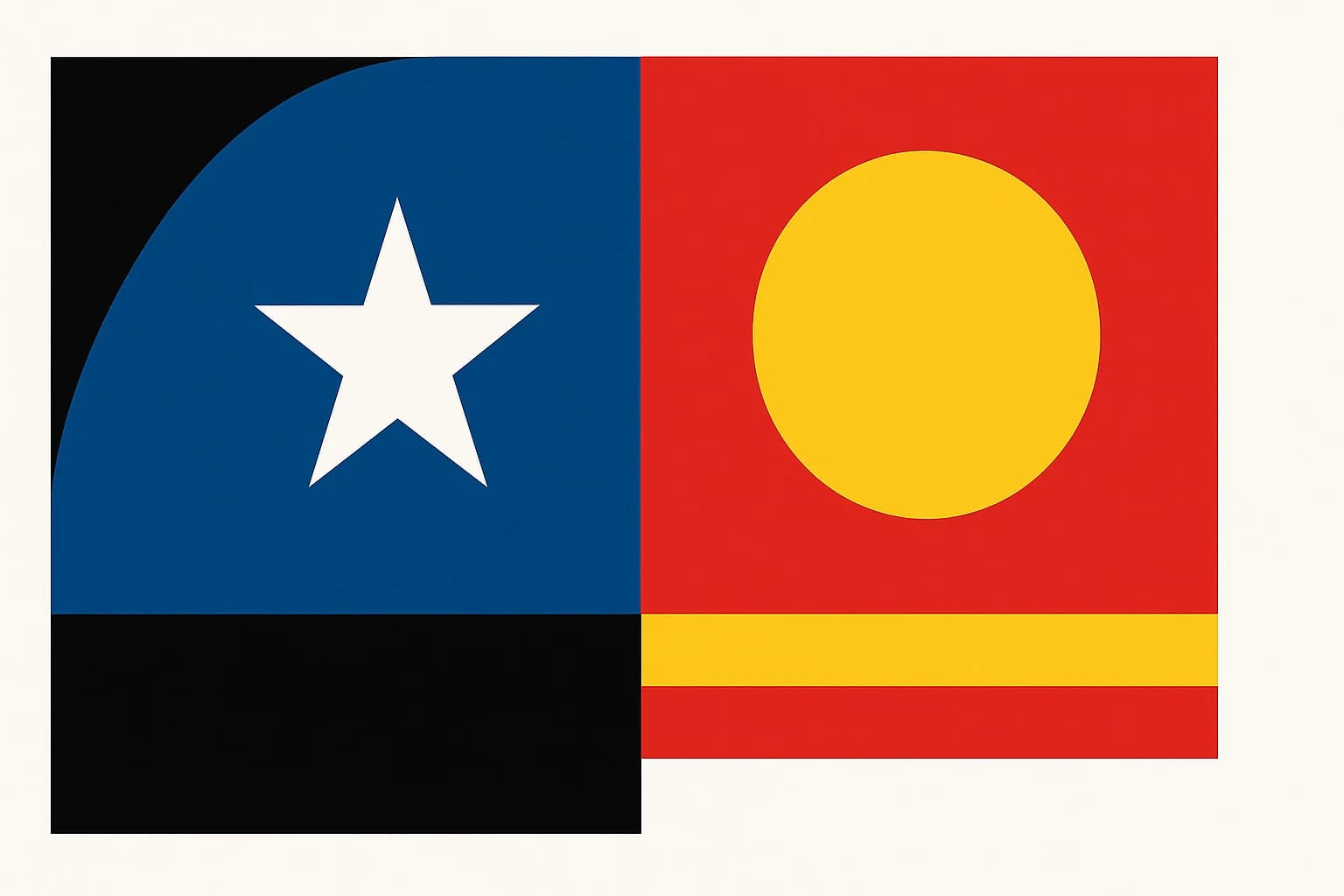
The Caribbean Netherlands covers Bonaire, Sint Eustatius and Saba. Its flag places a star on a blue field, with red and white, for unity and peace across the islands, and the circular emblem stands for completeness. The design has to represent three separate places without favoring any of them, which is most of the reason it looks the way it does.
Argentina
Argentina's flag dates from the early 19th century, and it has been through the whole of the country's nation building since. The sun refers to Inti, the Inca sun god, which puts indigenous roots directly onto the national emblem. The blue and white are read as sky and clouds. Together they hold an indigenous reference and a European format on the same field.
South Africa and the United Kingdom
South Africa's flag brings together colors associated with different political groups and communities, and its whole purpose after apartheid was to make that combination visible rather than to hide it.
The Union Jack combines the crosses of Saint George, Saint Andrew and Saint Patrick. It is the older approach to the same problem: stack the constituent symbols and let the result stand for the union.
Both flags encode a social arrangement, and both remain readable as arguments about that arrangement.
What composite flags do to people
Composite designs are meant to remind citizens of a shared past and a shared future, and they usually succeed at prompting a reaction. Sometimes that reaction is pride. Sometimes it is an argument about whose symbol got more space, which is a national conversation the flag started.
Where they run into trouble
The disputes are about interpretation. Combining cultural symbols can read as respect or as appropriation, and the line between them is drawn differently by different groups. Designs that one community sees as inclusive another sees as a misrepresentation of itself, and once that happens the flag becomes the site of the disagreement rather than a resolution of it.
Julio Song
Writer
Julio is a staff writer at FlagDB. He studied Mathematics at the University of Madrid and has a passion for vexillology.
More from Julio Song →