What a flag is for when things go wrong
A flag spends most of its life as a routine object on a government building. Its real function shows up in a crisis, when institutions are failing and the flag is the one piece of the state that still works: portable, recognizable, and not dependent on anyone's permission. That is why it appears at revolutions, at funerals, and in the windows of people who have lost almost everything else.
Afghanistan
Afghanistan's flag has been redrawn through a long series of regime changes, and each version carries some inheritance from the ones before it.
The current design has black, red and green stripes with the national emblem over them. Black stands for the dark past, red for the blood shed, green for hope. Whatever the government, the colors have stayed, which is part of why the flag can function as a point of solidarity in periods when very little else is agreed on.
Haiti
Haiti's flag is two horizontal bands, blue and red.
It has been through the country's revolutions, the 2010 earthquake and the political turmoil that continues now. The two colors are read as the unity of a diverse population, and the flag held that meaning through each of those crises. Haitians kept using it when the state itself was barely operating, which is about as strong a test as a national symbol gets.
Venezuela, Ukraine and Syria
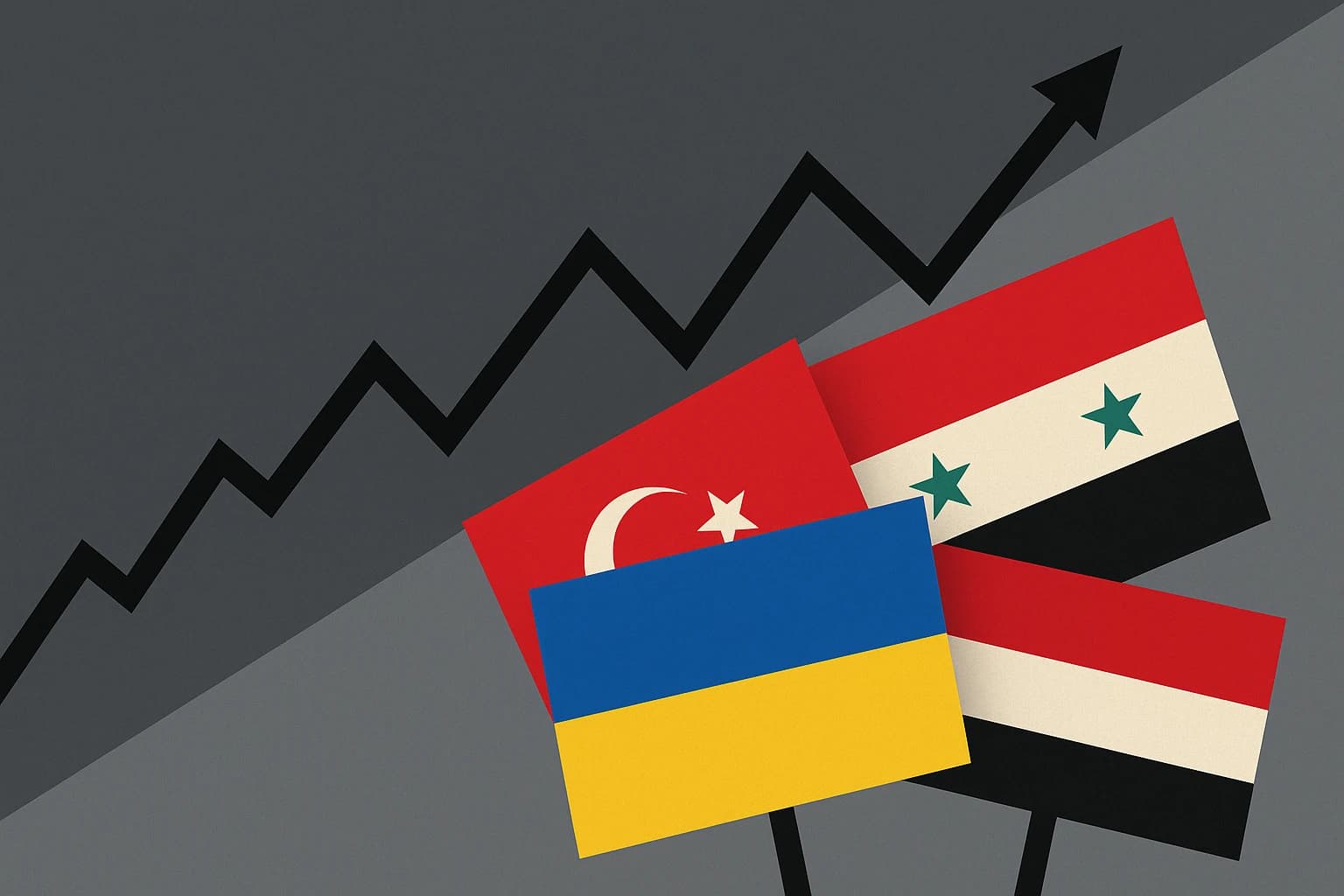
Other flags have been pulled into national crises in different ways. Venezuela's has become bound up with the country's economic collapse.
Ukraine's blue and yellow stripes now stand for a country under continuous attack, and they are recognized far outside Ukraine because of it.
Syria's flag is politically contentious, which is its own kind of evidence about what the country has been through.
Why the object matters psychologically
At a protest, a flag turns a crowd into something legible. It tells participants who else is with them and tells everyone watching what the gathering is about, without a single word being spoken. A flag hung from a balcony does a smaller version of the same thing. This is not sentimentality; it is the practical reason organizers hand out flags.
Meanings shift underneath the design
The design can stay fixed while what it means moves. A flag that stood for one government's legitimacy can come to stand for opposition to it, and a flag that was purely national can become an international shorthand. Social media accelerates this. A flag emoji or a profile picture overlay spreads a meaning in days that once took years, and it can attach a symbol to a cause that its designers never anticipated.
Artists and activists work on the same material, putting flags into installations, protest art and festival displays. What they are doing is arguing about the meaning, which is only possible because the design itself holds still.