Independence movements tend to have a flag before they have a state. A movement needs something that can go on a leaflet, be carried at a march, and be raised the day the old administration leaves. Afghanistan, Angola and South Africa all ended up with flags that record what the fight was about.
Why movements reach for a flag first
A flag is cheap to copy, easy to carry, and readable from a distance. That makes it the first piece of state apparatus a movement can actually own, and it works on people who will never read the manifesto. It is also why flags appear in the photographs of almost every revolution, usually well before anything else has been settled.
Afghanistan
Afghanistan's flag has been redesigned more often than most, with each version tracking a change of regime.
The black, red and green stripes carry assigned meanings: black for the country's dark past, red for the struggle for independence, green for hope and prosperity. Those colors have outlasted the emblems that have come and gone between them.
Angola
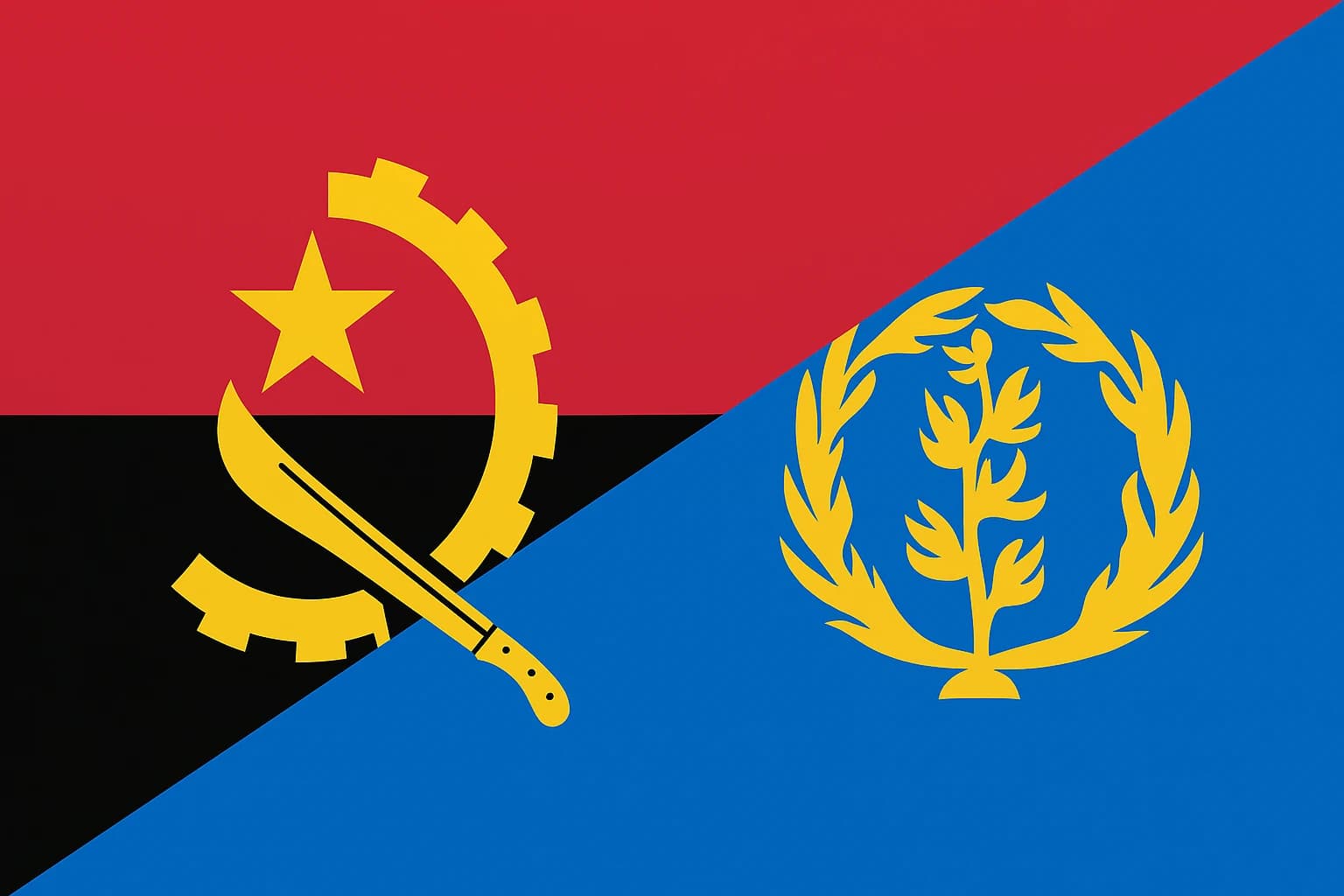
Angola's flag came out of the fight against colonial rule and makes no attempt to soften it. Bold red and black bands, with an emblem in the middle.
Red stands for bloodshed and sacrifice, black for Africa. The emblem is a machete crossed with a half cogwheel under a star, pointing at labor and struggle rather than at a dynasty or a founding hero. That choice says a good deal about how the independence movement understood itself.
South Africa
South Africa adopted its current flag as apartheid ended, and the design was built to be read as an argument about reconciliation.
It carries six colors and a Y shape, which is what makes it recognizable at a glance. Black stands for the people, green for the land, gold for the country's riches. The Y does the real work: separate bands converge into one, which is about as direct a picture of integration as a flag design allows.
What comparison across continents shows
Set these flags next to each other and the differences are as informative as the similarities. European flags often keep simple designs inherited from long-established states. African flags, designed much more recently and under very different circumstances, tend to spell out the struggle for autonomy in their symbols and their color meanings. Some flags were built as propaganda; others were built to hold a divided country together. Comparing them is a fast way into political histories you might otherwise never touch.
Newer movements, newer flags
New movements still produce new flags, and globalization has mixed traditional symbolism with contemporary aims. What has changed most is distribution. Social media puts a movement's flag in front of a global audience within hours, so the design now has to work as an avatar and a hashtag image as much as on a pole.
That is a real constraint on what gets designed, and it will keep shaping the flags that independence movements adopt next.