Afghanistan and Armenia: two flags, two long histories
Afghanistan and Armenia both have flags that have to account for an unusually long past. Neither country is new, and neither flag is trying to invent an identity from nothing. They are compressing something that already existed.
Ancient origins
Afghanistan sits at the crossroads of Central and South Asia, which made it central to trade and to conquest. Ancient cities like Bactria are what remain of a civilization that fed into the culture there now.
Armenia was among the earliest Christian nations, with roots going back to the Urartu civilization. Its history is largely a history of surviving.
National flags in both cases arrived much later than the identities they represent, at moments when autonomy and unity were the pressing questions.
The Afghan flag
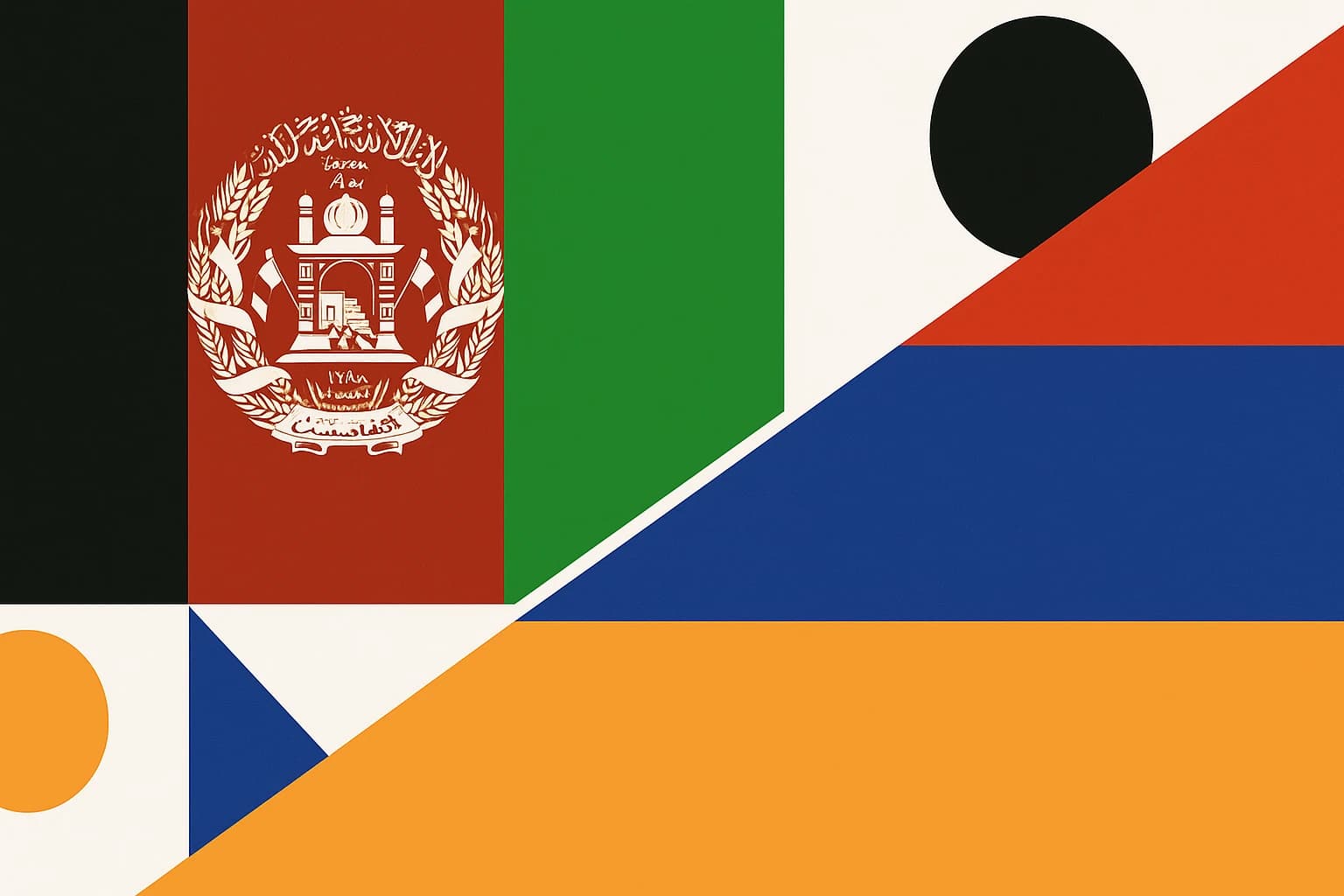
The current design uses black, red and green. Black is for past struggles, red for bloodshed and bravery, green for hope and prosperity.
The flag changed as regimes changed, repeatedly. The coat of arms is the part that held: a mosque within laurel branches, standing for faith and unity.
The Armenian tricolor
Red is for the blood shed for freedom and for the Christian faith. Blue is the sky over Armenia. Orange is courage and the fertile land.
Armenia adopted it after independence from the Soviet Union, so the flag marks the point at which the country stopped being governed from elsewhere.
What each flag has been used for
Both have been carried at moments when the country was under pressure. In Afghanistan the flag was at the front of resistance movements against foreign invasion. Armenia's became a symbol of post-Soviet revival and turns up at national celebrations like Independence Day.
Waving either one at a parade or a protest is not just ceremony. It is a claim about who the country belongs to.
How they read abroad
Afghanistan's flag is widely read as a symbol of resilience against instability. Armenia's has picked up recognition as an emblem of cultural revival, especially in diaspora communities where the flag does more work than it does at home.
Neither flag is only an identifier. Both are compressed arguments about a national past, which is what makes them worth reading closely.