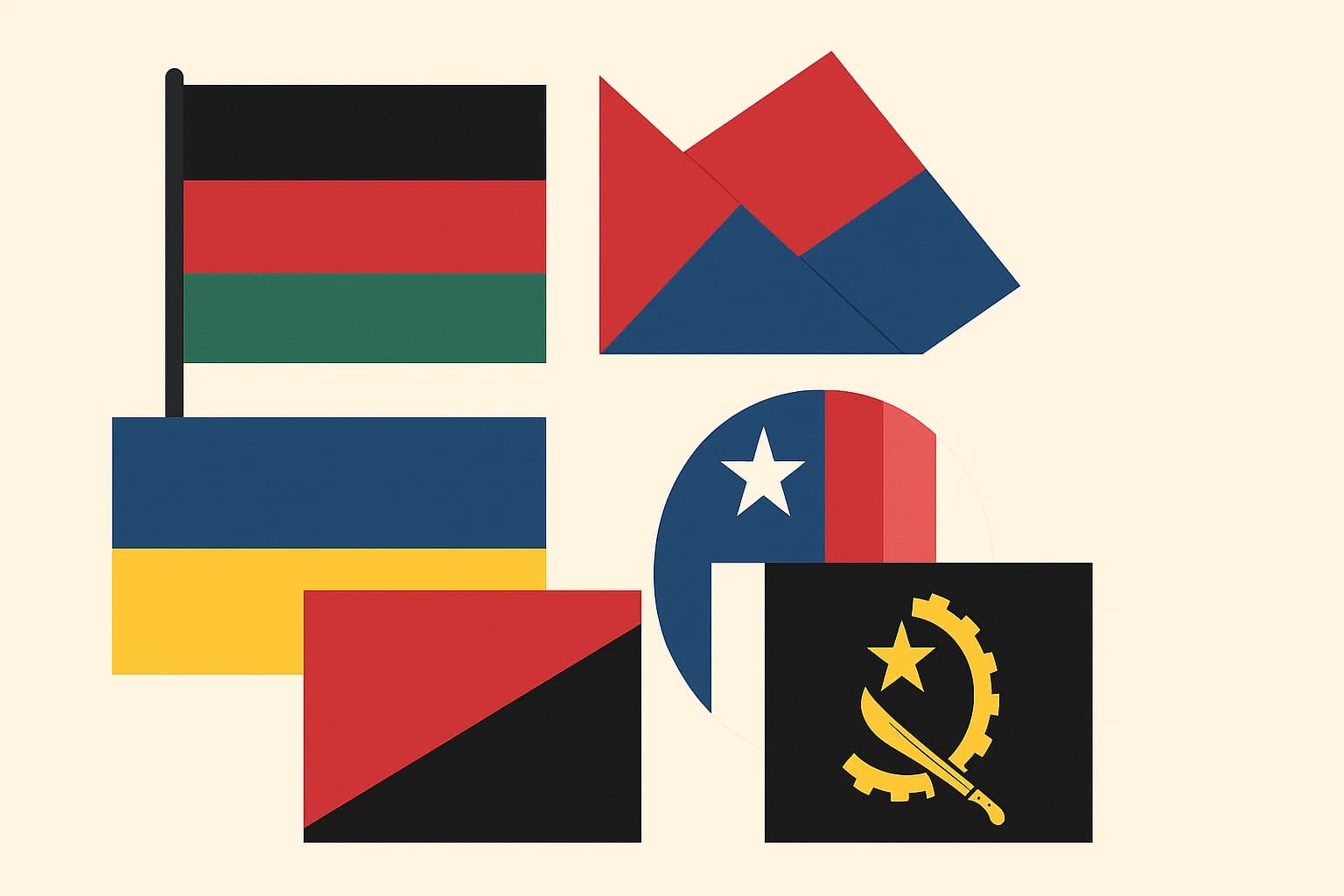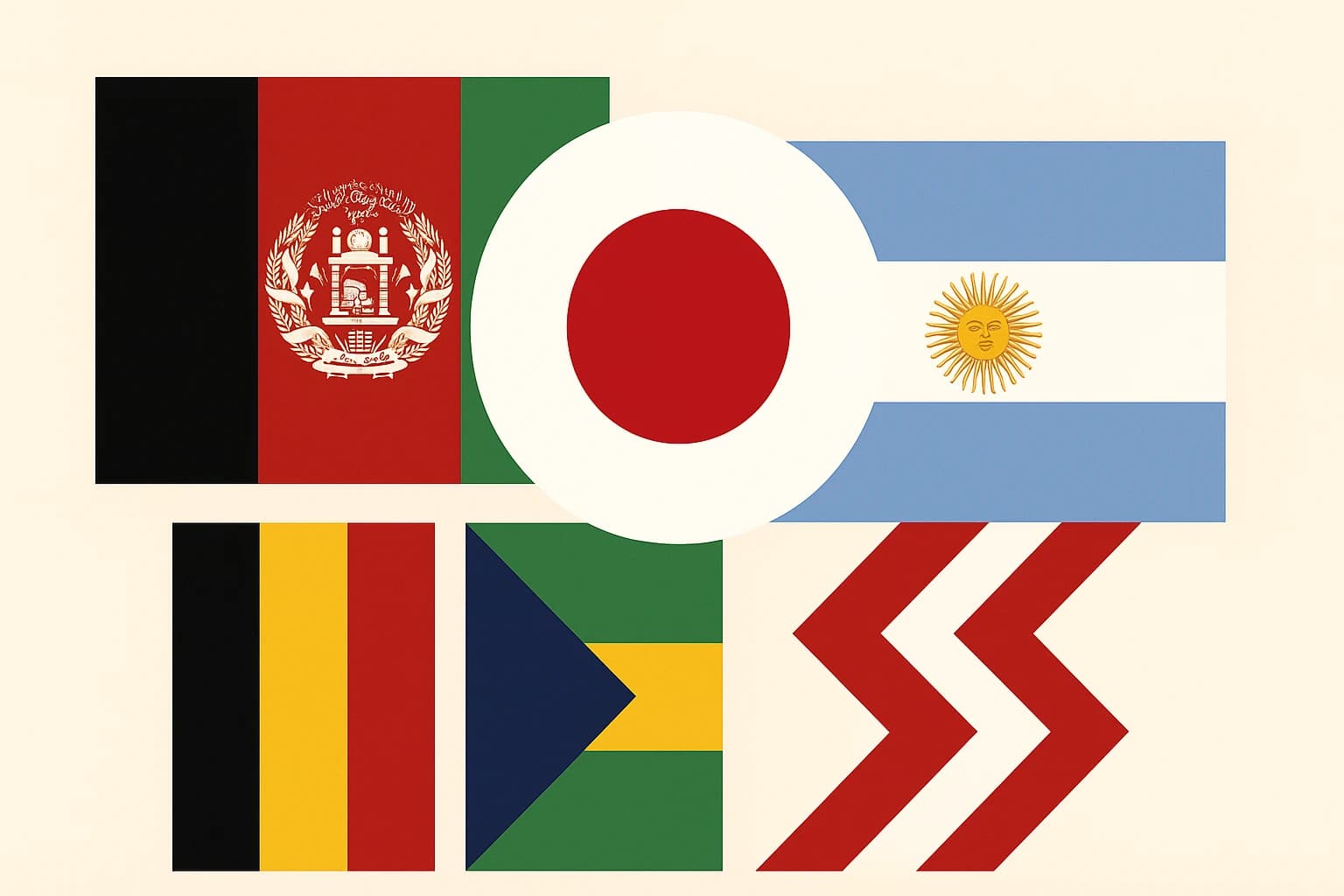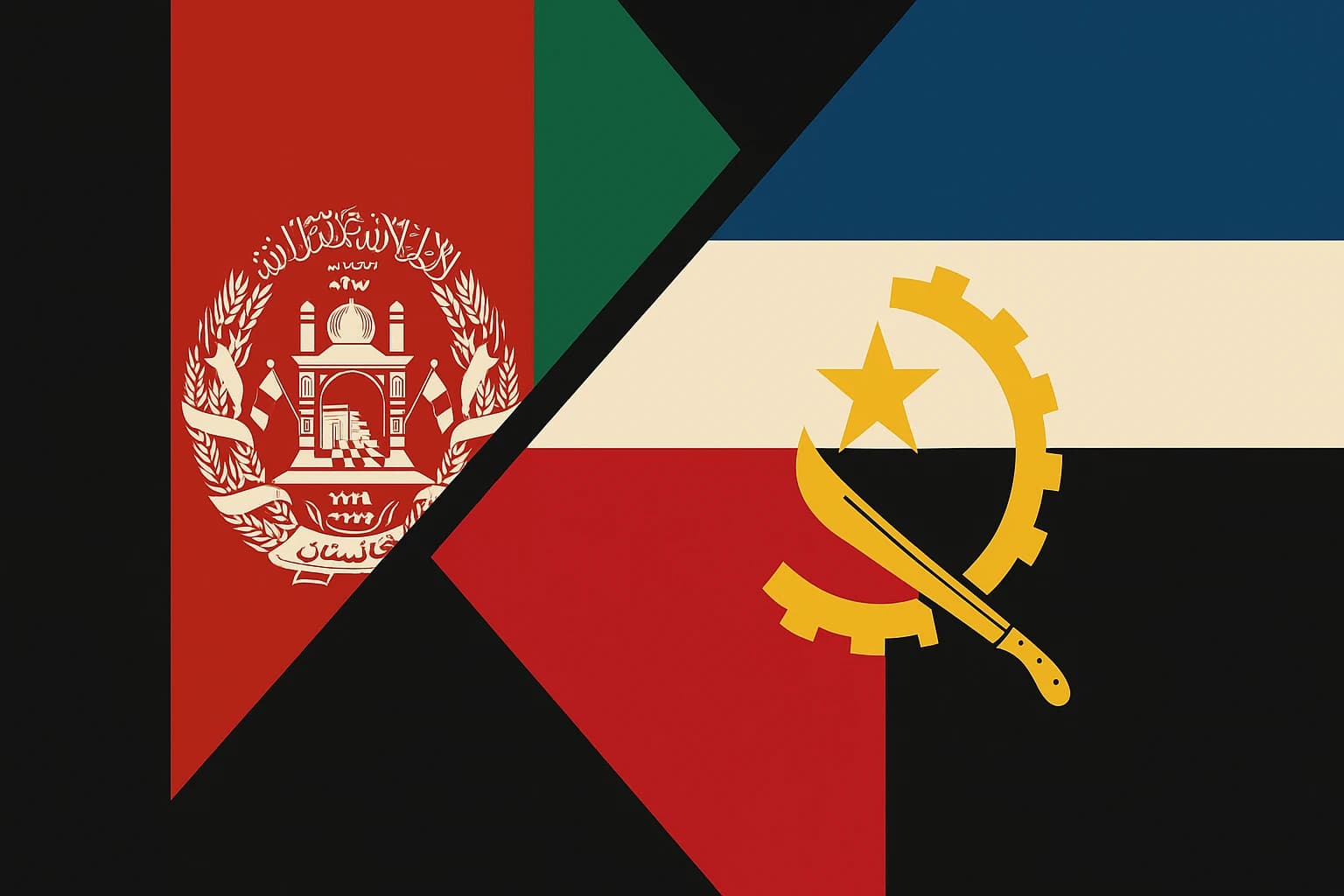
Black, red, and green turn up together on national flags far more often than chance would explain, and the reasons are almost never decorative. Two flags that use all three, Afghanistan's and Angola's, show how much political history a palette can be asked to carry.
What the three colors usually mean
Vexillology, the study of flags, spends a lot of its time on exactly this question, because the same three colors keep doing similar work in very different places.
Red is the most consistent. It stands for courage, and more specifically for sacrifice and blood spilled, which is why so many African liberation movements adopted it. Black carries strength in some contexts and mourning in others, and it often marks racial identity or the harsh conditions a country has come through. Green is the most forward-looking of the three, tied to land, agriculture, fertility, and hope.
The Pan-African flag is the clearest example of the combination working as a single statement about unity and freedom.
Afghanistan
Afghanistan has changed its flag more often than almost any other country, with each version attached to a different political era.
The current black, red, and green stand for past struggles, bloodshed, and a hoped-for future, in that order. At the center sits the coat of arms, built around a mosque, which puts Islam at the heart of the national emblem rather than at its edges.
Angola
Angola's flag reads as a statement about how the country arrived where it is.
The red and black recall both the fight for independence and the civil war that followed it. The gold gear and machete stand for industry and agriculture, the two things the country's economy was built on.
The same logic elsewhere
The pattern is not limited to these three colors. Japan's red circle is the sun. India's saffron stands for courage and sacrifice. Brazil's green is the forest. In each case a single color is asked to summarize something a country considers foundational about itself, which is a lot of weight for a dye to carry, and the reason flag palettes change so rarely once they are set.