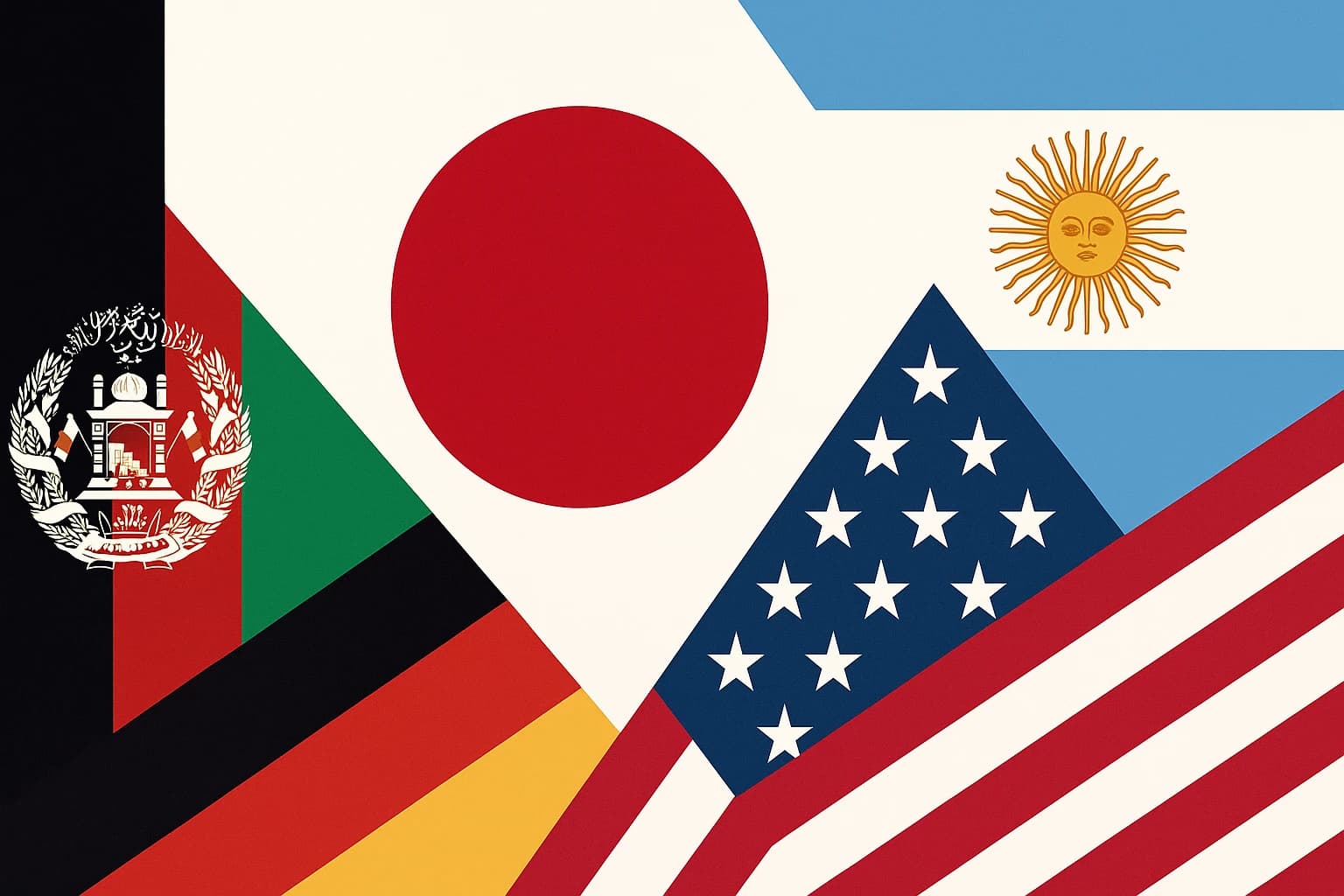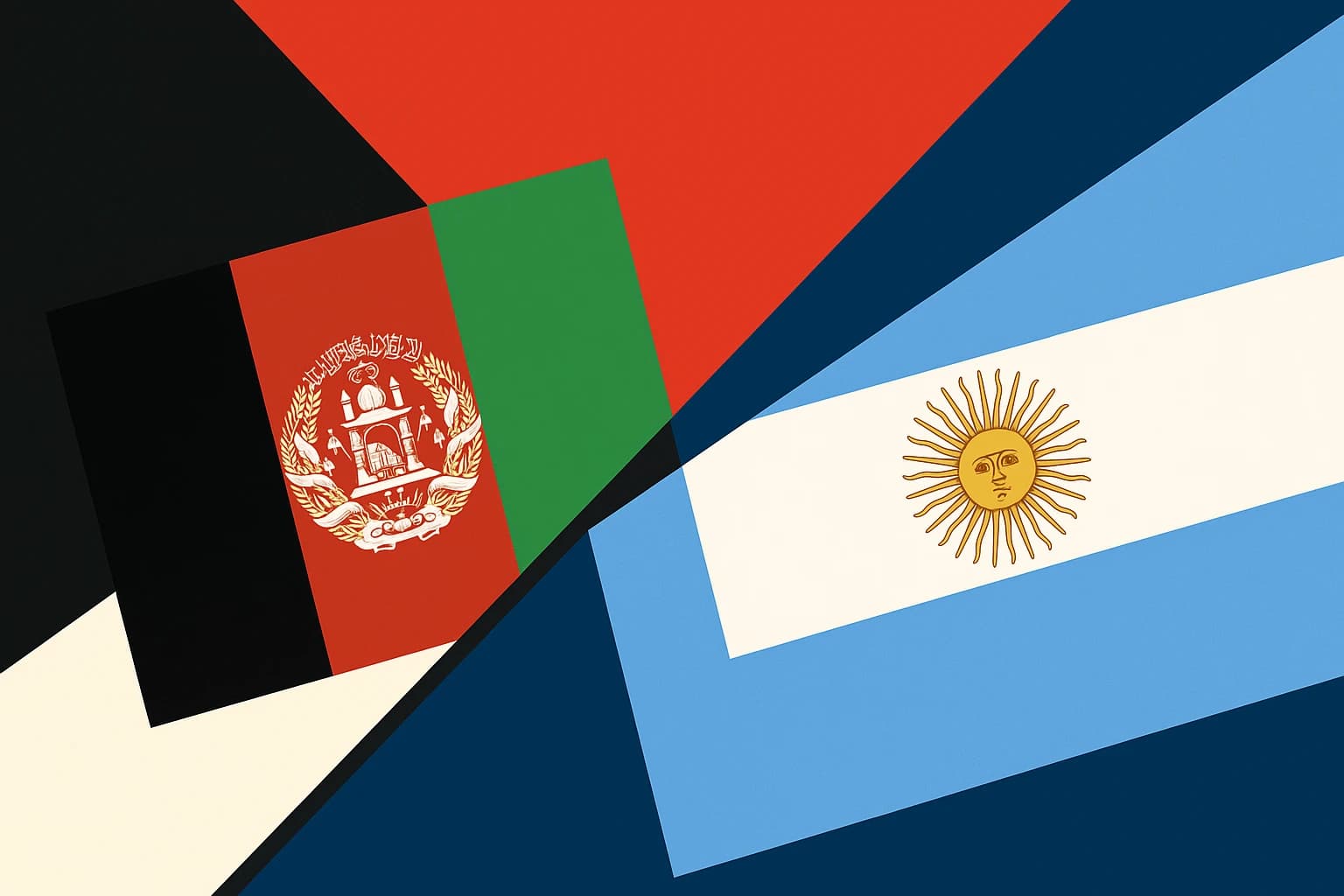
Afghanistan and Argentina have almost nothing in common except this: both countries have spent long stretches in political turmoil, and both have a flag that people kept reaching for anyway. What follows is where those two designs came from and what they have meant through the upheaval.
Afghanistan: the colors and the changes
Afghanistan's flag has changed many times, each version tracking the politics of the moment.
Black represents a history of oppression. Red is the blood of martyrs. Green signifies hope and a promising future.
The readings have moved with the country. Regime changes from monarchy to republic, and through the periods of conflict that followed, each brought their own alterations to the design. The Taliban's initial rise to power brought the most drastic break, though the core elements survived it.
Argentina: sky, snow, and the Sun of May
The blue and white stripes stand for clear skies and the snow on the Andes. The sun in the middle is the Sun of May, which represents the Inca sun god and the day of the May Revolution at once.
During the May Revolution and the independence campaign that followed, the flag worked as a rallying point rather than a piece of state decoration. It has kept that role. Argentine public demonstrations still tend to be full of flags, and the design shows up at moments of economic crisis and national celebration alike.
Flags as historical documents
Vexillology, the study of flags, treats them as more than national markers. A flag that has been redesigned repeatedly is a record of repeated arguments about what the country was supposed to be, and reading the sequence tells you things the official history tends to smooth over.
Afghanistan and Argentina are not unusual in this. Most countries have a flag that carries some version of the same argument, which is why the redesigns are so rarely quiet.