Sewn in Manhattan: How Cuba's Lone Star Flag Began as a Filibuster's Banner
Julio Song · · 10 min read
The first time Cuba's flag flew in public, it flew over a newspaper office in lower Manhattan. On Saturday, 11 May 1850, The Sun displayed the new banner at its offices at 89 Nassau Street, and The New Orleans Delta raised a second one from its third floor on Poydras Street. Cuba was still a Spanish colony. Not one Cuban town had seen the flag yet.
That detail comes from a paper by the Cuban historian Avelino Víctor Couceiro Rodríguez, presented at the 24th International Congress of Vexillology in 2011. It opens with a blunt line: "The Cuban flag had its origin in the United States of America."
So the flag of Cuba was drawn in New York, sewn in New York, and first carried into battle by a mostly American army. Its lone star has been argued over from the week it appeared. Was it an independent nation, or a state waiting for its place on the Stars and Stripes? The answer depends on who you ask, and when.
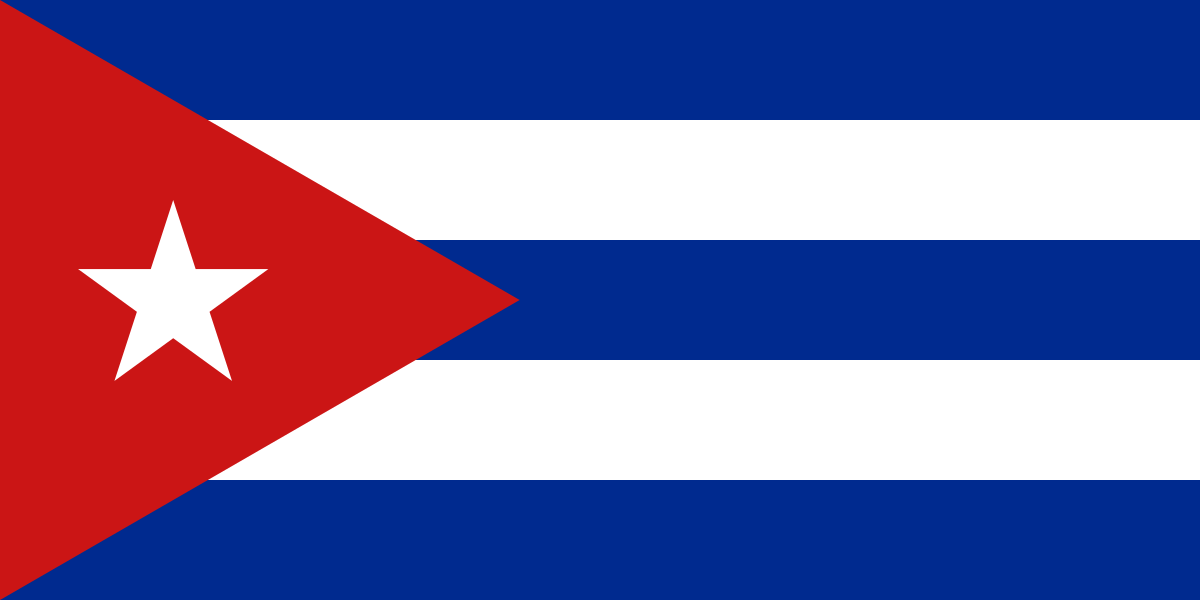 CubaView flag →
A Venezuelan, a poet and a boarding house
The man behind the design was not Cuban. Narciso López was born in Caracas in 1797 and spent his early career fighting for Spain against Bolívar's rebels. He rose to colonel and held posts in Spain and Cuba until 1843, when Cuba's new governor stripped him of office. By 1848 he was plotting against the empire he had served, and when that plot failed he fled to the United States.
In New York he lodged with a Mrs. Clara Lewis at 39 Howard Street, near Broadway. From there he visited the poet Miguel Teurbe Tolón, an exile from Matanzas, and asked him to draw the arms of a free Cuba.
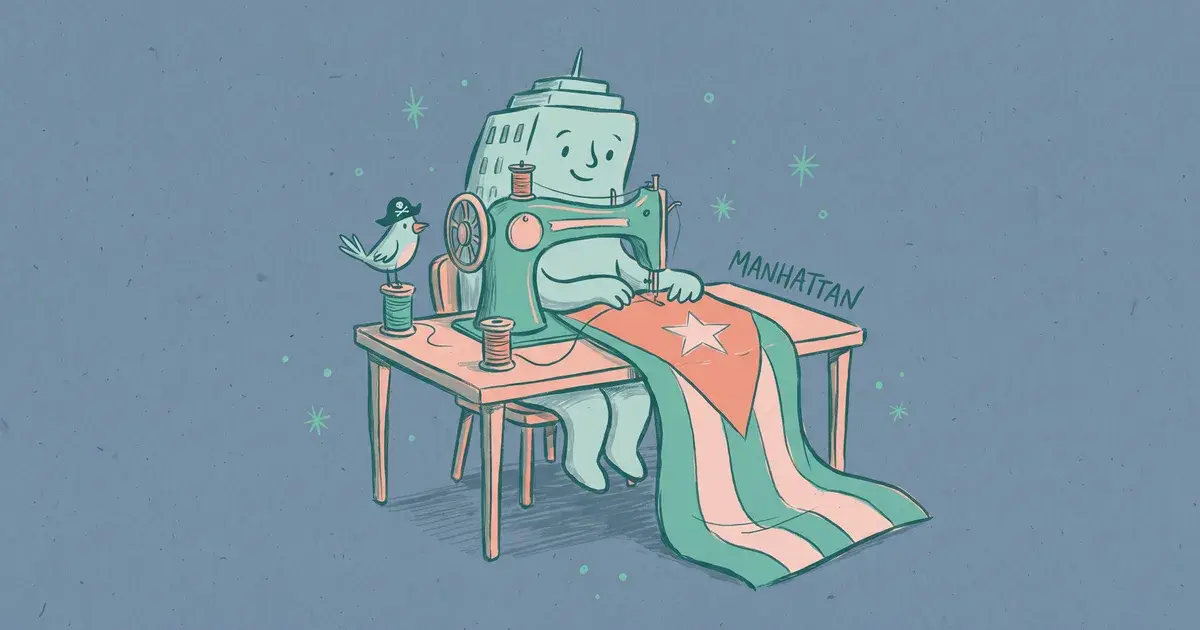
Couceiro's account, built on the notebook of the novelist Cirilo Villaverde, puts the decisive meeting in the first days of June 1849. López arrived one night for coffee and told Teurbe Tolón, "The revolution needs a flag." He had sketched a few changes to an earlier design while looking at the American flag. The poet drew it out. López looked at the paper and said the next job was to cut fabric and sew.
Teurbe Tolón's wife and cousin, Emilia, took that job. Cirilo Villaverde's son Narciso later described it to a Havana journalist as a half-hour of work with strips of white and blue silk and a piece of red cloth. Cuban historians call her "the Cuban Betsy Ross." That first flag survives today in Havana's Museum of the Revolution.
Even the room is disputed. Villaverde himself gave addresses on Warren Street and on Murray Street in different notes, and an 1898 article in a New York exile paper claimed the flag was designed in Philadelphia by other men entirely. Nobody disputes the city or the year.
Stripes from Washington, a star from Texas, a triangle from the lodge
Look at the flag with López's sources in mind and the pieces sort themselves out.
The five stripes alternate blue and white, three blue and two white. Teurbe Tolón explained the three blue bands as the three departments Cuba was divided into at the time: East, Centre and West. The white stood for the purity of the cause. Couceiro is frank that the poet "no doubt had the flag of the United States in mind," and he ties the red, white and blue to the American and French revolutions.
The triangle came from López's Freemasonry. Villaverde wrote that López rejected the square and the rectangle and chose an equilateral triangle instead. Someone at the table proposed putting the Masonic eye of Providence inside it. López wanted a star instead, and according to Villaverde he had the star of Texas in mind.
That choice carried baggage. Texas had declared independence from Mexico in 1836 and entered the Union as a slave state at the end of 1845. In New York in 1849, a single Texas-style star on a breakaway flag pointed to a story every American reader knew.
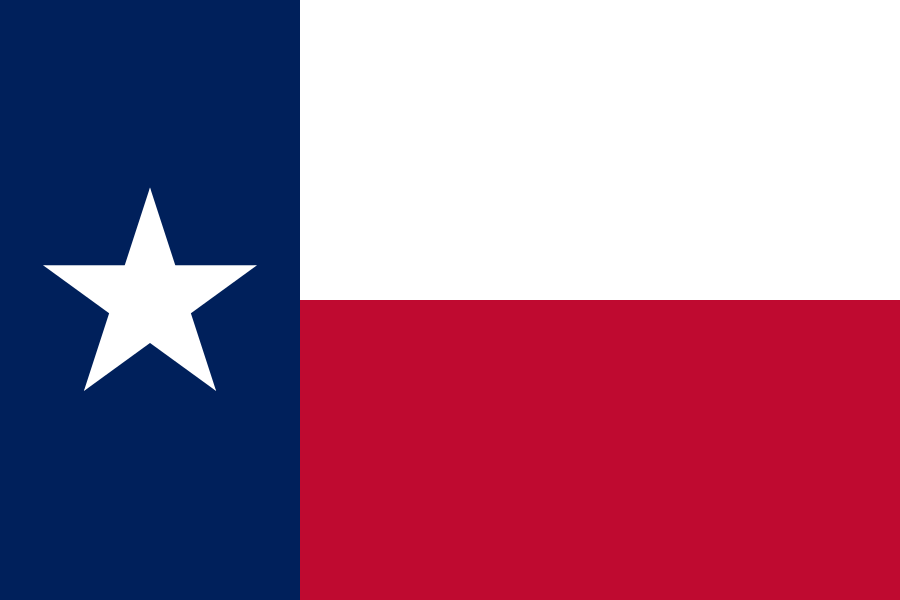 TexasView flag →
Cuban historians push back on that reading, and they have their own evidence. The poet José María Heredia wrote of "the star of Cuba" as early as 1823, and used the star as a symbol of a free state in a poem to Bolívar. In the Cuban tradition Couceiro sets out, the star shines alone "without joining the constellation on the flag of the United States."
The official specification came later. Cuba's flag is twice as long as it is wide, and the star's diameter is one third of the hoist.
Twelve hours in Cárdenas
The flag got its first test in a raid. You learn more about what it meant in 1850 from who carried it than from anything written about the stripes.
López's backers were Southern. His Wikipedia biography records that he asked Jefferson Davis to lead the army. Davis said no and suggested Robert E. Lee, who also turned it down. Mississippi's governor, John Quitman, gave money and political cover. The same biography says López supported slavery and hoped an independent Cuba would become a slaveholding partner of the South, perhaps a slave state. The Portland Flag Association puts it more bluntly: López hoped to annex the island as a slave state and so strengthen the South in the Senate.
His army fit the funding. Couceiro counts about 600 men, mostly from the United States, with British, German and Hungarian volunteers and only a handful of Cubans. They sailed from New Orleans, and some young women of that city sewed them a flag of rich silk from López's pattern.
On 19 May 1850 the steamer Creole entered the bay of Cárdenas. The expedition took the town and held it for twelve hours. The silk flag flew in the town square from sunrise to sunset, the first time the lone star flew on Cuban soil.
López brought a printed constitution with him. Its third article described the flag exactly as Cubans know it now: three blue stripes, two white, a red equilateral triangle at the hoist, a white star in the middle.
The local uprising López expected never came. Facing Spanish reinforcements, he pulled back to the ship and fled to Key West. Back in the United States he was indicted and tried in New Orleans, and was not convicted.
He tried again in August 1851 and landed in western Cuba with over 400 men. This time the Spanish caught him. He was garroted in Havana on 1 September 1851. Couceiro records his last words at the scaffold: "My death will not change the destiny of Cuba."
The Cárdenas flag outlived him. An aide, Juan Manuel Macías, kept it, and someone wrote on it in ink: "Kentucky, Primus in Cuba, Mayo 19 de 1850." It passed through several families until the Cuban Senate received it in a formal session on 14 December 1944. It is still kept in the Capitol.
Céspedes had his own flag. The rebels picked López's anyway.
When Cubans finally rose against Spain in large numbers, they did it under a different flag.
In 1868 the planter Carlos Manuel de Céspedes, later called the Father of the Country, opened the war against Spain at La Demajagua. He raised a banner of his own design, which Wikipedia describes as resembling the flag of Chile. That rising became the Ten Years' War, a Cuban-led fight on Cuban soil. López's flag had no such record behind it.
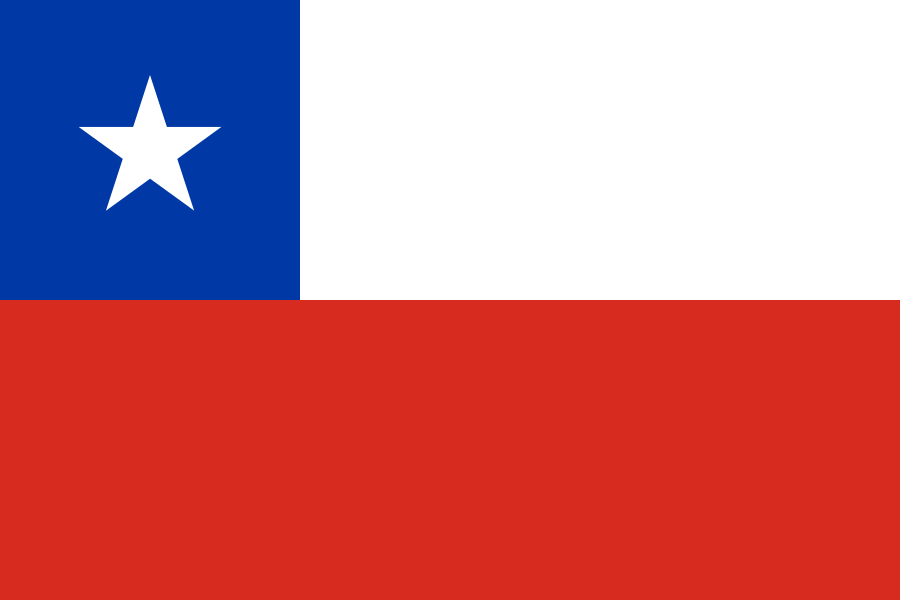 ChileView flag →
The rebels met at Guáimaro in April 1869 to write a constitution. On 11 April, in its second public session, the assembly chose "the flag previously raised by López and Agüero" as the national flag. Céspedes's banner was kept as part of the national treasure in the House of Representatives.
Why pick the filibuster's flag over the homegrown one? The Guáimaro delegates were honouring López's first step toward Cuban freedom, by the Wikipedia account. Couceiro adds that local rebels had already carried López's star through Camagüey, Trinidad and Vuelta Abajo in the summer of 1851. In the nineteen years since Cárdenas, it had picked up a Cuban history of its own.
The Demajagua flag never went away. It still appears beside the national flag at official events, according to Flags of the World. The losing design kept a permanent seat in the room.
1902: the star goes up, the Stars and Stripes come down
The ending has an irony to it. After the Spanish-American War, the United States occupied Cuba, and the American flag flew over the island from 1 January 1899. The lone star became the official national flag on 20 May 1902, when Máximo Gómez raised it at the Morro castle in Havana.
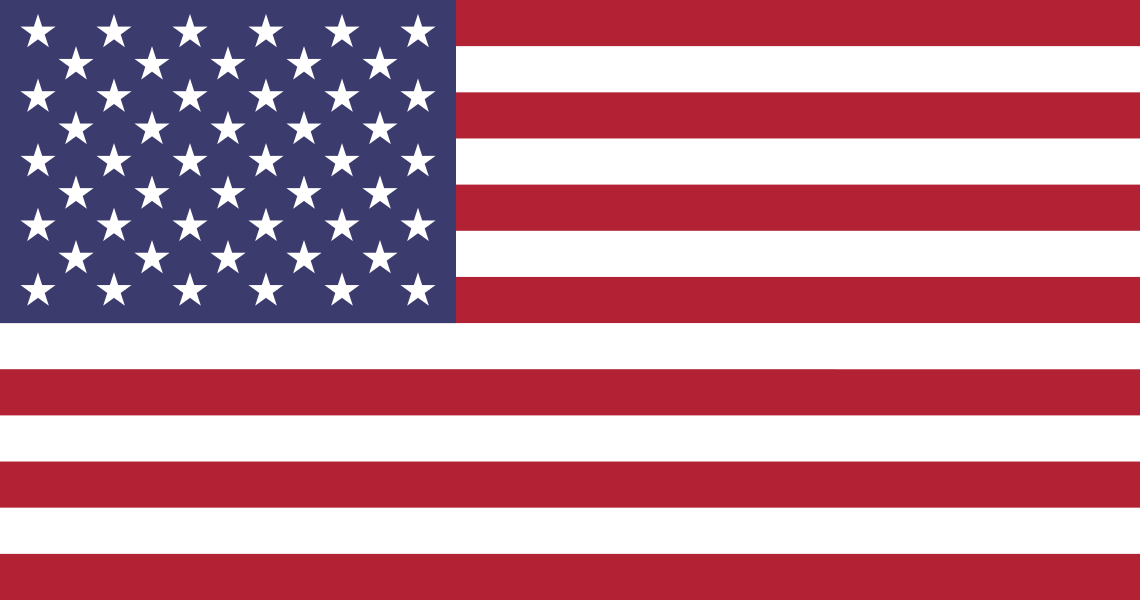 United StatesView flag →
So the banner some read as an annexation symbol was the flag that replaced American rule. A street song from those years, quoted by Couceiro, asked: "Lone little star of my Cuban flag, when will I see you shine over the Morro Castle of Havana?"
The constitutions that followed kept it. The fifth article of the 1940 constitution said simply: "The flag of the Republic is that of Narciso López." The revolutionary government kept it too, and its 1976 constitution listed the lone star flag among the national symbols. Article 2 of the 2019 constitution names "the flag of the lone star" first among the national symbols, ahead of the Bayamo anthem and the royal palm coat of arms.
López's name is gone from that clause. The star that began in a scheme bankrolled from Mississippi and New Orleans now flies over a socialist republic.
One bird, two wings
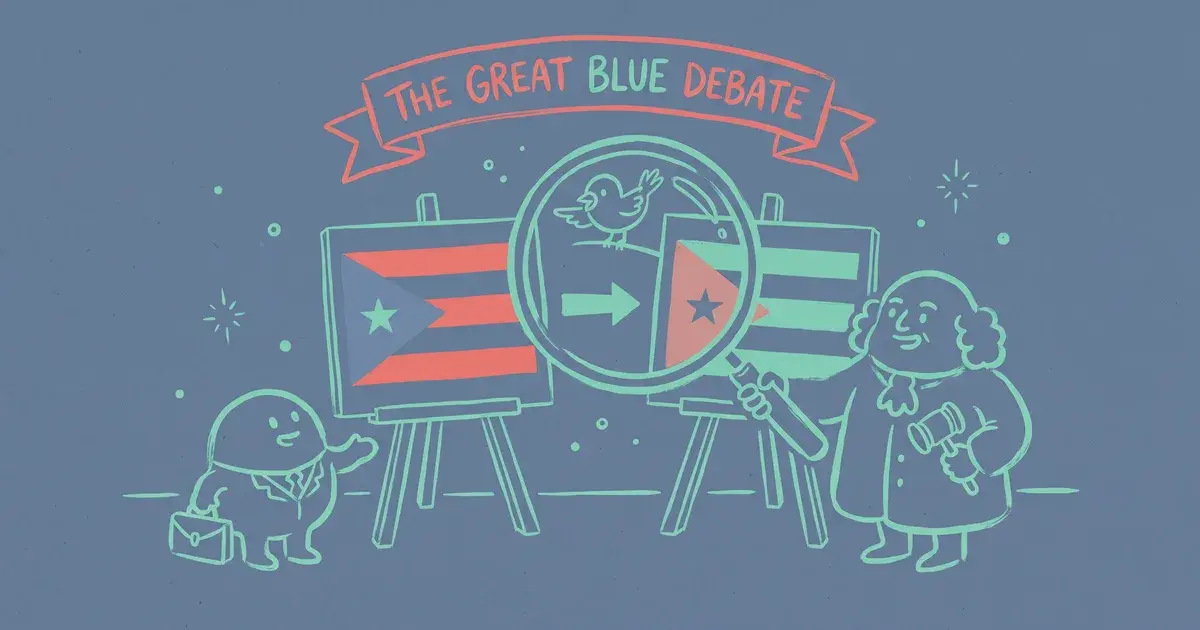
The flag left one more mark, on its neighbour. On 22 December 1895, at Chimney Corner Hall in Manhattan, Puerto Rican exiles working within José Martí's Cuban Revolutionary Party adopted a flag for their own island. An 1895 record describes it as made "the same way as the Cuban one, with the difference that the colors have been inverted." Red stripes, a blue triangle, the same white star.
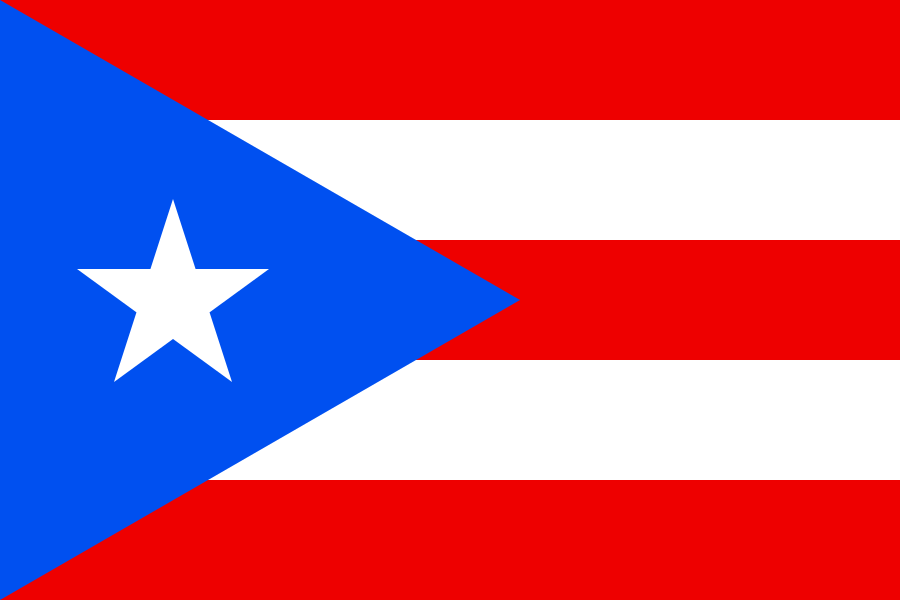 Puerto RicoView flag →
The Puerto Rican poet Lola Rodríguez de Tió described the two islands as "from one bird, two wings." The two flags took opposite paths. Cuba's became the flag of an independent state in 1902. Puerto Rico's was banned under the 1948 Gag Law, then adopted in 1952 by the commonwealth government, still under the United States.
Martí never saw either flag fly over a free island. He was killed in battle on 19 May 1895, forty-five years to the day after López's men raised the star at Cárdenas.
What the star was meant to mean
You won't settle the annexation argument by staring at the flag. López let Southern backers believe Cuba would keep slavery while he praised Northern freedoms to everyone else. His own movement argued about it for decades. As late as 1888 the Havana writer Manuel de la Cruz accused him of annexationist sympathies, and Villaverde fought back in print.
What settled it was use. Cuban rebels carried the star in 1851 and chose it in 1869. A republic raised it in 1902 in place of the American flag. Each time, the star meant whatever the people holding it needed it to mean. The design came out of New York and New Orleans, but the meaning was made in Cuba.
Julio Song
Writer
Julio is a staff writer at FlagDB. He studied Mathematics at the University of Madrid and has a passion for vexillology.
More from Julio Song →