A flag is one of the oldest ways of saying that a group of people belong together. Vexillology, the study of flags, spends much of its time on how that claim gets made: which animal, which colors, which arrangement of stripes. The designs carry identity and history in compressed form, which is why they get argued over.
Flags have also changed as the countries flying them changed, from medieval banners to the national flags of today, with the elements picked to say something both unifying and particular.
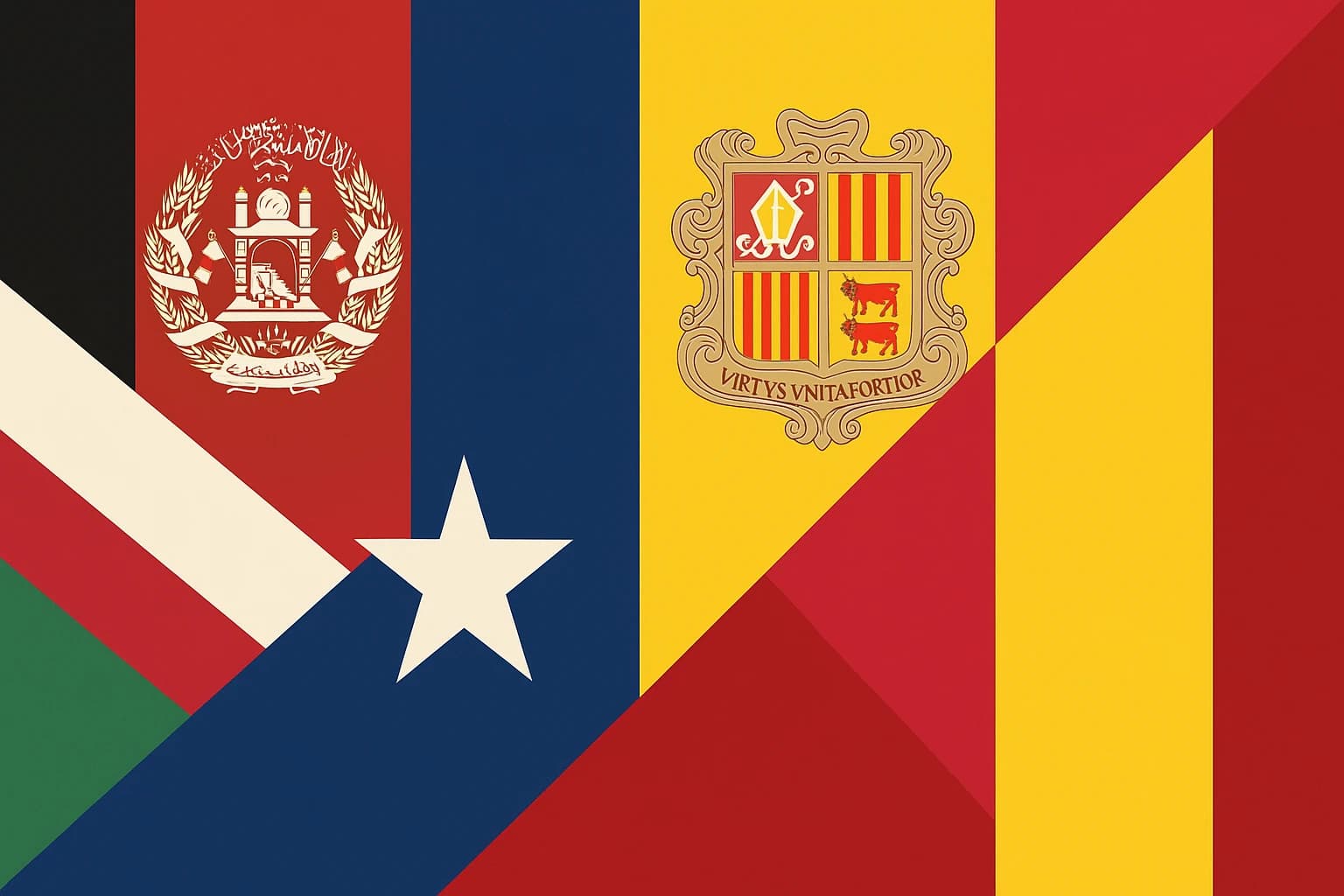
The emblem on Afghanistan's flag
Afghanistan's flag carries a national emblem at its center: a mosque with a mihrab, the prayer niche indicating the direction of Mecca, flanked by sheaves of wheat, with the shahada above. The mosque speaks to the place of Islam in Afghan identity regardless of who is governing, and the wheat to the river-fed valleys that have supported the country for centuries. It is one of the few elements that has survived across more than twenty redesigns.
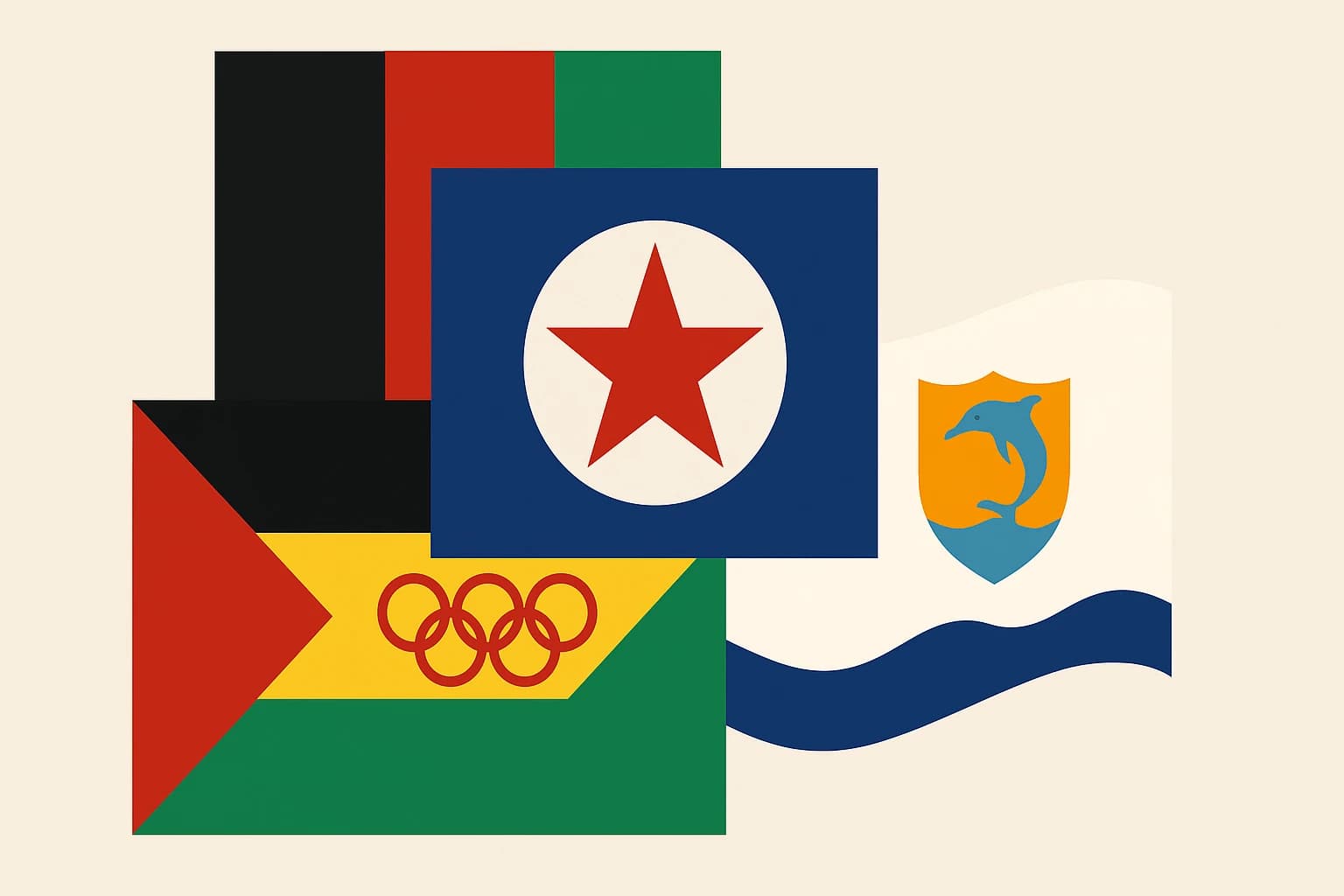
Anguilla and its dolphins
Anguilla's flag makes a quieter claim. Its dolphin emblem sits on sea blue, and in local stories dolphins stand for friendship and community. It suits an island whose life runs through the water around it.
The same idea, told differently
Plenty of countries put a symbol of togetherness somewhere on the flag: the olive branches on Cyprus's, the stars on the American one. Read in context, these symbols do two jobs at once. They say who the country thinks it is, and they say what it wants outsiders to see.
What flags do to people
Flags stir emotion. They come out at national celebrations and at commemorations, and people who would struggle to explain what they feel about their country will still stand up when one is raised.
The Olympics are the clearest example. The flags there are a focal point for people who have never met each other, and for a fortnight they stand in for a whole shared heritage.
The symbols that divide
Not every symbol on a flag is accepted by everyone under it. In the United States, the Confederate flag has driven long arguments about race and heritage, and those arguments show up as proposals for redesigns.
That is the awkward part of flag design. A flag has to hold a country's history and also be something its citizens today are willing to stand under.
Flags without a country
Some flags belong to no state at all. The Olympic flag and the United Nations banner are both attempts to give a cooperative project a face. They work in the opposite direction from national flags, which mark where one country stops and the next begins.