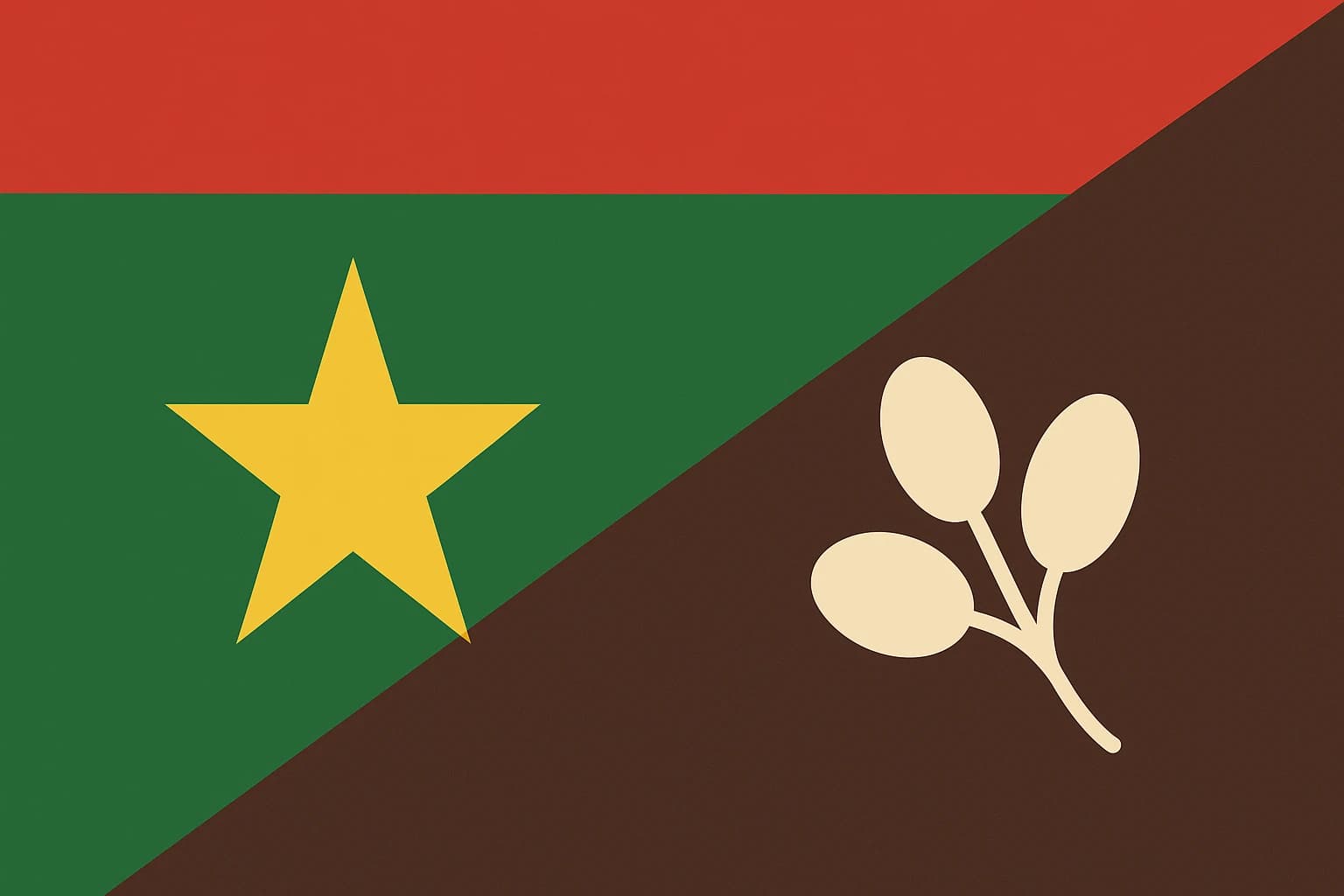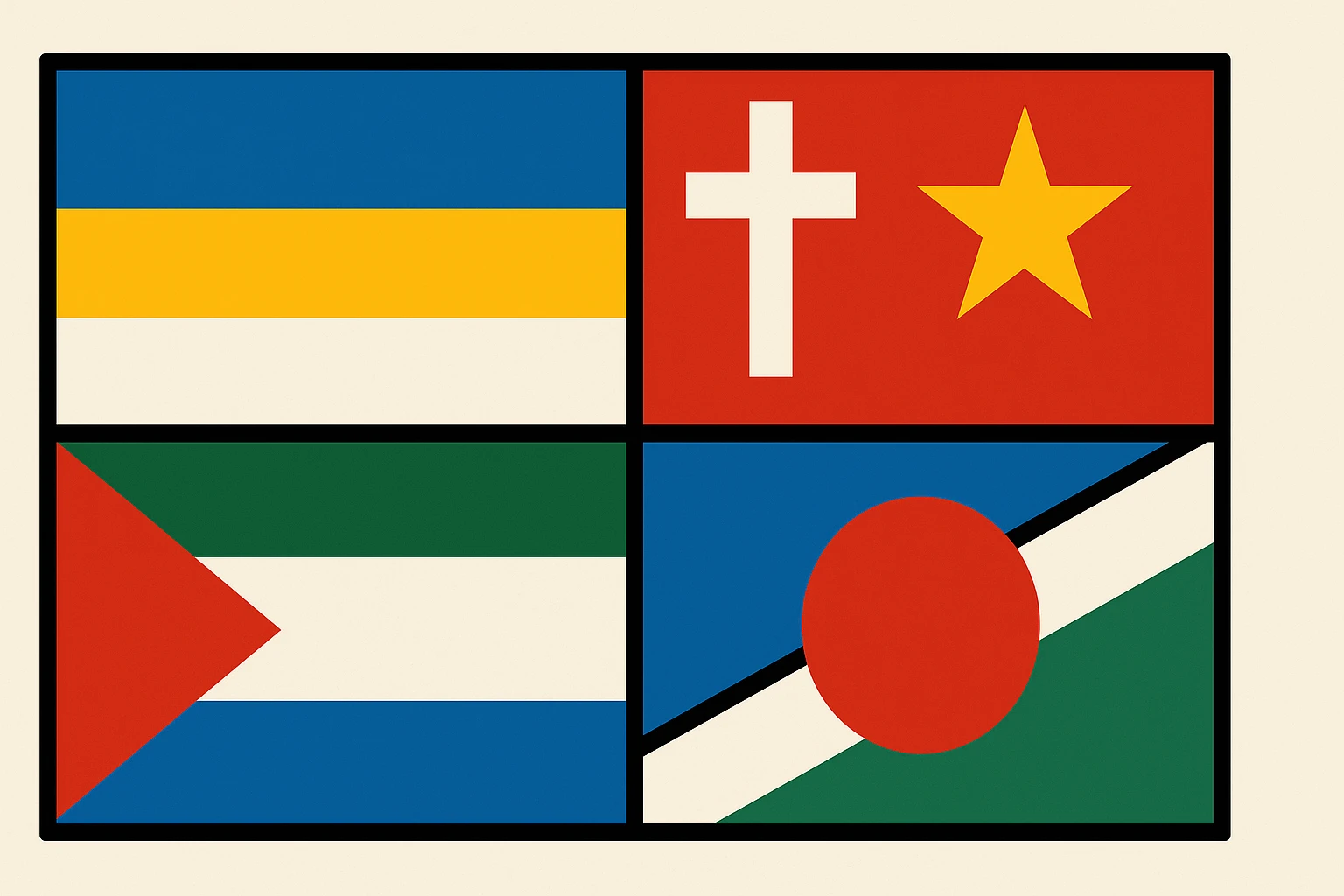
Most people can identify perhaps thirty flags. The rest of the world's territories are flying designs that almost nobody outside them can read, and some of those designs are considerably more specific about their own history than the famous ones are. Bermuda and Anguilla are good examples.
Flags carry more information than their fame suggests
Vexillology is the study of flags and what they mean. The useful thing about a flag is that it compresses a long argument into an object you can recognize in a second, and it does that whether or not anyone is paying attention. Colors and charges usually encode something particular: a place, an event, a relationship with a former ruler. The less famous the flag, the more likely it is that these references have never been explained to an outside audience.
Bermuda and the sinking ship
Bermuda's flag is a red ensign with the Union Jack in the corner and the territory's coat of arms in the fly, marking its long connection to Britain.
The coat of arms is where it gets specific. A lion holds a shield showing a sinking ship, a reference to the wreck of the Sea Venture, one of the defining events of Bermuda's history. It is a rare thing to see on a flag: not an ideal or a virtue, but a particular disaster.
Anguilla and the three dolphins
Anguilla's flag has three dolphins on it, read as unity, strength and endurance, set against blue.
The design comes from the period after Anguilla broke away from its union with Saint Kitts and Nevis and moved toward separate British administration, and it shows: the flag carries both the colonial inheritance and the identity the islanders were asserting against it. Anguilla remains a British Overseas Territory. The circling dolphins tie the whole thing back to the sea, which is the practical fact of life on a small island.
Other flags worth reading closely
St Kitts and Nevis, Dominica and Tuvalu are all in the same category. Dominica's flag uses its colors and symbols to point at the island's landscape.
Tuvalu's records its time under British administration.
The pattern across all of them is colonial history sitting on the cloth in plain sight, sometimes as an inherited element that has never been removed, sometimes as a deliberate counterweight to one.
Where these flags get seen
Small territories rarely get a stage, which is why events that line up every flag equally matter more to them than to anyone else. The Olympics is the obvious case: every flag is displayed at the same size, whatever the population behind it.
That is a large part of what these flags are for. They are how a small place makes a claim to be counted as a place at all.
Keeping the stories attached
The risk with a lesser-known flag is not that it disappears but that the explanation does, leaving a design nobody can read. Vexillologists, historians and public databases are what keep the reference to the Sea Venture attached to Bermuda's lion. Without that work the flag is just a picture.