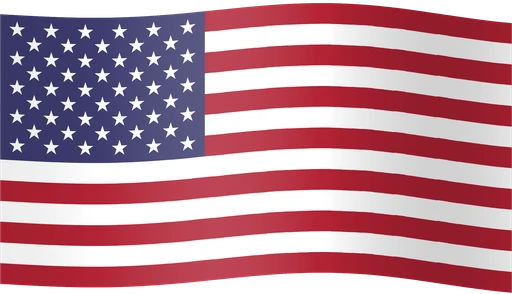
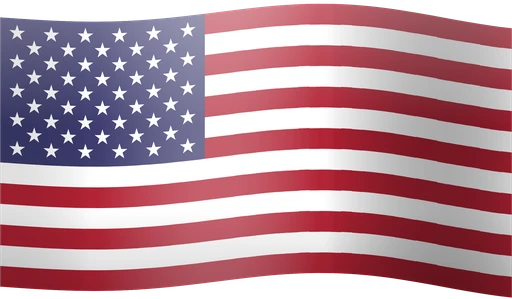
The Flag of The United States Minor Outlying Islands
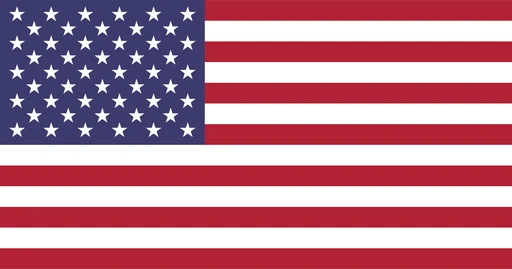
The United States Minor Outlying Islands are a scattered group of Pacific and Caribbean territories run directly by the United States government. They have no flag of their own. The islands are mostly uninhabited and have no local administration to adopt one, so the flag flown over them is the flag of the United States.
The United States Minor Outlying Islands are nine insular areas of the United States, almost all of them remote and unpopulated. They have no flag of their own. The flag flown over them is the national flag of the United States.
Nine islands taken for guano and for war
The group consists of Baker Island, Howland Island, Jarvis Island, Johnston Atoll, Kingman Reef, Midway Atoll, Navassa Island, Palmyra Atoll and Wake Island. The United States acquired them at different times and for different reasons, mostly military position and, earlier, guano.
The Guano Islands Act of 1856 let U.S. citizens claim islands with guano deposits, and several of the territories now in the group came into American hands that way. Guano was in heavy demand as agricultural fertilizer through the 19th century.
Two of the islands are better known for what happened on them during the Second World War. Wake Island was a military base and an early Japanese target. Midway Atoll gave its name to the Battle of Midway.
The flag they actually fly
None of the nine has an official flag of its own, so the U.S. national flag stands in: thirteen horizontal stripes alternating red and white, with fifty white stars on a blue canton. Red is usually read as valour, white as purity and innocence, and blue as vigilance, perseverance and justice. The fifty stars are the fifty states. The territories are not states, but flying the same flag ties them to the rest of the country.
Flag protocol on the islands follows the same rules as anywhere else in the United States, at the handful of government buildings and military installations that exist. Unofficial badges and emblems occasionally stand in for individual islands, but none of them has any formal status.
Insular areas and unincorporated territories
Two terms come up constantly in writing about these islands. An insular area is a U.S. territory that is not part of any state. An unincorporated territory is one where the U.S. Constitution does not apply in full and no organised local government has been established.
In practice the islands are managed by federal agencies, chiefly the Department of the Interior. They sit outside the usual structures of statehood, which shapes both how they are governed and which federal laws reach them.
References
[1] U.S. Department of the Interior (doi.gov)
[2] U.S. State Department - Insular Affairs (state.gov)
Common questions
- Do the United States Minor Outlying Islands have a flag?
- No. No flag has ever been designated for them as a group. The territories are administered directly by the federal government and fly the flag of the United States. A distinct flag for the islands is a conceptual idea rather than something with a history of use.
- Which islands are the United States Minor Outlying Islands?
- A scattered group of Pacific and Caribbean territories including Wake Island, Midway Atoll, Johnston Atoll, Baker Island, Howland Island, Jarvis Island, Kingman Reef, Palmyra Atoll and Navassa Island. They are grouped for statistical convenience rather than because they form a single administrative unit.
- Why do the Minor Outlying Islands have no flag of their own?
- None of them has a permanent civilian population, which is much of the reason no collective emblem ever developed. Without a local administration there is nobody to adopt one, and the grouping itself exists mainly as a statistical category.
- Who governs the United States Minor Outlying Islands?
- The United States federal government directly, through various departments depending on the island: the Fish and Wildlife Service administers several as national wildlife refuges, while Wake Island is under Air Force control. Their status and administration have changed over time.
Download this flag
Free in 12 styles, from 32px icons up to 2000px, as SVG, PNG, WebP and JPG.