The Flag of the Turks and Caicos Islands
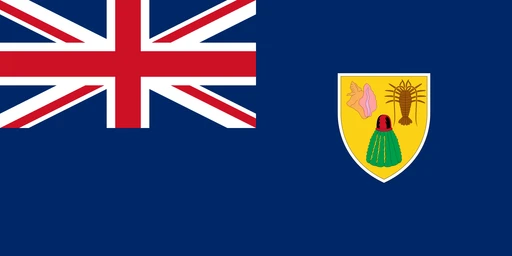
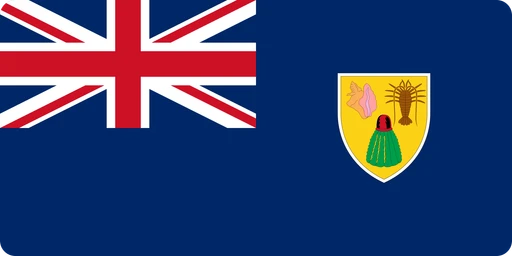
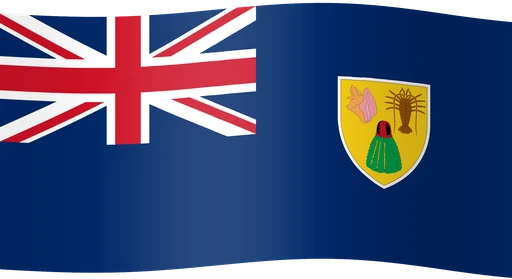
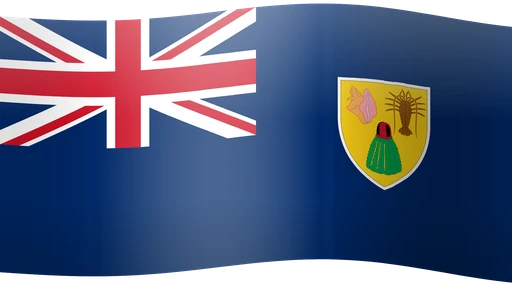
The flag of the Turks and Caicos Islands is a Blue Ensign with the Union Jack in the canton and the territory's coat of arms on the fly. The shield carries a conch shell, a lobster, and a cactus, three things closely tied to the islands. The blue field is the Caribbean Sea.
The flag of the Turks and Caicos Islands is a British Blue Ensign with a local twist: the shield on the fly carries a conch shell, a lobster, and a cactus.
Adopted in 1968
The flag was adopted on November 7, 1968. Before that the territory flew designs that leaned harder on the Union Jack alone, as British colonies generally did. Local emblems came later, once territories were given room to say something about themselves within the same basic template. The Blue Ensign format stayed put, but what sits on the fly changed the flag's character.
The shield
The Union Jack in the canton marks the constitutional tie to the United Kingdom, and the blue field is the surrounding ocean, which the islands depend on. The coat of arms on the fly does the local work. The conch shell stands for marine life and for a mainstay of the island economy, the lobster for fishing, and the cactus for the plant life particular to the region.
Display and variants
The flag flies on government buildings, at official events, and at diplomatic missions, from sunrise to sunset, and it is not left out in bad weather unless it is lit. It appears on Constitution Day and at local festivals, and its imagery is common in schools and in tourism material.
There is also a Governor's flag: the Union Jack defaced with the territory's coat of arms, flown by the Governor to represent the Crown.
Other British Overseas Territories
Bermuda and the Cayman Islands use the same formula: a Blue Ensign, a Union Jack canton, a local badge on the fly. The pattern comes out of British maritime practice, where ensigns identified vessels and administrations, and it survived into the flags of territories that were once colonies. The differences between them are all in the badge.
References
[1] Government of the Turks and Caicos Islands. (https://www.gov.tc)
[2] The Flag Institute. (https://www.flaginstitute.org)
[3] British National Archives. (https://www.nationalarchives.gov.uk)
Common questions
- What do the symbols on the Turks and Caicos Islands flag mean?
- The coat of arms carries a conch shell for marine life, a lobster for fishing, and a cactus for the local plant life. Together they point to what the islands live off.
- Why does the Turks and Caicos Islands flag include the Union Jack?
- The Turks and Caicos Islands is a British Overseas Territory, and the Union Jack in the canton marks that constitutional link to the UK.
- When was the current Turks and Caicos Islands flag introduced?
- It was adopted on November 7, 1968.
Featured in these articles
Download this flag
Free in 12 styles, from 32px icons up to 2000px, as SVG, PNG, WebP and JPG.