The Flag of Turkey
Republic of Turkey
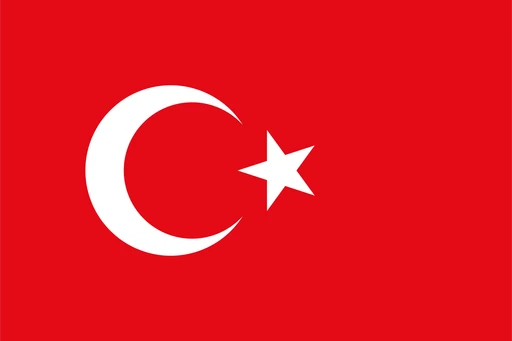
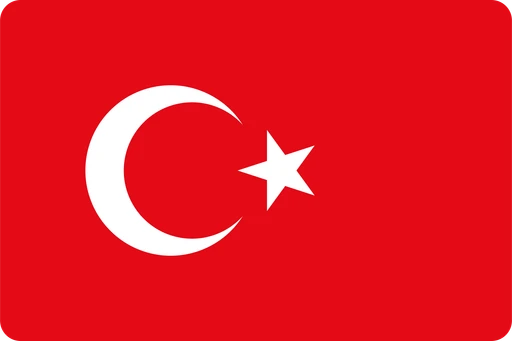
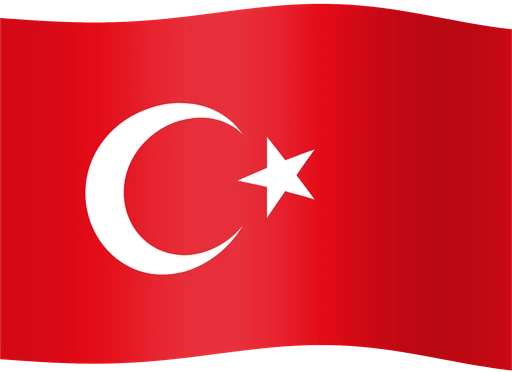
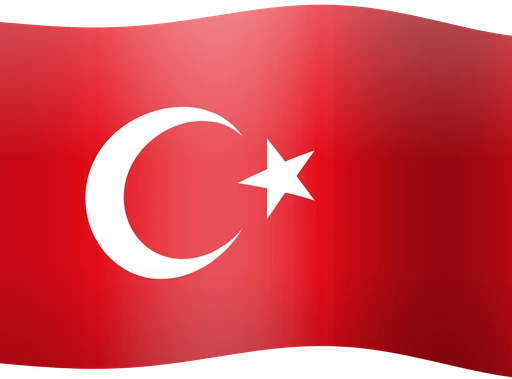
The flag of Turkey, called the Türk bayrağı or Al bayrak (the red flag), is a red field with a white star and crescent. The red is read as the blood of martyrs, and the star and crescent are old Islamic symbols matching the country's Muslim majority.
The flag of Turkey is a white star and crescent on a red field, a simple design with a long history behind it.
From Ottoman standard to republican flag
The star and crescent were fixtures of Ottoman military and imperial standards, already associated with the wider Islamic world before the empire took them up. The Republic kept them.
The current form was adopted on June 5, 1936, after legislation that fixed the flag's proportions and layout. The red field comes from the Ottoman battle flag. What the Republic changed was mostly geometry: the star and crescent stayed, but their size and placement were pinned down. Earlier variations had mostly turned on the angle and legibility of those two elements.
The star and the crescent
The star sits inside the curve of the crescent, and the whole composition is fixed by the ratios set out in law. Red is read as the blood of martyrs who defended the country, a color long tied to struggle and sacrifice. The white star and crescent trace back to early Turkic and Islamic iconography and are now read as peace and progress alongside the country's Islamic heritage.
Law and protocol
Turkish law protects the flag from desecration, regulates how it may be used, and attaches penalties to violations. It must be displayed on public buildings on national holidays and at state occasions, hoisted at sunrise and lowered at sunset. Separate ensigns exist for the armed forces, including the navy, which add elements to the national symbols rather than replacing them.
Other flags with the star and crescent
Several flags in the Islamic world use a star and crescent, the result of shared religious and cultural history rather than direct borrowing. Turkey's is set apart by its particular shade of red and by the exact positioning of the star inside the crescent, both fixed by the 1936 standardization.
In daily life the flag is everywhere: state ceremonies, sporting events, balconies during national festivals, and rallies.
Common questions
- What's the significance of the red color on the Turkish flag?
- The red stands for the blood of the martyrs who defended the country, and for bravery and sacrifice.
Featured in these articles
- The Map That Became a Flag: Why Cyprus and Kosovo Put Their Own Borders on Their Banners, and What That Desperate Move Reveals
- The White Flag That Isn't Surrender: How Switzerland, Georgia, and the Holy Roman Empire Turned a Blank Canvas Into Bold Identity
- Green Flags and the Prophet's Color: How Islam Shaped the Palettes of Saudi Arabia, Mauritania, and Beyond
- The Crescent Faces Left, the Crescent Faces Right: Why Orientation Matters More Than You Think
Download this flag
Free in 12 styles, from 32px icons up to 2000px, as SVG, PNG, WebP and JPG.