The Flag of Tokelau
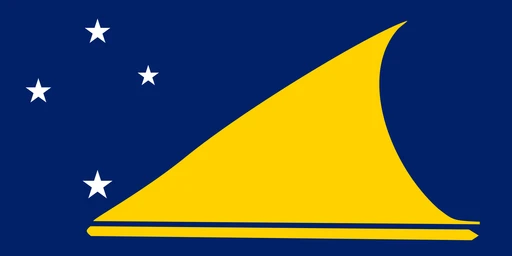
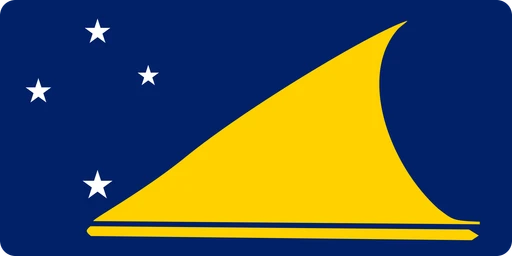
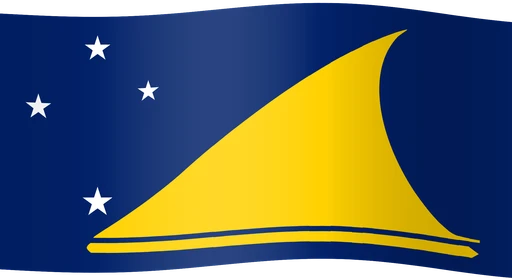
The flag of Tokelau has a blue field for the ocean, with the four white stars of the Southern Cross near the hoist and a yellow Tokelauan canoe (paopao) sailing toward them. The canoe points to the place of fishing and navigation in Tokelauan life, and the Southern Cross to where the islands sit in the South Pacific.
Tokelau, a non-self-governing territory of New Zealand, adopted its own flag in 2009. Until then it used New Zealand's.
A flag chosen by the community
Tokelau's political status meant that for most of its history it neither sought nor needed a flag of its own. As local autonomy grew, so did the case for one. The design was worked out with the Tokelauan community rather than handed down, which is why it reads as a set of local references rather than an administrative badge.
The canoe, the stars, and the blue field
The centerpiece is a stylized Polynesian canoe. Tokelauans have relied on seafaring for trade, travel, and contact with the rest of the Pacific, and the canoe stands for that. Four stars near the hoist form the Southern Cross, the constellation used for navigation in the Southern Hemisphere and a marker of where Tokelau sits geographically, and the canoe sails toward them.
The field behind them is deep blue for the Pacific. The stars are white. The canoe is yellow, the color of the sun, read as life, strength, and hope for the future.
Flying it alongside the New Zealand flag
The flag is flown on government buildings in the islands and used to represent Tokelau at official events and in international dealings. There are protocols for displaying it next to the New Zealand flag, which reflect the administrative relationship between the two. It also appears at local celebrations, and in schools it gives teachers something concrete to hang lessons on Tokelauan history and seafaring on.
Shared symbols across the Pacific
Other Pacific flags draw on the same two ideas. Tuvalu and Samoa both use the Southern Cross, and the ocean is a common theme across the region. The Southern Cross also appears on New Zealand's flag, which is a reminder of the constitutional link, though the canoe and the yellow palette are Tokelau's own.
References
Tokelauan Government Official Website
New Zealand Ministry of Foreign Affairs and Trade
Common questions
- What does the canoe on the Tokelau flag represent?
- The canoe stands for Tokelau's maritime heritage and for the navigation skills that seafaring across the Pacific depended on.
- Why does the Tokelau flag have four stars?
- The four stars are the Southern Cross, which places Tokelau in the Southern Hemisphere and ties it to the rest of the Pacific.
- What does the yellow color on the Tokelau flag signify?
- The yellow stands for the sun, a source of life and strength and a sign of hope for Tokelau's future.
Featured in these articles
Download this flag
Free in 12 styles, from 32px icons up to 2000px, as SVG, PNG, WebP and JPG.