The Flag of Sweden
Kingdom of Sweden
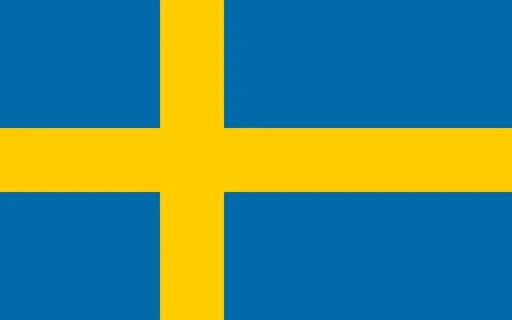
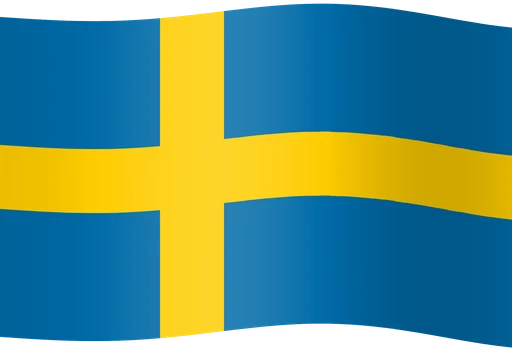
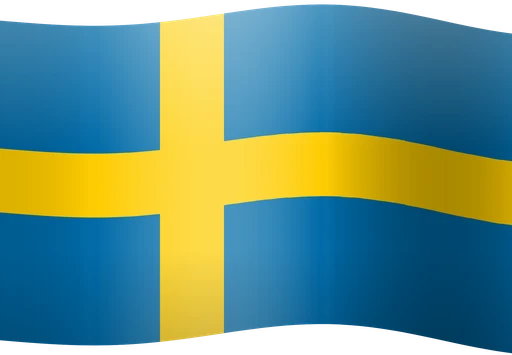
The flag of Sweden is a yellow Scandinavian cross on a blue field, with the arms of the cross running to all four edges and the upright set closer to the hoist, as on the other Nordic flags. Blue and yellow have stood for Sweden for centuries; both come from the national arms.
A yellow Nordic cross on a blue field. The Swedish flag is one of the plainest in Europe, and its two colors are older than the flag itself.
Where the blue and yellow come from
The design goes back to the medieval period and is usually traced to the national coat of arms, three golden crowns on a blue ground. The cross follows Christian usage and links the flag to the other Nordic kingdoms. The current version was adopted in 1906.
Flags multiplied during the Kalmar Union in the late Middle Ages, as its member kingdoms looked for ways to tell themselves apart, and the Nordic cross became the common device across Scandinavia. Swedish versions varied by region and by period until 1663, when the Royal War Council fixed the proportions and the placement of the colors. Everything after that was minor, mostly the result of political change and revisions to flag protocol, and the standardization of the early 20th century was meant to settle the matter for good.
The design
The yellow cross reaches all four edges, with its vertical arm set toward the hoist, as on every Scandinavian cross flag. Swedish heraldry reads blue as truth, vigilance, perseverance and loyalty, and gold as generosity and elevation of mind. The cross itself is Christian in origin, a reminder of how central the church once was in Scandinavian society, though it now tends to be read as a sign of cooperation between the Nordic countries.
Flag days and protocol
Sweden sets aside designated flag days for national events and observances. The flag hangs from public buildings and at official ceremonies, and the rules cover the details: it should not be flown at night unless it is lit, and separate state and civil ensigns, each a slight modification of the national design, cover naval and merchant vessels. Private use is regulated too. On national holidays the flag is everywhere, and it turns up regularly in Swedish art and literature.
The rest of the Nordic family
Denmark, Norway, Finland and Iceland all use the same offset cross, the clearest visual evidence of how closely the region's histories run together. What separates the Swedish flag is the particular pairing of blue and gold. The Kalmar Union and medieval heraldry shaped all of them.
References
[1] Swedish National Heritage Board: Sweden's National Flag (https://www.raa.se)[2] Government of Sweden: Official Flag Protocols (https://www.regeringen.se)
Common questions
- Why does the Swedish flag feature a cross?
- The cross is the Nordic cross, shared with the other Scandinavian countries. It comes out of Christian symbolism and marks the historical ties across the region.
Featured in these articles
- The Flag Denmark Confiscated, and the One Iceland Got Instead
- The Flag You've Never Seen: Why Some Countries Fly One Banner on Land and Another at Sea
- The Flag That Had to Please Everyone: How the European Union's Circle of Stars Became the Most Negotiated Image in History
- The Cross That Conquered the North: How Denmark's Dannebrog Became the Template for an Entire Continent
Download this flag
Free in 12 styles, from 32px icons up to 2000px, as SVG, PNG, WebP and JPG.