The Flag of Svalbard and Jan Mayen
Svalbard og Jan Mayen
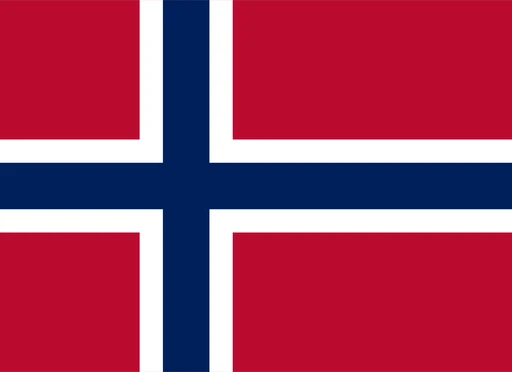
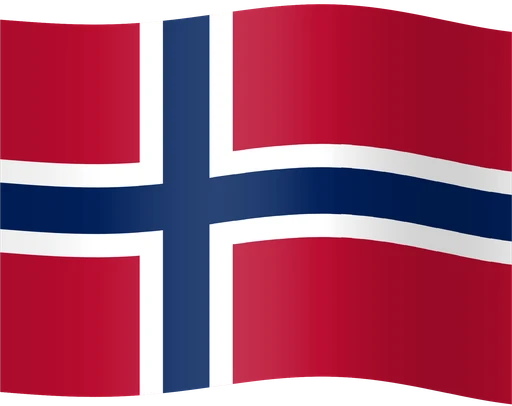
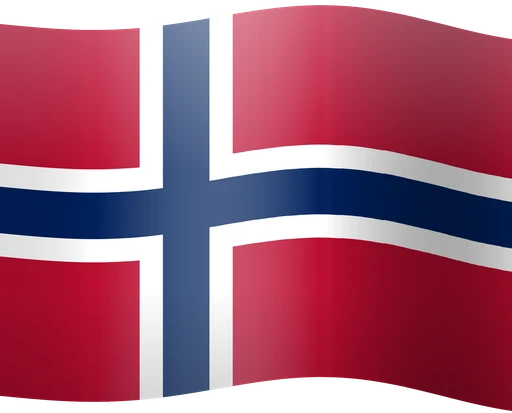
There is no separate flag for Svalbard and Jan Mayen. Both territories are part of the Kingdom of Norway rather than distinct entities, so both fly the Norwegian flag: a red field with a blue cross outlined in white, the cross shifted towards the hoist in the Nordic pattern.
Neither Svalbard nor Jan Mayen has a flag of its own. Both fly the flag of Norway.
Why there is no separate flag
Svalbard, an archipelago in the Arctic Ocean, came under Norwegian sovereignty through the Svalbard Treaty of 1920, which recognized Norway's full and absolute sovereignty while granting the other signatory states certain economic rights on the islands. Jan Mayen, between Greenland and Norway, was annexed in 1929 and brought into the Kingdom the following year. It is administered as part of Nordland county.
Neither arrangement creates a separate legal entity, and the legal framework governing the territories makes no provision for a distinct flag. The Norwegian flag covers both.
The flag they fly
A red field with a blue Scandinavian cross outlined in white, the cross set towards the hoist. Denmark, Sweden, Finland, and Iceland all use versions of the same cross, a Christian symbol and a shared regional inheritance rather than any deliberate coordination between the countries.
The red, white, and blue are read as freedom and democracy, an echo of the French and American revolutions that influenced Norway's constitutional development in the early nineteenth century.
Where it is flown
In both territories the Norwegian flag is used for all government and public purposes: official buildings, formal occasions, and international representation, following the same protocol as on the mainland. It also flies on scientific expeditions and at other activities run from the territories.
For the people who live and work there, the flag carries the ordinary weight of a national flag: it marks national holidays, it appears at community events, and it connects a very remote place to the country that governs it.
References
[1] Norwegian Ministry of Foreign Affairs - Official Information Page on Svalbard https://www.regjeringen.no/en/topics/arctic-and-antarctic/svalbard
[2] Official Svalbard Tourism Website - Insights into Svalbard's Governance https://www.visitsvalbard.com/en
Common questions
- Does Svalbard have its own flag?
- No. Svalbard and Jan Mayen are part of the Kingdom of Norway rather than distinct entities, so both fly the Norwegian flag. Neither territory has ever had a flag of its own, and neither has a local government that could adopt one.
- Why is Svalbard part of Norway?
- Svalbard came under Norwegian sovereignty in 1920 through the Svalbard Treaty, which recognised Norwegian sovereignty while giving signatory states equal rights to commercial activity there. That arrangement is why Russian settlements exist on the archipelago alongside Norwegian ones.
- Who designed the Norwegian flag flown over Svalbard?
- Fredrik Meltzer, a member of the Norwegian parliament, designed it, and it was adopted on 17 July 1821. Its Nordic cross ties Norway to its neighbours, while the red, white and blue were chosen to echo the flags of France, the United States and Britain as symbols of liberty.
- When did Norway annex Jan Mayen?
- In 1929. The island was first sighted by Henry Hudson in 1607 and used intermittently by whalers before that annexation. It has no permanent population beyond staff at its meteorological and radio stations, and Norway represents it internationally.
Featured in these articles
Download this flag
Free in 12 styles, from 32px icons up to 2000px, as SVG, PNG, WebP and JPG.