The Flag of the Solomon Islands
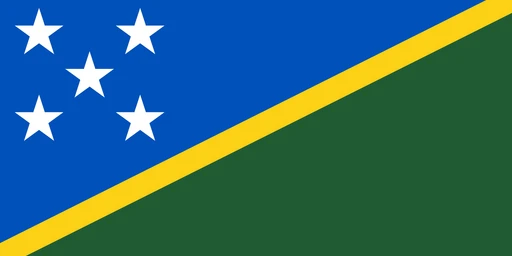
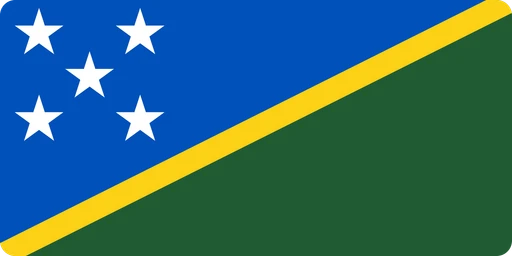
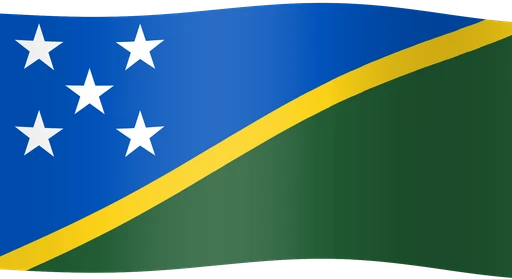
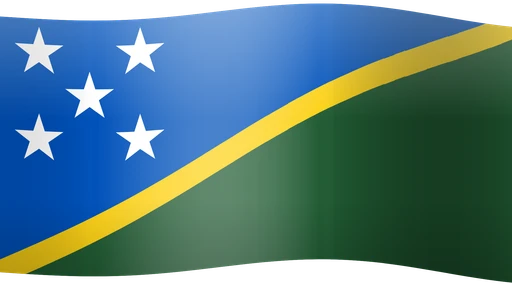
The flag of the Solomon Islands is divided diagonally by a thin yellow stripe, with a blue triangle above it and a green one below. Five white stars in the upper hoist are arranged in the shape of a diagonal cross, one for each of the main island groups. Blue is for the Pacific, green for the land, and yellow for the sun.
The flag of the Solomon Islands was adopted on 18 November 1977, roughly seven months before the country became independent of the United Kingdom on 7 July 1978. The islands had been a British protectorate since 1893.
Choosing a flag before independence
Proposals for a national flag were floated in the run-up to independence, and several designs were considered before this one was settled on. Replacing the British Blue Ensign was the point of the exercise: a country about to govern itself needed a flag that was not a colonial ensign with a badge on it.
Nothing has been changed since.
Reading the design
A thin yellow stripe runs diagonally across the flag, leaving a blue triangle above it and a green one below. Five white stars sit in the upper hoist, arranged in the shape of a diagonal cross.
The blue is the Pacific, which surrounds and defines the country. The green is the land, which most of the population still farms. The yellow stripe is usually read as the sun, and sometimes as a wish for peace.
The five stars stand for the main island groups: Choiseul, Guadalcanal, Malaita, Makira, and the Santa Cruz Islands. Since the country is an archipelago whose provinces are separated by open water, a design that counts them out is doing real work.
Flying it
The flag is flown at government buildings and used at national events and international gatherings. It goes up on days of national significance and can be flown at half-mast during mourning or when the government directs it.
There are no officially recognized variants, though the flag is incorporated into ceremonial displays of various kinds. Legal protections cover misuse and desecration.
The flag is a fixture of Independence Day and other celebrations, and it is used in schools as a way into teaching national history.
Similar flags and influences
Several Pacific flags share a family resemblance with this one, a product of similar geography and a similar colonial history. Many of the flags flown across the region under British rule carried imperial symbols, and the Solomon Islands design deliberately drops them.
References
[1] Solomon Islands Government. "National Flag Protocols." solomons.gov.sb
[2] Official Vexillology Associations. "Flags of the World: Solomon Islands." crwflags.com
[3] British Colonial Records. "Transition to Independence in the Solomon Islands." United Kingdom National Archives.
Common questions
- What do the stars on the Solomon Islands flag mean?
- The five stars stand for the main island groups: Choiseul, Guadalcanal, Malaita, Makira, and the Santa Cruz Islands.
- What do the colors on the Solomon Islands flag stand for?
- Blue is the Pacific Ocean, green the fertile land, and the yellow stripe the sun. Yellow is also read as a wish for peace.
Featured in these articles
- Diagonal Lines and Divided Futures: How Guyana, Tanzania, and Saint Kitts and Nevis Used Slashes to Tell Stories of Struggle
- The Diagonal Divide: Why Some Flags Cut Themselves in Half at an Angle, and Why It Matters
- Diagonal Lines and What They Mean: The Bold Geometry of Trinidad, Namibia, and Tanzania
Download this flag
Free in 12 styles, from 32px icons up to 2000px, as SVG, PNG, WebP and JPG.