The Flag of Norfolk Island
Territory of Norfolk Island
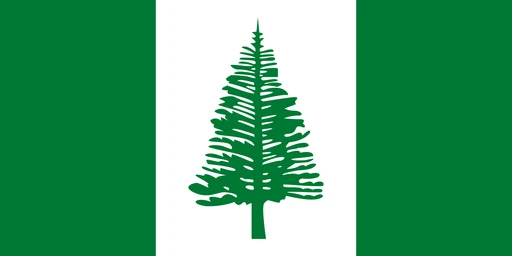
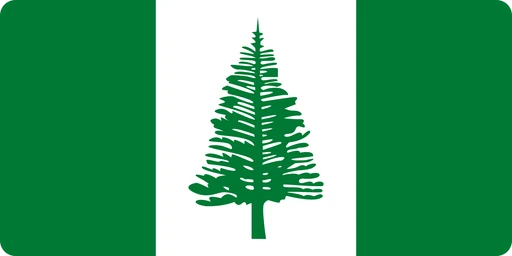
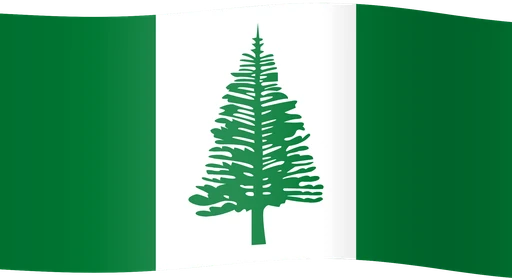
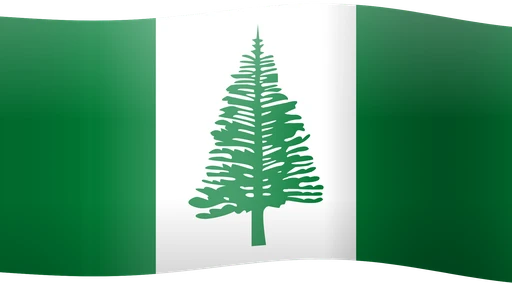
The flag of Norfolk Island is a vertical triband, green on the outside and white in the middle, with a green Norfolk Island pine in the center. The tree is native to the island and stands in for its landscape and its identity.
The Norfolk Island Council settled on the design on June 6, 1979, shortly after the Norfolk Island Act 1979 gave the island self-government over most internal matters, and the flag became official on January 17, 1980, when the Norfolk Island Flag and Public Seal Act 1979 came into force. Until then it had flown the Australian national flag, which had covered the island since its transfer from Britain to Australia in 1914, alongside various unofficial local designs that were never formally recognized.
A tree in the middle of the flag
The flag is a vertical triband, green on either side and white in the middle, with a Norfolk Island pine (Araucaria heterophylla) in the center panel. The tree is native to the island, and the green bands stand for the vegetation that the subtropical climate supports. The white is peace, and the quiet of island life.
Putting a single species at the center of a flag is not common. Lebanon does it with the cedar. Australia leans heavily on flora and fauna in its own emblems and coats of arms, which may have made the choice feel obvious.
The history the flag does not show
Norfolk Island was settled by Polynesians, later used as a British penal colony, and in 1856 received the HMS Bounty mutineers and their Tahitian companions from Pitcairn. None of that appears on the flag, but it sits behind it, and Bounty Day, which marks the arrival of the Pitcairn Islanders, is one of the days the flag comes out.
Where it flies
The Norfolk Island government and local institutions use the flag, and it goes up at government buildings and schools and during events such as Commonwealth Day and the island's Anniversary Day. Protocol treats it like any other national symbol. There are no widely recognized variants, though local communities use it freely at cultural events.
References
[1] Norfolk Island Regional Council - About Norfolk Island (https://www.norfolkisland.gov.nf)
[2] Vexillological Association Resources - Flag of Norfolk Island (https://www.flagsofworld.com)
[3] Historical Context - Norfolk Island History (Norfolk Island Museum Archives)
Common questions
- Why does the Norfolk Island flag feature the Norfolk Island Pine?
- The Norfolk Island pine is native to the island and is its most recognizable feature, so the flag uses it as an emblem of the place and its environment.
Download this flag
Free in 12 styles, from 32px icons up to 2000px, as SVG, PNG, WebP and JPG.