The Flag of Catalonia
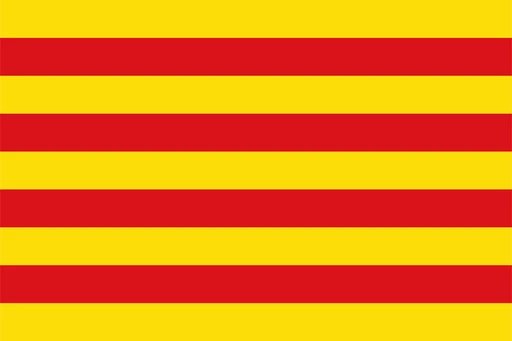
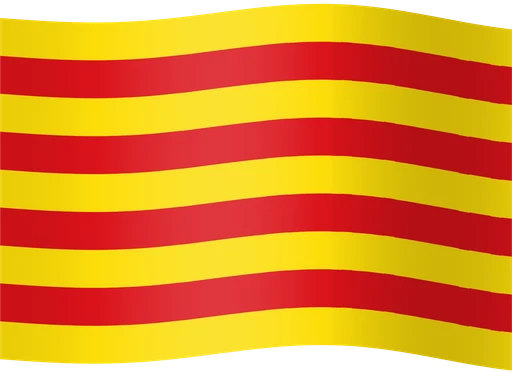
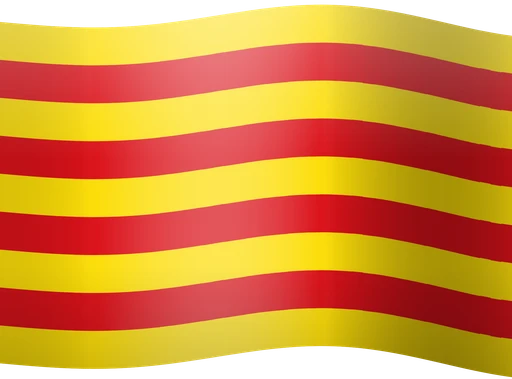
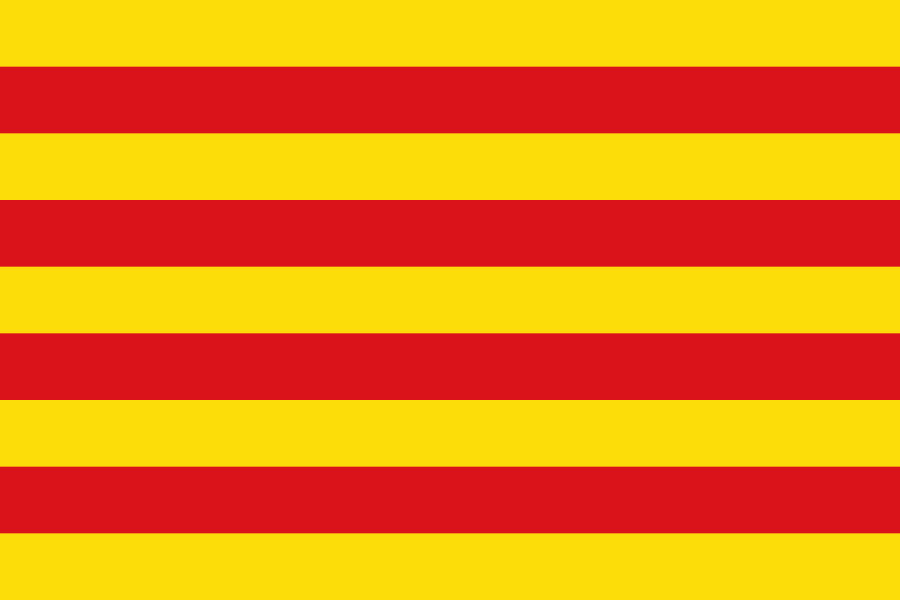
The flag of Catalonia, called the Senyera, has nine horizontal stripes of equal width: five yellow and four red, starting and ending with yellow. The stripes are the four red bars of the arms of the counts of Barcelona, which later became the arms of the Crown of Aragon. Yellow stands for gold, the metal of the original heraldic shield. The design is one of the oldest in Europe, and the same four bars appear in the flags of Aragon, Valencia and the Balearic Islands. Catalonia's Statute of Autonomy calls it the traditional flag of four red bars on a yellow field.
The Catalan flag looks simple. Nine stripes, five yellow and four red. Yet the red bars on a gold ground are among the oldest heraldic designs still in daily use in Europe. They were the arms of a medieval count, they spread to a kingdom, and today they fly over public buildings in Catalonia and, with small changes, in three other Spanish regions. The legend is better known than the history, and the history is more interesting.
From counts' arms to a banner
The bars began as heraldry, not as a flag. They were the personal arms of Ramon Berenguer IV, Count of Barcelona, and became the arms of the House of Barcelona. When Barcelona joined Aragon, the bars went with the crown. In the early years the number of bars was not fixed. By the thirteenth century it had settled at four.
The Gran Enciclopèdia Catalana points to a Romanesque tomb as the first known sighting, that of Ramon Berenguer II, who died in 1082. Other sources date the earliest clear image to a seal from the middle of the twelfth century. The dating of the tomb is disputed, so treat the seal as the safer answer.
Red on gold seems to have been the scheme from the start. A royal document of 1396 describes the bars as yellow and red.
Four fingers and a dying count
Every Catalan child learns the story. A wounded Count Guifré the Hairy lay dying, and a king dipped four fingers in the blood and drew them across the count's golden shield. That is where the bars came from.
The story has problems. Guifré died in 897. Charles the Bald, the king named in the most popular version, died in 877. Other versions name Louis the Pious, who died before Guifré was born. The tale first appears in print in the chronicle of Pere Antoni Beuter, published in Valencia in 1550. Catalan sources suggest he adapted or invented it. Before 1550, writers linked the bars to the cross of Christ. Seven versions circulated before Víctor Balaguer fixed the best-known one in 1859.
Four territories, one set of bars
When the Crown of Aragon grew, so did the territory the bars marked. A privilege of James I in 1269 granted the city of Mallorca a seal with the four bars, and in 1312 King Sanç extended a flag with the same emblem to the whole kingdom. The bars appear in the arms of the Kingdom of València and its capital. In Aragon they were granted to the cities of Huesca, Zaragoza and Teruel. They remain a symbol of Northern Catalonia, across the French border in Roussillon.
The modern flags show how this went. Aragon adds a coat of arms. The Balearic Islands add a castle in the canton. Valencia adds a blue band at the hoist, in the version known as the Senyera Coronada. Only Catalonia flies the plain nine stripes.
After the Nova Planta decrees of the early eighteenth century, the bars survived as an emblem of each Catalan-speaking territory. The nineteenth century brought them back as a political banner. Regionalist and nationalist movements in Catalonia and Valencia took them up, and the bars appear in publications from Lo Verdader Català in 1843 to La Veu de Catalunya in 1899.
Banned, then restored
The Mancomunitat de Catalunya adopted the bars as its official emblem in 1914. The Generalitat made the flag official in 1931. The Estatut Interior of 1933 confirmed it. Catalan Wikipedia records that Primo de Rivera's dictatorship had banned the flag and persecuted its display until 1930, and that Franco's regime prohibited it again from 1939.
The ban ended with the transition to democracy. Article 4 of the Statute of Autonomy of 1979, published in the Spanish official gazette on 22 December 1979, reads: "La bandera de Cataluña es la tradicional de cuatro barras rojas en fondo amarillo." The flag is the traditional one, four red bars on a yellow field.
The 2006 Statute, Organic Law 6/2006 of 19 July, replaced the 1979 text. Article 8 names the flag, the national day and the anthem as national symbols, and sets 11 September as the national day. It says the flag must be present at public buildings and at official acts in Catalonia. The wording of the flag itself did not change.
Reading the nine stripes
The proportions are 2:3, height to width. The design has nine stripes of equal width, five yellow and four red, so yellow sits at the top and bottom. Each red stripe is one of the four bars of the old shield, stretched across the whole flag.
Yellow stands for gold, the metal of the shield. The statute text quoted above describes the flag only as the traditional one of four red bars on a yellow field.
The Estelada
The Senyera has a cousin. The Estelada is a blue or red version of the Senyera. It was created in 1918 by Vicenç Albert Ballester, building on versions from 1906 and 1908. It is not an official flag. On 29 January 2014 the Parliament of Catalonia passed Resolution 497/X, recognising it as a symbol of a democratic, legitimate, legal and non-violent aspiration.
You will see both flags at the Diada, the National Day of Catalonia on 11 September. The Senyera is the official flag. The Estelada is an unofficial symbol of the independence movement.
References
[1] "Ley Orgánica 6/2006, de 19 de julio, de reforma del Estatuto de Autonomía de Cataluña," Boletín Oficial del Estado. https://www.boe.es/buscar/act.php?id=BOE-A-2006-13087
[2] "Ley Orgánica 4/1979, de 18 de diciembre, de Estatuto de Autonomía de Cataluña," Boletín Oficial del Estado. https://www.boe.es/buscar/act.php?id=BOE-A-1979-30178
[3] "Bandera," Gran Enciclopèdia Catalana. https://www.enciclopedia.cat/gran-enciclopedia-catalana/bandera-1
[4] "Barres catalanes," Gran Enciclopèdia Catalana. https://www.enciclopedia.cat/gran-enciclopedia-catalana/barres-catalanes
[5] "Bandera de Catalunya," Viquipèdia. https://ca.wikipedia.org/wiki/Bandera_de_Catalunya
[6] "Senyera," Wikipedia. https://en.wikipedia.org/wiki/Senyera
[7] "National symbols of Catalonia," Wikipedia. https://en.wikipedia.org/wiki/National_symbols_of_Catalonia
Common questions
- What does the Catalan flag mean?
- The flag is the coat of arms of the counts of Barcelona turned into a banner. Yellow stands for the gold of the shield and red for the four bars. No official text gives the colours a further meaning. The Statute of Autonomy describes it only as the traditional flag of four red bars on a yellow field.
- What is the legend of the four bars?
- The story says a king dipped four fingers in the wounded Count Guifré the Hairy's blood and drew them down his golden shield. Historians treat it as a legend. It first appears in print in a 1550 chronicle by Pere Antoni Beuter, and later versions swapped in different kings.
- Is the Catalan flag the same as the Aragonese flag?
- They share the same four red bars on yellow. Aragon's flag adds a coat of arms in the centre. The bars were the arms of the kings of the Crown of Aragon, so several territories of that crown kept them. Valencia adds a blue band at the hoist, and the Balearic Islands add a castle in the canton.
- What is the difference between the Senyera and the Estelada?
- The Senyera is the official flag. The Estelada is an unofficial version based on it, in blue or red variants, used by supporters of independence. Vicenç Albert Ballester created it in 1918. In 2014 the Parliament of Catalonia recognised it as a symbol of a democratic, non-violent aspiration.
- When was the Catalan flag banned?
- Primo de Rivera's dictatorship banned it and persecuted its display until 1930. Franco's regime then prohibited it from 1939. The Statute of Autonomy of 1979 restored its official status in Article 4. The 2006 Statute confirmed the flag in Article 8, which also requires it to be present at public buildings and official acts in Catalonia.
Download this flag
Free in 12 styles, from 32px icons up to 2000px, as SVG, PNG, WebP and JPG.