The Flag of Bermuda
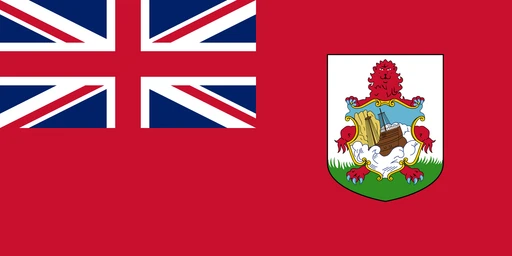
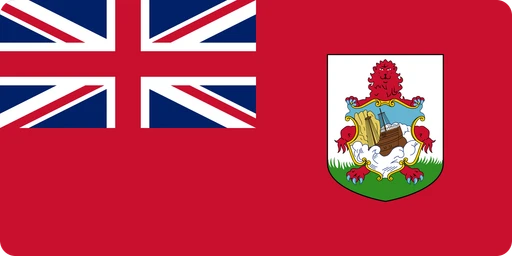
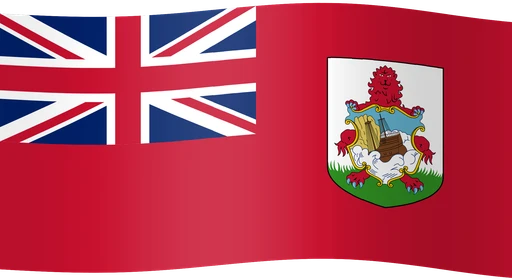
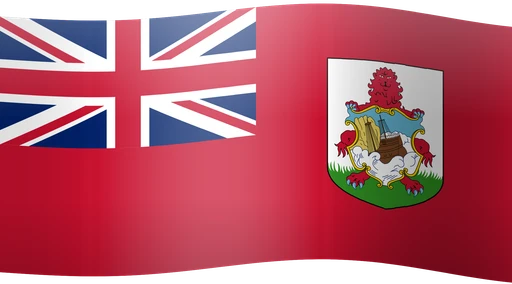
The flag of Bermuda is a Red Ensign, a red field with the Union Jack in the upper hoist corner, marking the territory's ties to the United Kingdom. Towards the fly sits Bermuda's coat of arms: a red lion holding a shield that shows the wreck of the Sea Venture, the 1609 disaster that led to the island's colonization.
Bermuda's flag is one of very few anywhere to depict a shipwreck. It is the British Red Ensign defaced with the colonial coat of arms, which shows the wreck of the Sea Venture, the flagship whose 1609 disaster on Bermuda's reefs accidentally founded the colony. Adopted in its current form on October 4, 1910, it puts the territory's origin story at its center.
The shipwreck that founded a colony
On July 28, 1609, the Sea Venture, flagship of the Virginia Company's Third Supply fleet, was caught in a hurricane in the Atlantic. With the ship taking on water and no hope of reaching Virginia, Admiral Sir George Somers deliberately drove the vessel onto Bermuda's reefs to keep it from sinking in open sea. All 150 passengers and crew survived.
What they found on the uninhabited islands surprised everyone. Bermuda, long feared by sailors as the "Isle of Devils" because of the reefs surrounding it, turned out to be lush, temperate, and full of food. The castaways spent ten months there, building two new ships from Bermuda cedar and salvaged Sea Venture timbers. They eventually sailed on to Jamestown, but the story of their stay spread rapidly through London. William Strachey's eyewitness account, circulated in manuscript, is widely believed to have inspired Shakespeare's The Tempest (c. 1610-1611).
The wreck's consequences were permanent. By 1612 the first intentional settlers arrived, making Bermuda England's second-oldest overseas colony after Jamestown. That disaster-turned-beginning became the centerpiece of Bermuda's heraldic identity, first on the coat of arms and then, through the arms, on the flag.
From colonial seal to Red Ensign
Bermuda's earliest colonial seals, dating to the early 17th century, used imagery related to the islands but had not yet settled on the Sea Venture. Over time the shipwreck became the dominant motif. The coat of arms eventually granted by royal warrant shows the Sea Venture being dashed upon rocks, with a red lion crest, representing England, above the shield.
The current flag was formally adopted on October 4, 1910, as part of a broader standardization of British colonial flags under the Red Ensign system. This is where Bermuda diverges from the norm: unlike most British Overseas Territories, which use the Blue Ensign, Bermuda uses the Red Ensign, a convention rooted in its civil maritime tradition rather than any governmental designation.
Since 1910 the flag has stayed essentially unchanged, though the artistic rendering of the arms has been refined over the decades, with minor adjustments to the ship's rigging and the surrounding waves. Bermuda's choice to keep the Red Ensign rather than switching to blue, as many territories did during the 20th century, is a point of local pride and a certain stubbornness about identity.
Reading the flag
The layout follows the standard British Red Ensign format: a deep red field with the Union Jack in the canton. On the fly half sits the coat of arms, rendered larger than most territorial arms on ensigns, which makes the Bermuda flag one of the more legible colonial-derived flags at a distance.
Look closely and you will see the Sea Venture in distress, wedged among jagged rocks with stylized waves crashing around the hull. The ship is drawn with period-accurate rigging and hull details. Above the shield sits a wreath, and atop that a red heraldic lion, the lion of England, holding a smaller shield bearing a second depiction of the same shipwreck. That doubling of the central motif is unusual in heraldry, and it reads as though Bermuda refuses to let you forget how it got here.
The colors do quiet work. The red field signals maritime tradition and courage. Within the arms, green and blue evoke the island's landscape and surrounding ocean. No motto appears on the flag itself, though the territory's motto is "Quo Fata Ferunt," meaning "Whither the Fates Carry Us," which suits a colony born from shipwreck.
Why red and not blue
Most British Overseas Territories fly the Blue Ensign, traditionally associated with government service and official use. The Red Ensign is historically the flag of the British merchant marine.
The answer lies in centuries of maritime commerce. Bermuda was a critical hub for Atlantic shipping, privateering, and naval operations for hundreds of years. Its identity was made on the water, and the Red Ensign reflects that. The distinction carries practical and symbolic weight, signaling Bermuda's constitutional status and its historical ties to trade rather than to governmental authority alone.
There is a modern dimension too. Bermuda maintains one of the world's larger ship registries. Vessels registered there fly the Red Ensign with the Bermuda arms, making it a surprisingly common sight in ports from Rotterdam to Hong Kong.
Usage, protocol, and the independence debate
The flag flies from government buildings, schools, and public institutions across Bermuda and represents the territory internationally. At sporting events, including the Olympics, where Bermuda competes as an independent team, it works as the national identifier. For a territory of roughly 64,000 people, that is considerable global visibility. At the 2020 Tokyo Olympics, Bermuda's athletes drew attention for their colorful uniforms, and the Red Ensign stood out in the parade of nations against the more conventional national flags around it.
The flag has also figured in Bermuda's periodic independence debates. In the 1995 referendum, voters rejected independence by 73.6% to 25.7%. Pro-independence advocates have occasionally proposed new designs, but none have gained official traction. The current flag holds the duality at the heart of Bermudian political life: self-governance alongside a continuing constitutional link to the United Kingdom.
One more detail worth knowing: the Governor of Bermuda has a separate flag, the Union Jack with the Bermuda arms on a white disc, reserved for official vice-regal functions. But it is the Red Ensign version that Bermudians identify as theirs.
Comparisons and distinctiveness
Bermuda's flag belongs to the large family of British Ensign-derived flags, alongside those of the Cayman Islands, British Virgin Islands, Falkland Islands, and others. Within that family it stands apart. Most territories put wildlife, landscapes, or heraldic abstractions on their arms. Bermuda depicts a specific historical event, and a violent one.
A shipwreck on a flag is exceptionally rare. You might compare it to the flag of the District of Columbia, which references George Washington's coat of arms, another design rooted in a founding narrative. The Cayman Islands flag is the closest parallel, another Red Ensign territory with maritime-themed arms, but the Cayman version depicts a turtle and pineapple rather than a disaster. Bermuda's coat of arms has conflict, stakes, and an outcome, which is why it turns up so often in vexillological literature.
References
[1] Government of Bermuda, "Official Symbols and National Emblems" (gov.bm)
[2] Whitney Smith, Flags Through the Ages and Across the World (McGraw-Hill, 1975)
[3] The Flag Institute (UK), "Bermuda: Flag Information" (flaginstitute.org)
[4] Zuill, W.S., The Story of Bermuda and Her People (Macmillan, 1999)
[5] CRW Flags / Flags of the World (FOTW), "Bermuda" entry (fotw.info)
[6] International Olympic Committee, Bermuda country profile (for flag use at international sporting events)
[7] Bermuda National Trust, historical records and coat of arms documentation
Common questions
- Why does the Bermuda flag feature a shipwreck?
- The shipwreck on Bermuda's coat of arms is the wreck of the Sea Venture in 1609. The ship ran aground on Bermuda's reefs, its survivors spent ten months on the islands, and that accident is how the colony began.
- What is the significance of the Union Jack on Bermuda's flag?
- The Union Jack marks Bermuda's status as a British Overseas Territory and its long constitutional link to the United Kingdom.
- Why does Bermuda use a Red Ensign instead of a Blue Ensign like other British territories?
- Most British Overseas Territories fly the Blue Ensign, which is tied to government service. Bermuda goes with the Red Ensign, the traditional flag of the British merchant marine. That makes sense given Bermuda's long history as a shipping, privateering, and trade hub in the Atlantic. It still maintains one of the world's larger ship registries, so you'll spot the Red Ensign with Bermuda's arms in ports all over the world.
- Did the shipwreck on Bermuda's flag actually inspire Shakespeare's The Tempest?
- Most scholars think so, yeah. In 1609, the Sea Venture wrecked off Bermuda, and a survivor named William Strachey wrote a vivid account that circulated around London. Shakespeare almost certainly read it before writing The Tempest around 1610-1611. The parallels are hard to ignore: a violent storm, a shipwreck, a mysterious island. It's one of the most famous literary connections to any flag's imagery.
Featured in these articles
- The King Who Wouldn't Pick a Side: How the Union Jack Ended Up on an American State Flag
- The Only Flag in the World With a Shipwreck on It: Why Bermuda Celebrates the Disaster That Created It
- Bermuda's Sinking Ship and Anguilla's Dolphins: Flags Nobody Reads
- Flags of Dependencies and Territories: Beyond the Nation-State
Download this flag
Free in 12 styles, from 32px icons up to 2000px, as SVG, PNG, WebP and JPG.