Most countries have an official account of what their flag's colors mean. Those accounts are worth reading, partly for the meanings themselves and partly because of how tidy they tend to be. A country that assigns one idea to each color is telling you which ideas it considers load-bearing.
Thailand: nation, religion, monarchy
Thailand's flag is red, white, and blue, and each band has an assigned meaning.
Red is the nation and the spirit of the Thai people. White is purity and Buddhism, the country's major religion. Blue is the monarchy. Three institutions, three colors, in a country where all three still matter a great deal. The palette summarises a political order rather than a landscape.
Brazil: half geography, half aspiration
Brazil's flag uses green, yellow, blue, and white.
Green is the forests, yellow is wealth and specifically gold, blue is the sky, and white is peace. Two of those describe the place and two describe what the country wants, which is a common split and a useful thing to look for on any flag.
Afghanistan: colors assigned to events
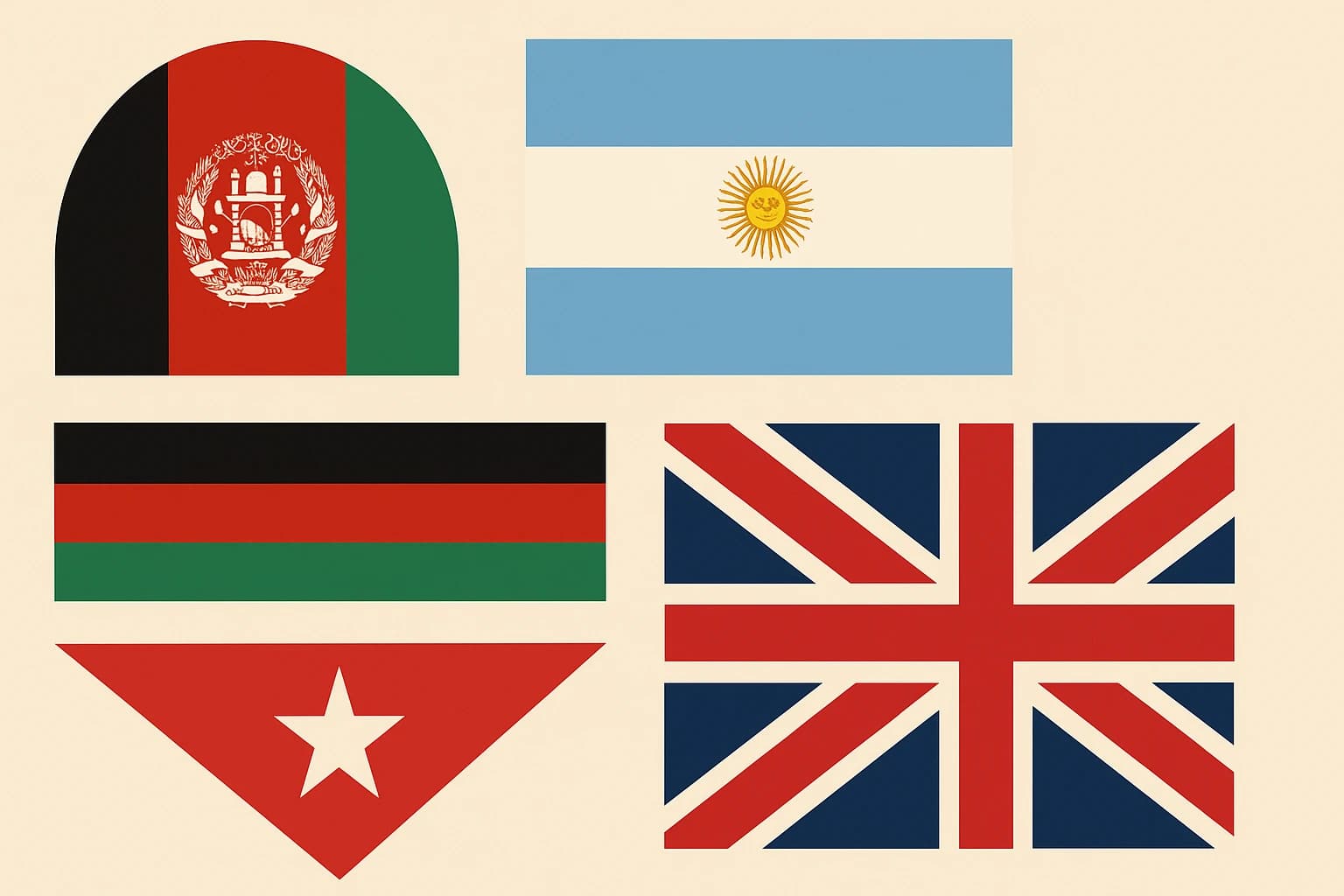
Afghanistan's black, red, and green each attach to a stretch of history rather than to a landscape.
Black recalls a period of occupation. Red is the bloodshed in the fight for independence. Green carries hope along with the Islamic faith. It is a much harder set of meanings than Brazil's, and it shows what happens when a palette is built out of events instead of scenery.
Italy and Japan
Italy's green, white, and red are tied to faith, hope, and charity.
Japan pares the method down to two colors, white and red, for serenity and the sun.
Different scale, same method: a short list of ideas, one color each, nothing left over.
What colors do before they mean anything
Colors act on people before any of the official meanings arrive. Red is associated with power and tends to provoke strong feeling. Blue calms. Green suggests freshness and growth. Those reactions are part of why the same handful of colors keeps appearing on flags that otherwise have nothing in common, and why the same palette can work for a national flag and a corporate identity.
Where flag design goes next
Globalization keeps pushing new themes into flag design, and public sentiment does most of the steering. Colors get reassigned when a country's account of itself changes, which is the part of flag design that never really settles.