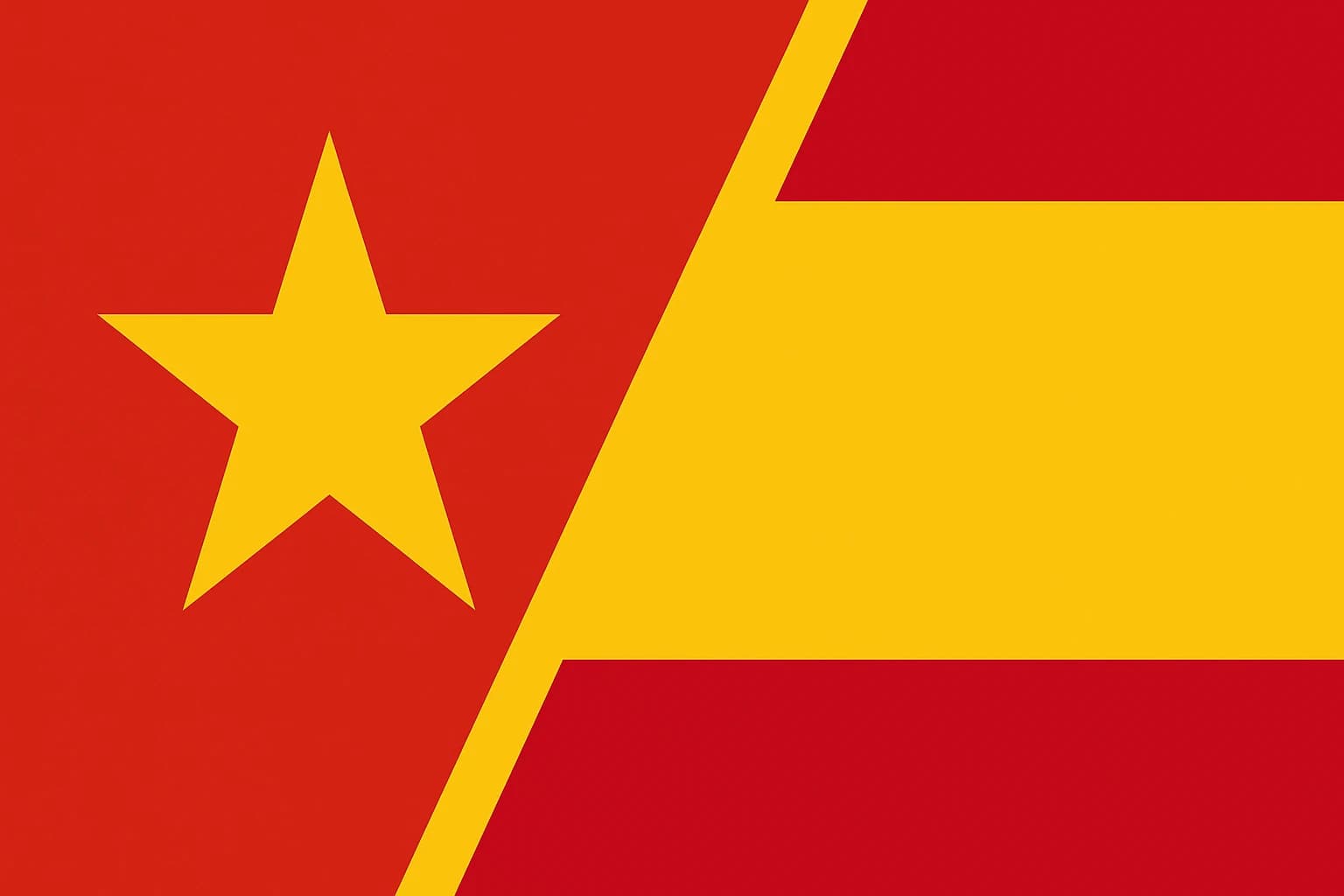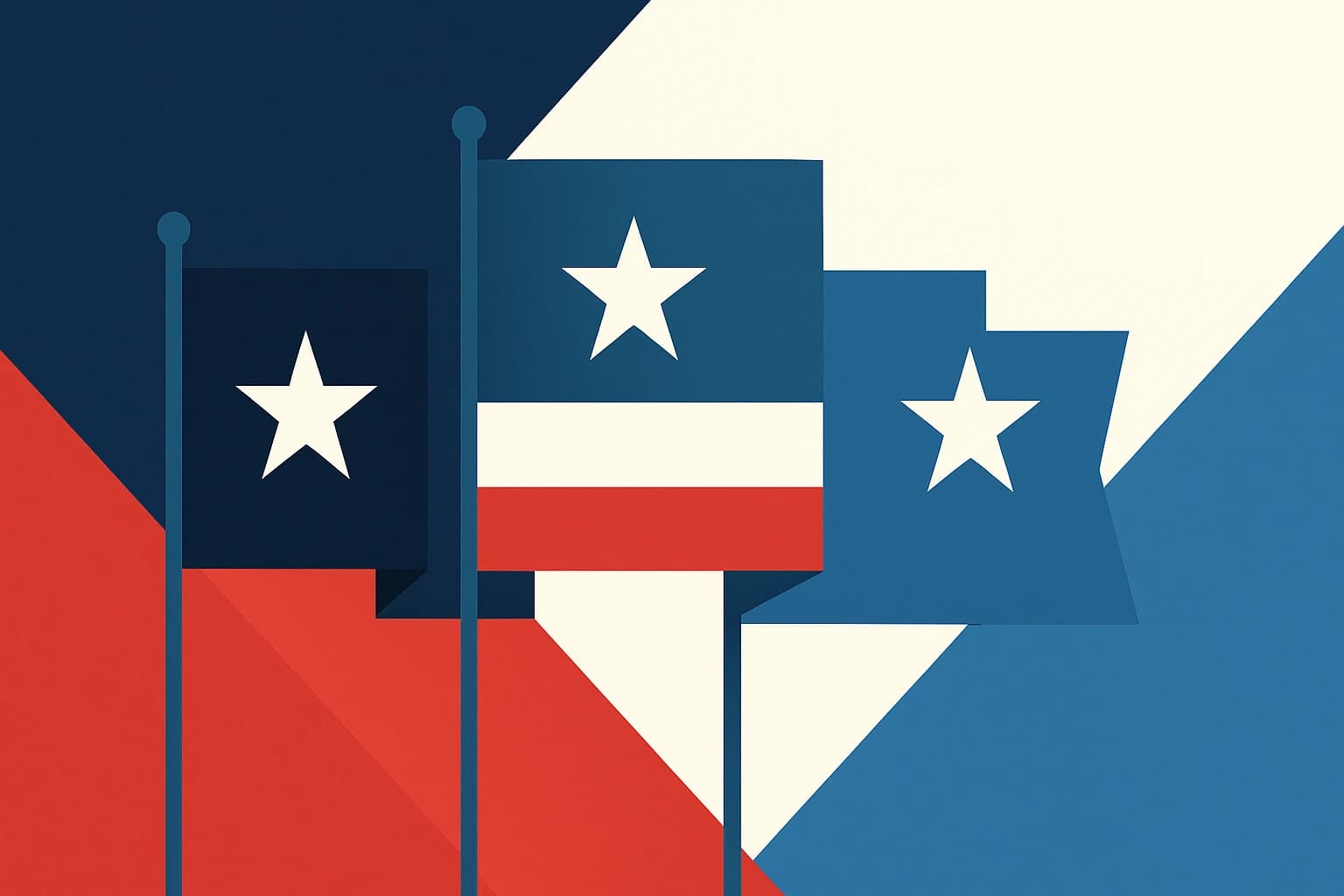
In 1902, Cuba raised its new national flag for the first time over a sovereign nation. At its center: a single white star on a red triangle. Thousands of miles south, Chile had been flying its own lone star for over eighty years. Across the Atlantic, Liberia's flag bore a nearly identical motif. And a year later, Panama would adopt not one but two stars on its brand-new banner. Four countries, four continents, four completely different political origin stories. Yet all of them reached for the same spare, five-pointed symbol to say something essential about who they were.
The answer is that flag symbols aren't powerful because of what they inherently mean. They're powerful because they mean almost nothing on their own, which lets them absorb whatever a nation needs them to carry. A single geometric shape ended up standing for revolution, racial liberation, political compromise, and indigenous identity, depending entirely on who drew it and why.
One star, four revolutions
In vexillology (the study of flags, for the uninitiated) there's a distinct category called the "lone star" flag: banners with a single prominent five-pointed star as the central design element. Not star fields like the American flag's fifty white dots or the European Union's ring of twelve. Not the star-and-crescent motifs on the flags of Turkey or Pakistan. One star, front and center, carrying the weight of a whole national identity.
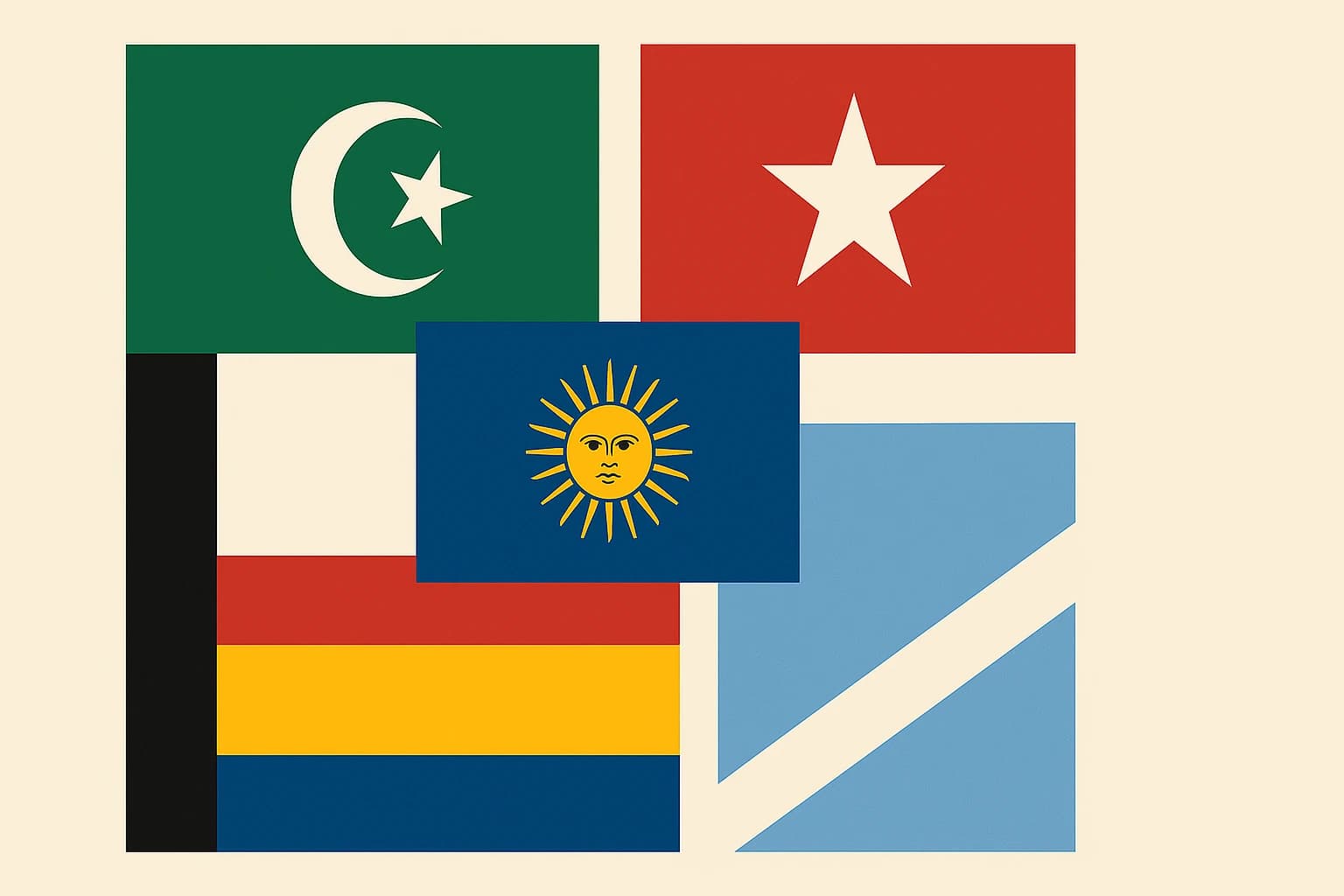
The list of countries that use this motif is surprisingly long: Cuba, Chile, Liberia, Panama, Somalia, Vietnam, Ghana, Morocco, and others. But four of these nations share an overlapping historical window, roughly the early-to-mid 19th century era of nation-building, and they left behind direct documentary evidence of why the star was chosen. Those four are Cuba (flag designed 1849, first flown over an independent nation in 1902), Chile (1817), Liberia (1847), and Panama (1903).
The lone star is the most versatile symbol in vexillology because a five-pointed star is abstract enough to hold whatever meaning a new nation gives it: freedom, unity, statehood, racial dignity, a political truce.
Cuba's star, lit by Texas
The Cuban flag was born in a New York City boarding house in 1849. Its designer was Narciso López, a Venezuelan-born activist who was plotting an armed invasion of Cuba to wrest it from Spanish colonial control. The single white star on a red triangle was directly inspired by the Lone Star flag of the Republic of Texas, adopted in 1839. López and his fellow conspirators admired that Texan banner as the symbol of a colony breaking free from a larger power (Mexico, in that case).
The complication is that López didn't want Cuba to be independent. He wanted it annexed to the United States as a slave state. The star originally stood not for Cuban sovereignty but for American-style separatism, pro-slavery expansionism wrapped in revolutionary cloth.
That meaning didn't last. By the 1890s, José Martí and the Cuban independence movement had taken the flag and recast the lone star as a beacon of sovereign Cuban nationhood. The red triangle became the blood of revolution. The star became "La Estrella Solitaria," the lone star of a people standing alone against Spain. When Cuba achieved independence in 1902, the flag flew with its original design and a completely transformed meaning.
Then came another layer. After 1959, Fidel Castro's revolutionary government kept the flag unchanged and the star acquired a socialist reading. Annexationist, nationalist, and socialist meanings, all in one country's history, with no design changes at all.
Liberia's star
Liberia's flag, adopted in 1847, is the most visually American-looking flag in the world that doesn't belong to the United States. Eleven red and white stripes. A single white star on a blue canton. The resemblance is not a coincidence. The flag was designed by a committee of seven women in Monrovia for the new republic founded by formerly enslaved African Americans and freeborn Black settlers under the auspices of the American Colonization Society.
The question is why one star instead of many. The United States flag had started with one star per state and kept adding more as it grew. Liberia's single star said something else: we are one nation, whole from the start, and we are not a colony of America. It claimed kinship with and independence from the nation that had enslaved and then "repatriated" them.
That duality runs through Liberia's history. For the Americo-Liberian settlers, the star was a badge of self-determination, proof that Black people could build a republic. For the indigenous Africans already living in the region, it stood for an imposed order. The settlers created a social hierarchy that marginalized native populations for over a century, so the star that was meant to symbolize freedom also encoded a power structure.
That tension erupted in Samuel Doe's 1980 coup and later in Charles Taylor's civil wars. Where Cuba's star absorbed shifting revolutionary ideologies, Liberia's absorbed the contradictions of a freedom movement built on displacement, and it never resolved them.
Panama's two stars
Panama's flag breaks the pattern, which is why it belongs here. Adopted on November 3, 1903, the day Panama declared independence from Colombia, it has two stars rather than one: a blue star and a red star on white quarters, flanked by blue and red quarters. Manuel Amador Guerrero, Panama's first president, designed it with his family. The stars explicitly represent the country's two dominant political factions: the Conservatives (blue) and the Liberals (red).
That's a very different use of the star. Not a declaration of unity or freedom but a diplomatic compromise, with the white quarters between the colored ones standing for peace between the factions.
The context made it close to inevitable. Panama's independence was engineered with heavy U.S. involvement, since Canal Zone interests drove much of the maneuvering, and the new nation was fragile. The same Liberal-Conservative divide that had fueled Colombia's Thousand Days' War from 1899 to 1902 threatened to tear Panama apart before it started. The flag had to promise internal peace as much as external sovereignty.
By doubling the star, Panama admitted what Cuba's and Liberia's flags never did: that unity was aspirational. Where those nations used one star to project wholeness, Panama used two to acknowledge a fracture. It's honest in a way flags rarely are.
Chile's star and its indigenous roots
Chile's current flag, also nicknamed "La Estrella Solitaria" (the same name as Cuba's, which gets confusing), was adopted in 1817. That makes it the oldest continuously used lone star flag among the four nations we're discussing. Its single white star on a blue canton alongside a white and red field was designed during the Chilean War of Independence from Spain.
The star's roots go back further than European-style independence movements. Chilean historians and vexillologists have documented that it references the Mapuche people's guñelve, an eight-pointed symbol for the morning star (Venus) that appeared on Mapuche war banners long before European contact. The independence movement, led by figures like Bernardo O'Higgins, took up indigenous symbolism to distinguish Chile from Spain and assert a pre-colonial American identity.
The Chilean flag simplified the eight-pointed guñelve to five points, aligning it with European heraldic conventions. That hybrid mirrors the broader project of Latin American independence movements, which claimed indigenous heritage while building European-style nation-states: homage and appropriation in the same brushstroke.
The tension is unresolved in 2026. Chile's state waged brutal campaigns against the Mapuche throughout the 19th and 20th centuries while flying a star partly inspired by their cosmology. The Mapuche today fly their own flag, the Wenufoye, adopted in 1992, which restores the guñelve in its full eight-pointed form.
Why the star endures
Compare the lone star to other common flag symbols. Crescents carry Islamic association. Crosses carry Christian ones. Eagles and lions suggest particular heraldic or imperial traditions. A five-pointed star has been used by socialist states (Vietnam, China), capitalist democracies (the United States), theocracies (Morocco), tribal nations, and everything in between.
That flexibility is why the star keeps getting chosen. A nation designing a flag needs a symbol grand enough to project sovereignty but open enough to fill with local meaning, and a five-pointed star is geometry rather than ideology. It suggests celestial aspiration without specifying which heavens you're reaching for.
It also works as design. The North American Vexillological Association's guidelines emphasize simplicity, meaningful symbolism, and distinctiveness, and the lone star scores high on simplicity while leaving meaning wide open. Four nations with nothing in common politically each landed on it independently.
Not every star means something profound, mind you. Some nations adopted stars through imitation or colonial inheritance without much deliberation. But even a borrowed star (Cuba from Texas, Liberia from the U.S.) gets reinterpreted almost immediately.
Four stars, four arguments
Lay a Cuban flag next to a Chilean one, a Liberian one, and a Panamanian one. Four stars that look nearly identical, and four different arguments about what a nation is and who belongs to it.
Cuba's star is a revolution that changed owners three times. Liberia's is an American dream redrawn on African soil, contradictions intact. Panama's paired stars are a peace treaty stitched in fabric. Chile's is an indigenous cosmological symbol dressed in European clothing.
The lone star has lasted because it is an empty vessel with a good shape. Every country that picks it up fills it with a different story.