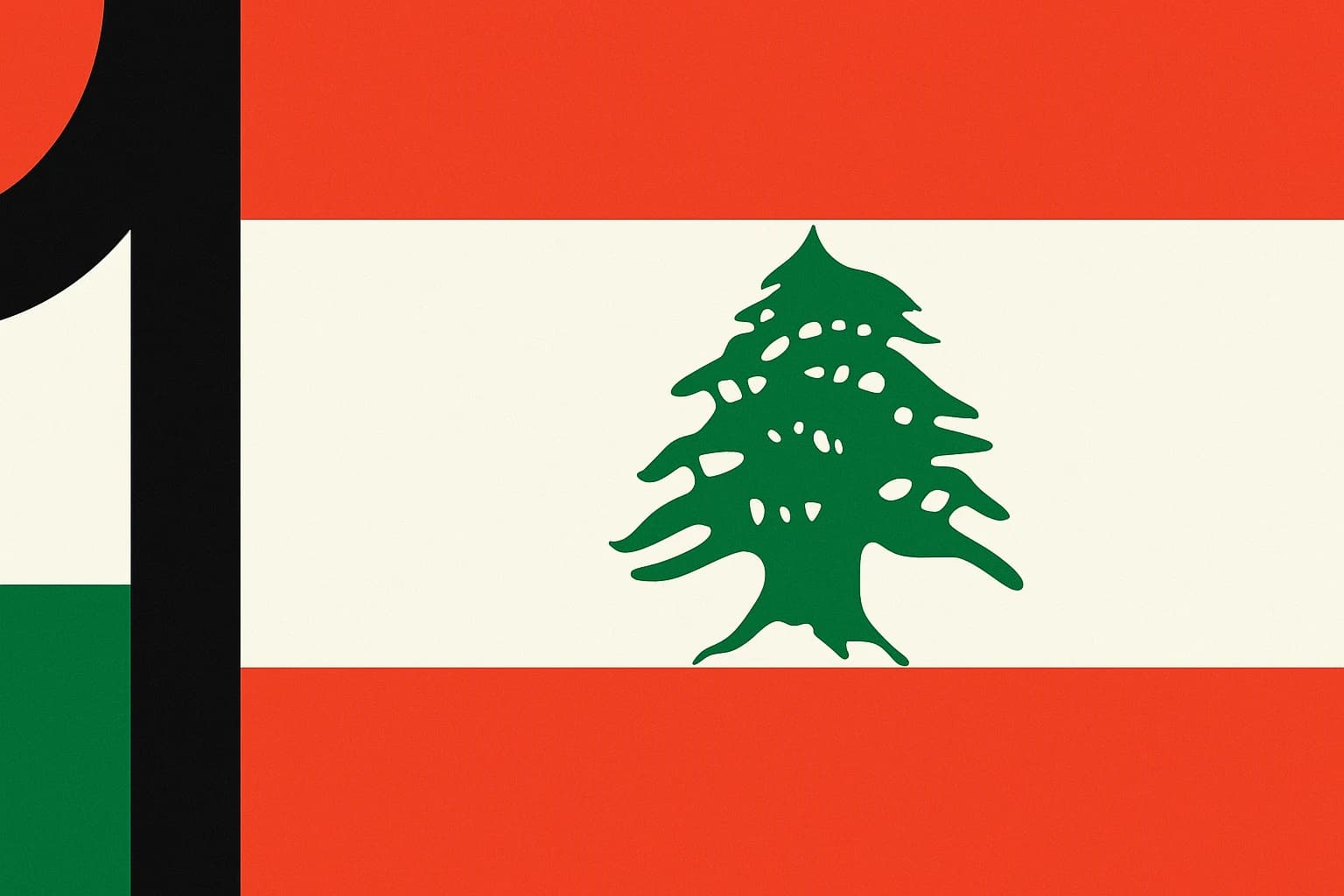
Of the 193 UN member states, fewer than a dozen place a plant as the central or dominant symbol on their national flag. Stars, stripes, crescents, crosses, eagles, lions. The visual language of nationhood overwhelmingly favors the abstract, the celestial, or the predatory. Yet Lebanon chose a tree. Not a stylized leaf or a decorative wreath tucked into a coat of arms, but a full, green, unmistakable cedar planted squarely in the center of a white field. This is not ornamental. It is the flag.
That choice raises a question. What does it mean when a country stakes its identity not on a weapon, a geometric ideal, or a mythic beast, but on an organism that gets sick, shrinks in range, and dies? And what happens when, as in 2026, that organism is doing exactly that?
Why almost no flags feature plants
Of 193 UN member flags, only a handful put plant life at the center. Lebanon has its cedar. Canada has its maple leaf. Belize has a mahogany tree inside its coat of arms. Cyprus places olive branches beneath the island's silhouette. Haiti's coat of arms includes a palm tree. Equatorial Guinea puts a silk-cotton tree on its shield. That is roughly the whole list.
The reasons for this scarcity are practical before they're philosophical. Flags evolved on battlefields and ship masts, where they had to be readable at a distance, in wind, in chaos. A charging eagle reads fast. A crescent reads fast. A tricolor reads fast. A tree is specific, local, and quiet. It doesn't signal ferocity or cosmic order. It signals place.
Vexillologists, the people who study flag design (yes, that's a real field), hold that the best flags follow a few hard rules: simplicity, distinctiveness, limited colors, no lettering. Plants break the simplicity rule. They have branches, leaves, texture. Drawing a convincing tree on a battlefield banner in the 12th century was nobody's idea of efficient communication.
And yet the rarity works in their favor. Lebanon's cedar is probably the most instantly recognizable flag symbol in the Middle East because nothing around it looks remotely like it. In a region dense with Pan-Arab tricolors of red, white, black, and green, a tree on a white field is unmistakable.
Hong Kong's bauhinia flower, adopted in 1997, is a modern case of botanical flag design under very different circumstances: a handover symbol, a political negotiation made floral. Lebanon's cedar comes from somewhere much older.
Five thousand years of cedar
The cedar of Lebanon shows up in one of the oldest stories humans ever wrote down. In the Epic of Gilgamesh, composed around 2100 BCE, the hero and his companion Enkidu travel to the Cedar Forest guarded by the terrifying Humbaba. The cedars were already legendary at that point: sacred, enormous, associated with the gods. This wasn't a casual mention. The Cedar Forest was the destination, the point of the quest.
Under Phoenician civilization (roughly 1500 to 300 BCE) the cedar became something more concrete: an economic engine. Cedar wood built the ships that made Phoenicia a maritime power, and it was exported across the Mediterranean for temple construction, including, according to 1 Kings 5-6, Solomon's Temple in Jerusalem.
Egyptian, Assyrian, and Biblical texts return to the cedar again and again as a symbol of strength, incorruptibility, and divine favor. Cedar wood resists rot, and that material fact gave it spiritual associations with permanence. When your wood outlasts the people who carved it, people start reading theology into the grain.
The line to the modern era is direct. The cedar appeared on the flag of the Mount Lebanon Mutasarrifate (1861-1918), was taken up by Lebanese nationalists in the early 20th century, and was formalized on the national flag at independence in 1943. Nobody invented the tradition in a committee room.
What the cedar flag encodes
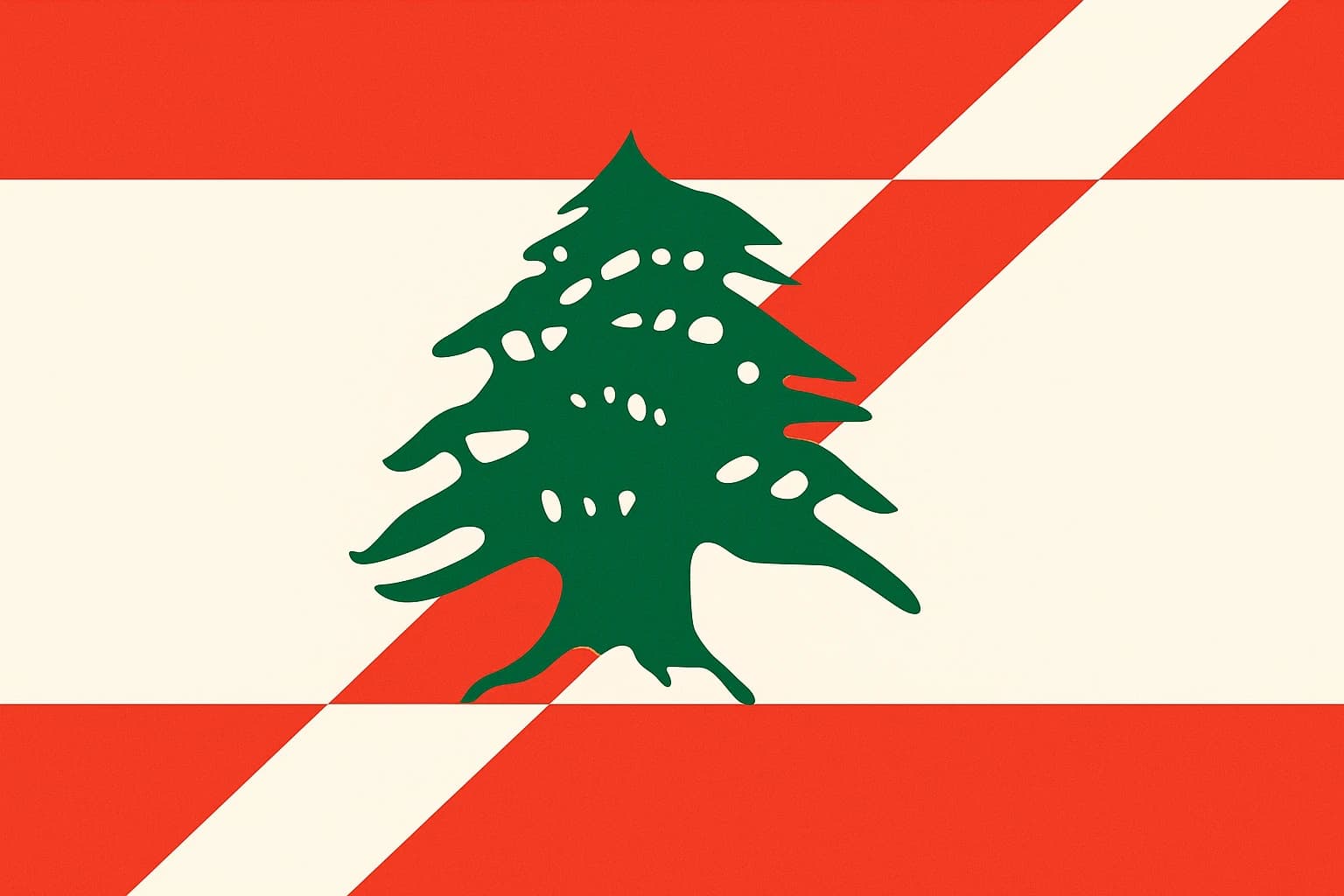
The flag's design language is deliberate. The red stripes stand for blood shed for liberation. The white field stands for peace and the snow of Mount Lebanon. The green cedar stands for immortality and steadfastness.
But the cedar also carries a sectarian subtext that's impossible to ignore in Lebanese politics. The tree was historically championed most strongly by Maronite Christian nationalists. Its centrality on the flag was partly a negotiation between confessional communities, a compromise baked into cloth.
During and after the Lebanese Civil War (1975-1990), various factions claimed the cedar as their own. The Lebanese Forces, a Christian militia alliance, used a cedar-and-cross emblem. Other groups pushed back against what they saw as one community's monopoly on the national symbol. Post-war, the cedar was deliberately re-universalized, repositioned as a symbol for all Lebanese regardless of sect.
Canada's maple leaf offers an interesting parallel. When Canada adopted its current flag in 1965, the choice was partly about sidestepping divisive identity politics. The old Red Ensign carried the British Union Jack. The fleur-de-lis belonged to French Canada. The maple leaf belonged to the land itself, not to one community.
Both the cedar and the maple leaf were, in a sense, "safe" choices. A tree doesn't have a religion or an ethnicity, and it predates every faction that claims it. The catch is that rooting national identity in a living organism rather than an abstract idea creates a vulnerability. The symbol has a body, it occupies space in the real world, and bodies, unlike ideas, can be measured and counted.
Belize, Cyprus, and the others
A small club of nations made similar choices, each for different reasons.
Belize's flag, adopted in 1981, has a full mahogany tree inside the coat of arms, flanked by two woodcutters, one mestizo, one Creole. The tree stands for the colonial logging industry that built British Honduras, which puts a postcolonial nation in the odd position of keeping a symbol of extractive industry on its flag. Belizeans have largely reinterpreted the mahogany as resilience rather than exploitation, but the history is right there in the image: two men with axes flanking the thing they are cutting down.
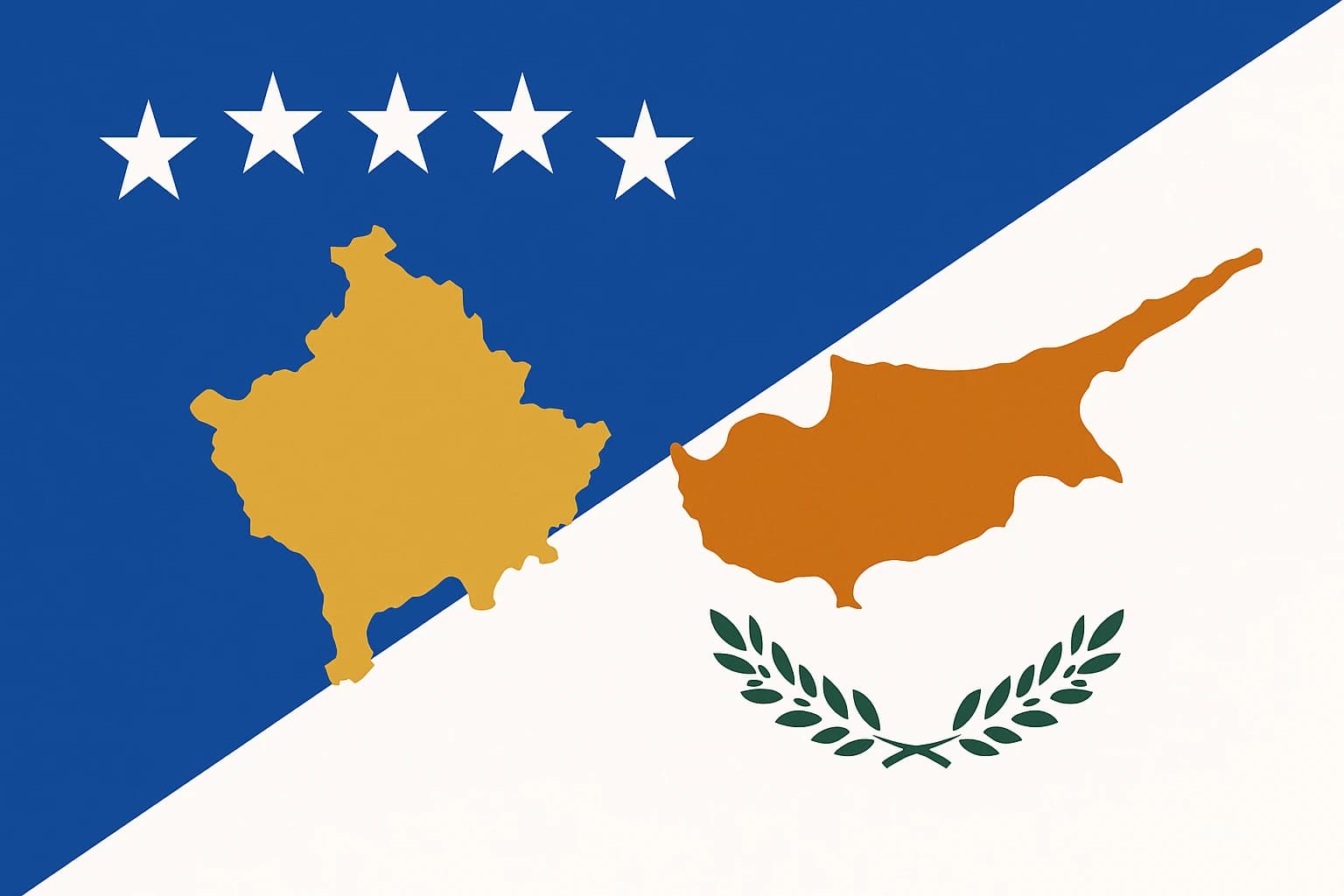
Cyprus's flag, adopted in 1960, takes a different approach. It shows the island's own geographic shape in copper-orange, with two olive branches below for peace between Greek and Turkish Cypriots. The branches were a deliberate choice by the flag's designer, İsmet Güney, a Turkish Cypriot art teacher. In 2026, with the island still divided, they read as aspiration rather than description. The symbol promises something the politics haven't delivered in over sixty years.
Other botanical elements appear across the world's flags in supporting roles. Mexico's eagle perches on a cactus, recalling the Aztec founding myth. Paraguay places a palm and olive branch on its reverse seal. Guatemala's national bird, the quetzal, perches on a scroll. But these are plants as set dressing, not plants as the main event.
Each botanical flag says something about a nation's relationship to its land. Belize's is extractive. Cyprus's is aspirational. Lebanon's and Canada's are attempts to ground national character in something that grows out of the soil.
When the symbol gets sick
The Cedrus libani forests that once covered vast stretches of Mount Lebanon have been reduced to scattered groves totaling roughly 2,000 hectares. The most famous, the Cedars of God (Arz el-Rab) near Bsharri, is a UNESCO World Heritage Site containing about 400 old-growth trees. Four hundred trees is the physical reality behind the symbol on the flag.
Rising temperatures in the Eastern Mediterranean are pushing the cedar's viable habitat upward in elevation. Research from institutions like the American University of Beirut has documented reduced snowpack, bark beetle infestations worsened by warmer winters, and seedling mortality. Some projections suggest suitable cedar habitat in Lebanon could shrink by mid-century to a fraction of what remains.
Lebanon in 2026 is still working through the aftermath of the 2019-2020 economic collapse, the 2020 Beirut port explosion, and continuing political instability. The country and its symbol are under the same pressures: fragmentation, neglect, a climate turning hostile.
Reforestation efforts are underway. The Lebanon Reforestation Initiative has planted hundreds of thousands of trees. The Shouf Biosphere Reserve, Lebanon's largest nature reserve, protects about a quarter of the country's remaining cedar forests and has become a model for community-based conservation. International partnerships continue to fund research and planting.
These efforts treat the cedar as an active project rather than a symbol to preserve behind glass. Planting cedars is a form of patriotism, and protecting a grove is a political act.
It also raises a question the other flags never have to answer. When your national symbol is a species with a conservation status, does the flag become a kind of ecological report card?
Do botanical symbols age differently?
Stars are eternal. Crosses are transcendent. Eagles are mythic. None of them age. They exist outside seasons and outside biology, and a star on a flag looks the same whether the nation is thriving or collapsing.
A tree is seasonal and mortal. It grows, loses leaves, gets sick, dies. A botanical flag carries a story of growth and decline that abstract symbols don't.
Canada's relationship to its maple leaf has evolved over decades: from a colonial timber symbol to a bilingual peacekeeping identity marker to, in the 21st century, an emblem complicated by climate change affecting maple syrup production and boreal forest health. The symbol hasn't changed, but the tree behind it has, and that changes the symbol's meaning whether anyone updates the design or not.
Contrast this with non-botanical symbols that have aged badly for political rather than ecological reasons. The Soviet hammer and sickle disappeared with the state that flew it. Libya's plain green flag under Gaddafi was replaced in 2011. Those symbols failed because the regimes behind them failed.
Botanical symbols age through nature rather than revolution, which makes them more layered rather than more embarrassing. A cedar on a flag in 1943 meant triumph. A cedar on a flag in 2026, with the forests shrinking and the country fractured, means persistence under pressure and a refusal to give up on something that's struggling.
A living document
Lebanon's cedar is the only full tree among the world's flags, as opposed to a claw, a star, or a stripe. Its symbolic run, from Gilgamesh's sacred forest to Phoenician masts to a war-scarred nation's emblem of persistence, may make it the oldest continuously meaningful symbol on any national flag.
Its power in 2026 comes from its vulnerability. Abstract symbols don't get sick and a tree does, so a country that puts a living thing at the center of its identity is making a claim that the nation's fate and the land's fate are the same story. As Lebanon's remaining cedars push upward through thinning mountain air, that claim is being tested.