The Flag of Lebanon
Lebanese Republic
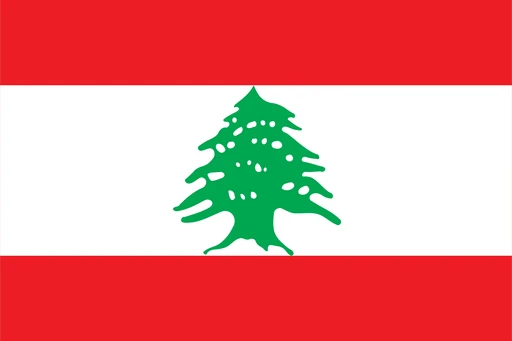
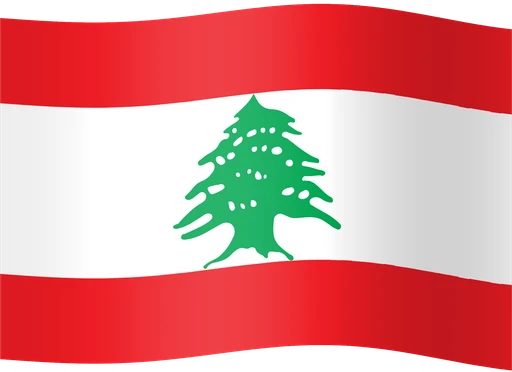
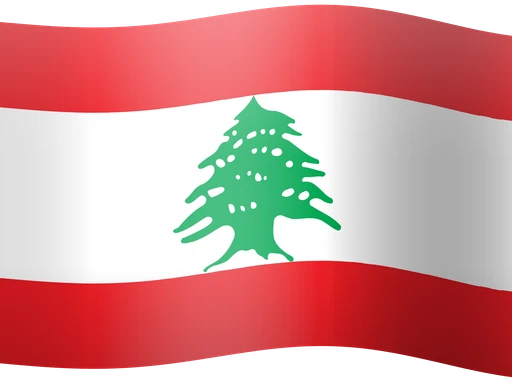
The flag of Lebanon has three horizontal bands: red, white at double width, and red again, with a green cedar tree centered in the white band. Red stands for the blood shed in the fight for freedom, white for peace, purity, and the snow on the mountains, and the green cedar for immortality and steadiness.
Lebanon's flag is built around a Cedar of Lebanon, a tree mentioned over 70 times in the Bible and prized by the pharaohs for their greatest monuments. The flag itself is young by comparison, adopted in 1943 as Lebanon declared independence from French mandate rule. An ancient tree on the banner of a very modern and very contested state: that gap is where most of the flag's interest lies.
The cedar, older than the country
The Cedar of Lebanon (Cedrus libani) has been a symbol of the region for over 3,000 years, predating the modern state by millennia. It shows up in the Epic of Gilgamesh, where Enkidu and Gilgamesh journey to a vast cedar forest guarded by a demon. Ancient Egyptian records describe the cedar forests of Lebanon as among the most valuable natural resources in the known world. Phoenician traders used Lebanese cedars to build the legendary ships that carried them across the Mediterranean, and King Solomon reportedly sourced timber from these same forests to construct the First Temple in Jerusalem.
By the 20th century, millennia of logging had reduced those once-vast forests to fragments. Putting the cedar on the flag was partly an act of mourning, a reminder of what had been lost and a call to protect what remained.
The cedar on the flag is green, for vitality and the natural world, and it sits in the middle of the white band so that it touches both red stripes and holds the composition together. The stylized form was designed by the Lebanese art collector and politician Henri Pharaon during the independence drafting process. He wanted something bold enough to read at a distance but restrained enough to suit the tree.
Modern Lebanon treats reforestation of the cedar groves as a national priority. Several reserves, including the Cedars of God grove in Bsharri, are UNESCO World Heritage Sites.
The flag and the 1943 independence crisis
Lebanon spent over two decades under French Mandate rule, from 1920 to 1943, following the collapse of the Ottoman Empire and the post-World War I carve-up by the League of Nations. During that period, the flag incorporated the French tricolor, a constant visual reminder that sovereignty belonged to Paris, not Beirut. Lebanese nationalists despised it.
The breakthrough came on November 11, 1943. That same week, Lebanon's parliament unilaterally amended the constitution to strip out all references to the French Mandate. France responded by arresting President Bechara El-Khoury, Prime Minister Riad al-Solh, and other leaders. The backlash, both domestic and international, was swift. Within days, the imprisoned officials were released, and France's grip on Lebanon began to slip for good.
The flag designed and adopted that week was a deliberate rupture. Its red and white stripes drew from the colors used by Lebanese fighters during the 1916-1918 Arab Revolt against the Ottomans, grounding the new banner in regional resistance history rather than European aesthetics. No colonial insignia. No foreign tricolor. Only indigenous landscape and history.
Choosing the cedar as the central emblem was itself a political act. In a country with 18 officially recognized religious communities, the designers avoided any Islamic crescent or Christian cross. The cedar was secular, ancient, and universally Lebanese. It belonged to everyone. Lebanon's independence was formally recognized on November 22, 1943, now celebrated as Lebanese Independence Day.
Why red, white, and green
The flag's structure is three horizontal bands: red on top, white in the middle, red on the bottom. The white band is double the width of each red stripe, so peace is given more space on the cloth than sacrifice.
Red symbolizes the blood shed by Lebanese martyrs across centuries of conflict. Given Lebanon's history, from ancient invasions to the civil war to the 2006 war with Israel, the color carries a weight that's anything but abstract. White represents peace, purity, and the snow that caps Mount Lebanon for much of the year, a striking landscape feature visible from Beirut on clear days. The green of the cedar speaks to growth, prosperity, and the enduring pulse of Lebanese civilization.
Some scholars link the red and white to the colors of the Qaysi and Yemeni factions that dominated Lebanese political life in the 17th and 18th centuries, though this interpretation is debated. What's less debatable is what the color scheme avoids: the pan-Arab palette of red, white, black, and green used by Syria, Jordan, Iraq, and others. Lebanon's flag quietly insists on a distinct national identity, separate from the broader Arab nationalist movement.
Protocol, variants, and the flag in wartime
The official proportions are 2:3, and the law requires the cedar to touch both red stripes, which is what ties the three bands together visually.
During the Lebanese Civil War (1975-1990), the national flag's unifying role fractured. Various militias and factions replaced it with their own banners, and the cedar flag became associated with particular sides rather than the nation as a whole. The Lebanese Armed Forces flag adds an eagle emblem, while the president's standard incorporates additional insignia. Hezbollah and other armed groups fly entirely different flags, a visible reminder of ongoing tensions over who speaks for Lebanon.
The flag reclaimed its unifying power during the 2019 Lebanese protests, known as the "thawra" or October Revolution. Hundreds of thousands of citizens waved it in the streets as a symbol of non-sectarian, nationwide frustration with the political establishment. For a few weeks, the cedar flag meant exactly what its designers had intended: one country, one people.
Lebanese diaspora communities worldwide, one of the largest per-capita diasporas on earth, have made the cedar flag a powerful marker of identity. From São Paulo to Sydney to Detroit, the green cedar is instantly recognizable.
How it compares with other flags
Lebanon is one of very few countries whose flag features a tree as its central emblem. Norfolk Island's flag shows a Norfolk pine, and Equatorial Guinea includes a silk-cotton tree, but the cedar remains the most iconic arboreal symbol in world vexillology. The horizontal triband with a central emblem is a common structure globally, but Lebanon's is unusual in having its emblem span the full height of the central stripe, creating a stronger visual anchor.
What's most striking in a regional context is the absence of any cross or crescent. For a Middle Eastern nation with significant Christian and Muslim populations, that omission is rare and deliberate. Neighboring Syria and Jordan lean into the pan-Arab color palette; Lebanon's divergence reinforces the Phoenician-rooted cultural identity narrative that many Lebanese embrace.
The cedar motif has spread to diaspora organizations in Brazil, the United States, and Australia, where large Lebanese populations have adapted it for their own flags and logos. Vexillologists tend to cite the Lebanese flag as a case of a simple design that still carries specific cultural meaning.
References
[1] Lebanese Republic Official Government Portal (presidency.gov.lb). Official flag specifications and legal descriptions.
[2] Flags of the World (FOTW) Database, crwflags.com. Vexillological analysis, proportions, and historical flag variants.
[3] Kaufman, Asher. Reviving Phoenicia: The Search for Identity in Lebanon. I.B. Tauris, 2004. Cultural and nationalist context of the cedar symbol.
[4] Salibi, Kamal. A House of Many Mansions: The History of Lebanon Reconsidered. University of California Press, 1988. Historical background on Lebanese identity formation.
[5] Hitti, Philip K. Lebanon in History. Macmillan, 1957. Deep historical roots of the cedar as a civilizational symbol.
[6] League of Nations Mandate for Syria and the Lebanon (1922). Primary source for the colonial-era context.
[7] Maktabi, Rania. "The Lebanese Census of 1932 Revisited." British Journal of Middle Eastern Studies, 1999. Context on Lebanon's multi-confessional society and the secularism of the cedar choice.
[8] United Nations Treaty Series / Lebanese Constitutional Records (1943). Formal date and legal context of flag adoption.
Common questions
- What does the cedar tree on the Lebanese flag mean?
- The cedar tree symbolizes immortality and steadfastness. It's a nod to Lebanon's mountains and its cultural roots, mentioned in ancient texts.
- Why are there red, white, and green colors on the Lebanese flag?
- Red represents the blood shed for freedom, white stands for peace and purity, and the green cedar symbolizes immortality and resilience.
- When was the Lebanese flag first used?
- The Lebanese flag was first adopted on December 7, 1943, after Lebanon gained independence from French mandate rule.
- What does the cedar tree on Lebanon's flag mean?
- The Cedar of Lebanon is ancient. It shows up over 70 times in the Bible, and pharaohs and Phoenician traders valued its timber for thousands of years. On the flag it stands for Lebanon's deep roots and natural heritage, and it is a secular choice. With 18 religious communities in the country, the cedar belongs to all of them equally rather than to one faith.
- Why doesn't Lebanon's flag have a cross or crescent?
- That was deliberate. Lebanon has large Christian and Muslim populations, so the designers picked the cedar tree instead. A cross or crescent would've favored one religion over the other, while the tree belongs to everyone. It makes Lebanon's flag unusual in the Middle East, where most flags lean heavily into religious iconography.
- What makes Lebanon's flag stand out from other Arab flags?
- Most Arab neighbors like Syria, Jordan, and Iraq use the same pan-Arab colors: red, white, black, and green. Lebanon deliberately went a different direction, looking back to Phoenician roots instead. Very few national flags anywhere use a tree as their main symbol, which makes Lebanon's easy to pick out.
Featured in these articles
- The Cedar That Carries a Nation: Lebanon's Tree and the Burden of a Symbol Under Siege
- The Cedar, the Clove, and the Wheat: Why Some Flags Chose a Crop Over a Crest
- The Cedar That Outlasted Every Regime: How Lebanon Built a Nation Around a Symbol No One Could Own
- The Tree That Holds Up a Nation: Lebanon's Cedar and the Surprisingly Rare Tradition of Putting Plants on Flags
Download this flag
Free in 12 styles, from 32px icons up to 2000px, as SVG, PNG, WebP and JPG.